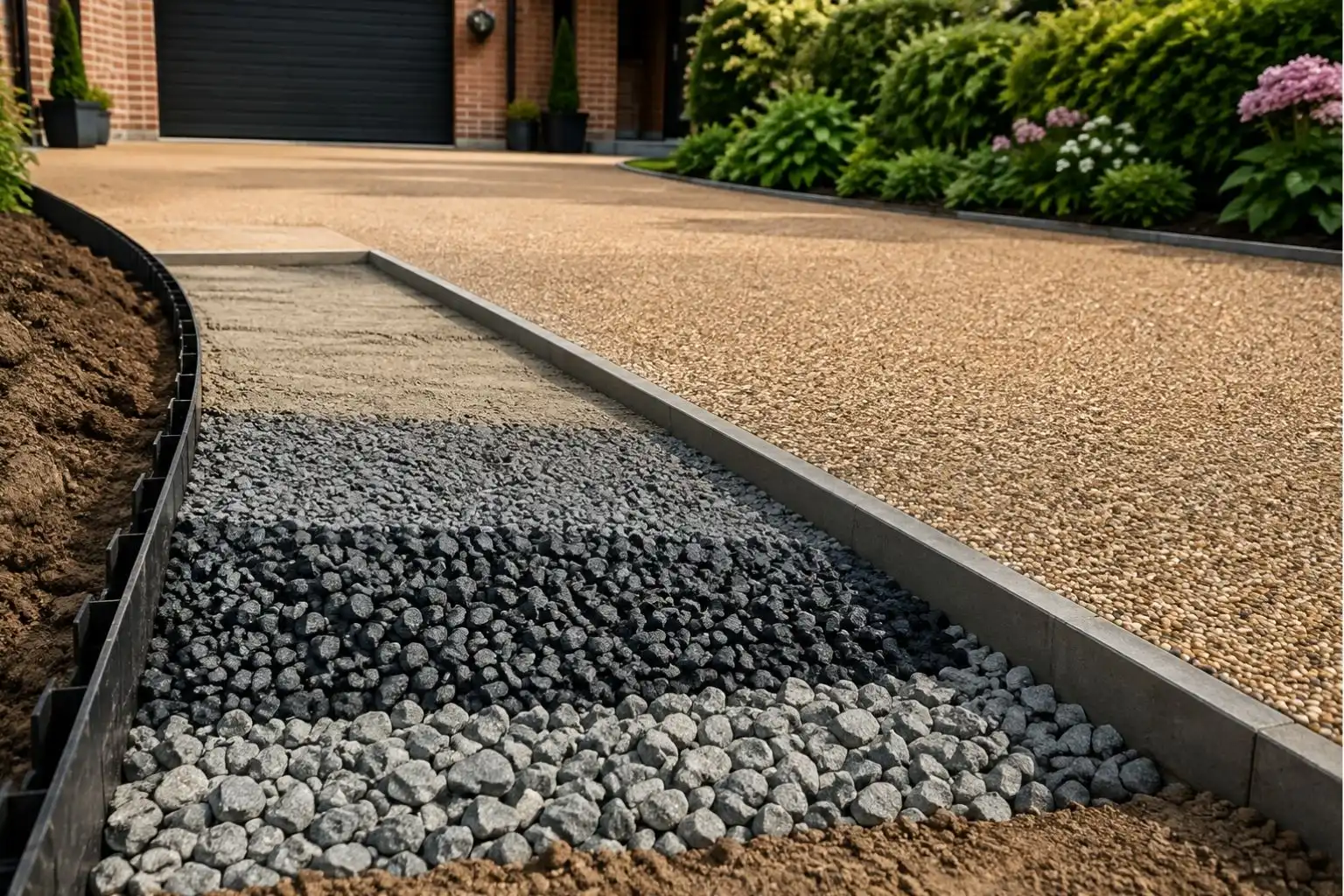
Settling on the wrong driveway or paving surface can lead to drainage issues, cracking, poor appearance, and expensive repairs that many homeowners never planned for. A common misconception is that all outdoor surfacing materials perform the same and that the decision comes down to looks alone. In reality, poor material choices and contractor decisions often create costly regrets.
According to a report cited by Domino, 74% of homeowners who completed renovation projects reported regrets, including overspending and contractor-related problems. So before investing in a new driveway or pathway, how can you know if resin bound surfacing is the right long-term solution for your home?
What is Resin Bound Surfacing?
Resin bound surfacing is a type of paving made by thoroughly mixing natural stone aggregates with a clear, UV-stable two-part polyurethane resin binder in a forced action mixer. The fully coated aggregate is then trowelled onto a prepared sub-base, typically existing sound tarmac or concrete, to a consistent depth of 16–20 mm for driveways. Once cured (approximately 24 hours), the result is a seamless, hard-wearing, and fully permeable surface.
The defining technical characteristic of a resin bound surface is its permeability. Because every stone particle is individually coated and bonded to its neighbours, rather than having gaps filled with mortar or sand, microscopic voids remain between the aggregate. This is what makes resin bound surfacing fully SuDS-compliant under UK drainage regulations, and why it typically requires no planning permission for residential driveways in Manchester, Cheshire, or anywhere else in England (Planning Portal).
Where is Resin Bound Surfacing Used?

The versatility of the material is one of its most practical advantages. Applications include:
- Residential driveways: the most common application across Manchester, Cheshire, Altrincham, Wilmslow, and Stockport
- Garden patios and pathways: seamlessly extending driveway surfaces to outdoor living areas
- Commercial car parks and pedestrian walkways: commercial resin bound surfacing withstands heavy foot traffic and regular vehicle use
- Public realm and civic spaces: town centre footpaths, school playgrounds, and urban plazas increasingly specify resin bound for its durability and low maintenance profile
- NHS sites and healthcare premises: L&R Surfacing has completed commercial resin bound surfacing projects at healthcare sites across Greater Manchester.
From residential paths to NHS car parks, resin bound surfacing adapts to different project sizes without compromising drainage or finish quality. Its durability and visual appeal make it a preferred choice for contractors, architects, and homeowners across the North-West.
Resin Bound Driveway and Surfacing Services Explained

Here are some of the most popular resin bound driveway and surfacing services homeowners choose to improve durability, drainage performance, and the overall appearance of outdoor spaces.
1. Resin Bound Driveway Solutions
L&R Surfacing installs BBA-approved resin systems designed for durability, UV stability, and long-term performance. Understanding the difference between resin bound and resin bonded surfaces is essential before installation begins. Resin bound surfacing blends resin and aggregate before laying, creating a smooth, permeable, and hard-wearing finish suitable for residential driveways.
Resin bonded systems apply loose aggregate onto a resin-coated base, producing a textured finish with different performance characteristics. Resin bound driveways are valued for their clean appearance, drainage capability, and low-maintenance qualities. A medium-sized resin bound driveway typically costs around £6,000. When installed correctly on a suitable base, they provide a durable surface that complements both modern and traditional homes.
2. Imprinted Concrete Driveways
Imprinted concrete driveways provide the appearance of natural stone, slate, or cobbled paving while maintaining a strong and durable surface. The installation process involves pouring concrete and imprinting it with patterned mats before sealing. This creates decorative finishes that suit a wide range of property styles.
Homeowners often choose imprinted concrete for its solid structure, minimal weed growth, and ability to replicate premium paving designs. Proper preparation and sealing are essential to maintain appearance and surface protection over time. With professional installation and ongoing care, imprinted concrete offers a practical surfacing solution that balances visual appeal with reliable performance.
3. Driveway Resurfacing and Overlay
Driveway resurfacing and overlay solutions offer an effective way to refresh worn outdoor surfaces without unnecessary disruption. When the existing sub-base remains structurally sound, resin bound surfacing can often be installed over suitable tarmac or concrete foundations. A new surface overlay should be allowed to cure before resin application, typically around 7 days for bitumen and at least 28 days for concrete.
A professional resin bound surfacing contractor will inspect the base carefully before recommending an overlay. Surfaces with fewer joints usually provide the best finish for resin. Signs of cracking, movement, or drainage failure must be addressed before resurfacing begins. If you are unsure if resurfacing or full replacement is the better option, read our blog, “Driveway Resurfacing: Is It the Right Option for Your Driveway?” to learn how contractors assess existing surfaces.
4. Patios and Garden Paths
Resin bound and decorative surfacing solutions extend beyond driveways into patio and garden pathways, helping create a consistent and attractive outdoor environment. Smooth finishes, varied aggregate colours, and seamless transitions allow homeowners to connect different outdoor areas with a cohesive design.
It works particularly well in pedestrian spaces due to their permeability and comfortable underfoot feel. Garden paths and patios benefit from surfaces that resist loose gravel movement and reduce maintenance demands. Careful installation and edging help preserve appearance and performance over time. Thoughtful surfacing design can enhance both usability and the overall character of an outdoor space.
5. Groundworks and Sub-Base Installation
Groundworks and sub-base preparation form the foundation of any successful surfacing project. A high-quality finish depends on stable groundwork with a base that can support the expected load after installation. Preparation may involve excavation, levelling, drainage assessment, edging installation, and the placement of compacted sub-base materials.
Every stage plays an important role in preventing movement, cracking, and water-related issues after installation. Professional contractors assess soil conditions and existing structures before determining the most suitable preparation method. Loose granular sub-bases are unsuitable for resin surfacing applications because they do not provide a sufficiently stable base. Completing groundwork in-house also supports better project control and accountability.
The Installation Process: What Homeowners Should Expect
A professional resin bound surfacing installation follows a structured process. Understanding each stage helps homeowners hold their contractor to account and recognise quality workmanship.
- Site survey and base assessment: A reputable resin bound surfacing contractor will inspect the site, assess drainage and surface condition, and confirm if an overlay or excavation is required.
- Sub-base preparation: The most critical stage. BALI standards require 150–250 mm of compacted MOT Type 1 hardcore for vehicle-bearing surfaces. Sound tarmac or concrete may support an overlay, while unstable surfaces require excavation.
- Priming and edge restraint installation: Concrete bases require primer to prevent delamination, while aluminium edge restraints help protect the surface and contain the resin mix.
- Mixing and laying: Polyurethane resin and dried aggregate are mixed and laid to a consistent depth before curing begins using specialist tools.
- Curing and sign-off: A resin bound surface cures within 24 hours for foot traffic and 48–72 hours for vehicles, followed by final inspection and maintenance guidance.
A properly installed resin bound surface depends on preparation, workmanship, and precision and attention to detail. Knowing the process helps homeowners ask informed questions and work confidently with experienced resin bound surfacing contractors.
Start Your Resin Bound Surfacing Project
Now that you understand what resin bound surfacing is and how it can improve outdoor spaces, the next step is finding the right solution for your property. A professionally installed resin bound surface supports drainage, reduces maintenance concerns, and enhances the appearance of driveways, patios, and pathways while delivering long-term performance.
If you are considering local resin bound surfacing installation, driveway resurfacing, or commercial resin bound surfacing, working with experienced professionals matters. At L&R Surfacing, our experienced team provides tailored recommendations to suit your style and budget. Check out our Resin Driveways services to learn more about resin bound surfaces and available design options. Contact us at enquiries@landrsurfacing.co.uk or call 0161 399 0351 to schedule a consultation or request a free quote.
Frequently Asked Questions About Resin Bound Surfacing
How Much Does Resin Bound Surfacing Cost?
Resin bound surfacing installation cost varies depending on project size, groundwork requirements, base condition, and surface design. A resin bound surface installed over sound concrete or tarmac may cost less than projects requiring excavation and full sub-base preparation. Edging, drainage improvements, access limitations, and decorative aggregate choices also influence the final quotation.
Homeowners should treat unusually low prices carefully, since poor preparation often leads to future repair costs and reduced lifespan. Trusted resin bound surfacing contractors carry out site assessments and provide clear written quotations explaining labour, materials, and groundwork requirements. Investing in professional installation helps protect durability, drainage performance, and long-term value.
Can Resin Bound Surfacing Be Laid on Gravel?
In most cases, resin bound surfacing should not be installed directly onto loose gravel. A stable and properly prepared base is essential to support a durable resin bound surface and prevent structural problems after installation. Loose gravel shifts over time and cannot provide the consistent support required for successful resin bound surfacing.
Professional contractors usually recommend installing over sound concrete, tarmac, or a newly prepared sub-base designed for the intended use and load requirements. During local resin bound surfacing installation, contractors assess the existing ground before recommending resurfacing or excavation. Proper groundwork reduces movement, drainage issues, cracking, and premature failure, helping the finished surface last longer.
How Strong Is Bounded Resin Surface?
A bounded resin surface, more commonly called a resin bound surface, is designed to provide excellent strength and durability when professionally installed. The combination of high-quality resin and natural aggregate creates a hard-wearing finish capable of handling daily foot traffic and vehicle use on residential driveways. Strength depends heavily on proper groundwork and a stable supporting base matched to expected traffic levels.
Resin bound surfaces often resist cracking better than some traditional paving options when preparation and installation meet professional standards. Commercial resin bound surfacing is commonly used in walkways, car parks, and public spaces due to its durability, permeability, and long-term performance under demanding conditions.
Can I Get Local Resin Bound Surfacing Installation Near Me in Greater Manchester?
Yes. L&R Surfacing provides local resin bound surfacing installation throughout Greater Manchester and Cheshire, serving areas including Altrincham, Wilmslow, Stockport, Sale, Knutsford, and surrounding locations. Homeowners searching for trusted resin bound surfacing contractors can request a free site survey to assess drainage, surface condition, and project requirements before receiving a written quotation.
Every resin bound surface installation uses BBA-approved systems designed to support durability, drainage, and reliable long-term performance. From residential driveways and pathways to commercial resin bound surfacing projects, the team focuses on careful preparation, professional workmanship, and tailored recommendations backed by a 10-year written workmanship guarantee for added confidence.