Cracks, pooling water, and uneven surfaces can turn a simple driveway into a constant headache, especially when rain, frost, or heat weaken the pavement. In fact, a life‑cycle study by MPDI found that average service life for asphalt pavements was about 12.8 years, while concrete pavements lasted around 23.4 years before major rehabilitation or replacement became likely.
This means choosing the right material and maintaining proper drainage can significantly extend your driveway’s lifespan and reduce long-term repair costs. Armed with results like these, how can you pick a driveway that stays strong, drains well, and keeps its look for decades?
What Is A Resin Driveway?
A resin driveway is a decorative and durable surface made by combining natural aggregate stones with a clear resin binder. Applied over a prepared base, the resin mixture hardens into a smooth, strong, and visually appealing finish that can withstand daily use and variable weather conditions.
Homeowners choose resin driveways for their low-maintenance qualities, as they resist weeds, reduce surface water pooling, and are easy to clean. They also offer extensive design possibilities, including various colours, patterns, and finishes, allowing for a customised look that enhances kerb appeal and complements the property’s overall style, creating a long-lasting and attractive entrance.
What Are The Two Types Of Resin Driveways?
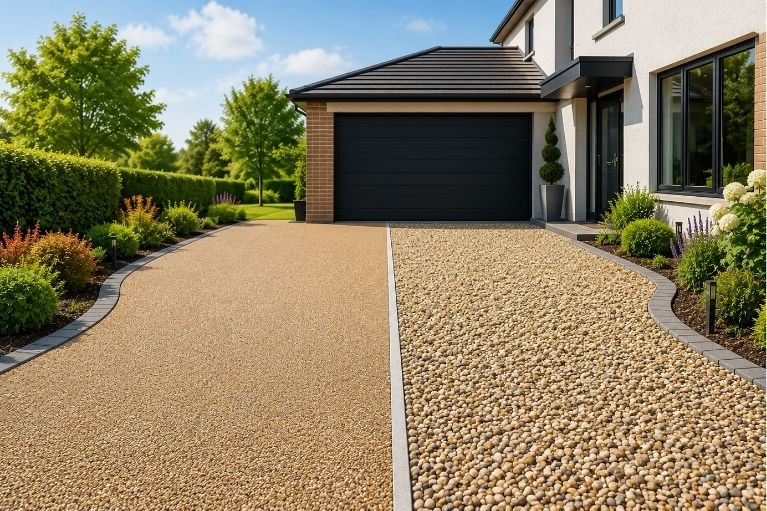
Here are the two main types of resin driveways, each offering unique benefits and design options for driveways, patios and paths; resin bound options are permeable and fully compliant with sustainable urban drainage systems, meeting SUDS regulations:
1. Resin Bound Driveways
A resin bound driveway is created by thoroughly blending natural aggregate stones with resin before applying the mixture onto a properly prepared base. The resulting surface is smooth, seamless, and fully permeable, allowing water to drain naturally while reducing puddling and protecting the sub-base. These driveways are ideal for resin pathways, garden borders, and front entrances.
Homeowners favour this option over traditional solutions like imprinted concrete due to its long-lasting durability, low maintenance, and resistance to weeds or surface damage. With countless resin driveway designs, patterns, and colour options available, a resin bound driveway offers both functionality and style, transforming the exterior of a property into an attractive, practical, and personalised space.
2. Resin Bonded Driveways
Resin bonded driveways are formed by applying resin onto an existing surface and then scattering loose aggregate stones on top. This creates a textured, decorative finish that allows for unique resin driveway patterns and personalised resin driveway ideas, giving homeowners flexibility in styling. While slightly less permeable than resin bound surfaces, these driveways remain durable, visually appealing, and low-maintenance with proper care.
Regular cleaning using a resin driveway cleaner keeps the surface looking fresh, and minor chips or wear can be addressed with resin driveway repair products. That makes it a practical and attractive choice for enhancing kerb appeal and complementing a property’s overall design.
How Resin Driveways Are Installed?
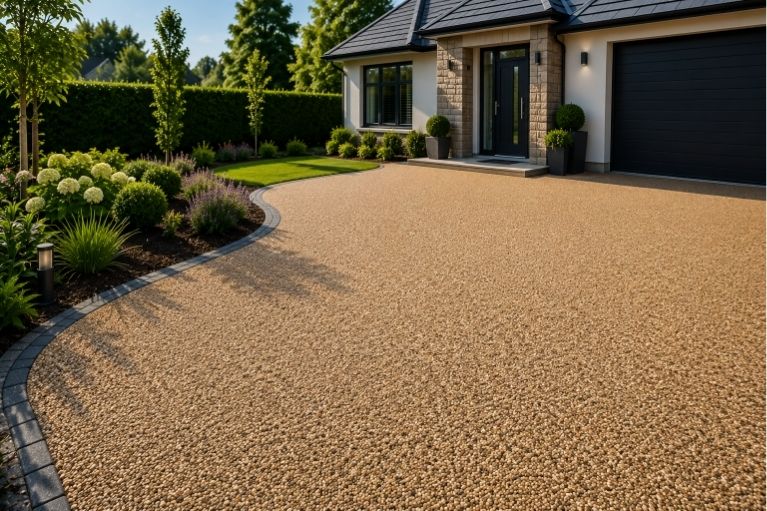
Here’s a step-by-step look at how resin driveways are installed, from base preparation to finishing touches, ensuring a durable and attractive surface:
1. Base Preparation
The installation begins with clearing and levelling the area. A stable base, often concrete or tarmac, is laid to prevent uneven settling and future resin driveway repair. Proper groundwork ensures durability and protects the driveway from cracking, pooling, or shifting over time. A well-prepared base supports smooth, long-lasting resin driveway designs.
2. Mixing with UV Stable Resin
Resin is carefully mixed with aggregate stones to coat every piece evenly. The pace of work matters too, as the resin mix is typically laid at about 20 metres per hour for a consistent finish. This ensures a consistent finish, maximises durability, and prepares the mixture for application. Accurate mixing is essential for permeability, smoothness, and low maintenance, especially for driveways and resin pathways where water drainage and visual appeal are important.
3. Application
The resin and aggregate mixture is spread evenly over the prepared base using trowels or screeds. Care is taken to create a smooth, uniform surface without gaps or uneven areas. This process defines the final texture, supports drainage, and allows homeowners to enjoy customised resin driveway patterns and low-maintenance finishes.
4. Curing
Once applied, the surface is left to cure. Walking is safe within a few hours, while vehicle access is typically possible within 24 hours, depending on the weather. Proper curing ensures strength, durability, and a seamless finish that resists cracking and requires minimal maintenance using a resin driveway cleaner.
5. Maintenance
After installation, routine cleaning maintains the driveway’s appearance. Using a resin driveway cleaner removes dirt, moss, and debris, keeping the surface smooth and functional. Regular inspection allows small issues to be addressed early with resin driveway repair, extending the lifespan of both resin pathways and driveways while preserving their aesthetic appeal.
Why Homeowners Prefer Resin Driveways?
Resin driveways have become a top choice for homeowners seeking a combination of durability, low maintenance, and aesthetic appeal. With their smooth, seamless surface and customisable resin driveway designs, these driveways offer a practical solution for modern homes. Many property owners also value the ability to extend the same material to resin pathways, integrating it with overall landscaping to create a cohesive look across the garden and entrance areas.
Here’s why resin driveways are a popular choice among homeowners:
- Long-lasting and resistant to cracks, frost, and wear
- Low-maintenance surface, easy to clean with a resin driveway cleaner
- Wide variety of resin driveway patterns and colour options, with UV-stable options often the best choice when long-term colour retention matters
- Reduces water pooling thanks to permeability
- Enhances overall kerb appeal and property value
These benefits make resin for driveway projects not only visually attractive but also functional, helping complement a property’s style while still being practical. With proper installation and minimal upkeep, homeowners enjoy a durable, stylish, and practical surface that maintains its appeal for years.
Start Your Resin Driveway Project
Now that you know the benefits and options available for resin driveways, it’s time to take the next step toward a durable and stylish driveway. A professionally installed surface improves drainage, resists weeds, and enhances your home’s overall look, while lasting for years with minimal maintenance.
If you’re considering a new driveway, resin pathway, or decorative upgrade, it’s important to work with experienced driveway specialists. At L&R Surfacing, we provide tailored quotes, professional installation, and long-term maintenance advice. Check out our Resin Driveways services to see options like resin bound, resin bonded driveways, and custom resin driveway designs. Contact us at enquiries@landrsurfacing.co.uk or call 0161 399 0351 to schedule a consultation or request a free quote!
Frequently Asked Questions About Resin Driveways
How long does a resin driveway last?
A resin driveway lasts 15 to 25 years, and three things decide where you land in that range: how well you prepare the sub-base, how consistently you maintain it, and the quality of the resin. UV-stable resin matters most, because it keeps the surface sharp instead of fading under years of sun.
Clean it regularly with a resin driveway cleaner and tackle small problems early to stop cracks and pooling. Both resin bound and resin bonded driveways hold up, giving you a low-maintenance surface that keeps its strength for decades.
How much is a resin driveway?
The cost depends on your driveway’s size, type, design, and shape. In 2026, homeowners pay around £6,000 on average, with installation running about £50 per m². As a guide, a 20m² driveway costs around £2,800, a 50m² driveway around £6,000, and a 100m² driveway around £10,000.
Resin bound driveways typically run £80–£120 per m², while resin bonded driveways sit lower at £60–£100 per m². Decorative resin driveway designs, patterns, or coloured aggregates push the price higher, and sub-base preparation, site conditions, and installation complexity shape the final figure too.
What base is needed for a resin driveway?
Every resin driveway needs a stable, level base. Installers rarely lay resin onto block paving unless they’ve assessed it carefully first, because resin demands a solid foundation. Concrete or compacted tarmac usually does the job, and sound existing concrete works too, as long as it suits the resin bound surface you’re planning.
Whatever the base, it must drain properly, stay free of debris, and compact firmly to stop pooling and cracking. Get this groundwork right and you extend the driveway’s life, cutting the odds of an expensive resin driveway repair.
What are the disadvantages of a resin driveway?
Resin driveways are durable, low-maintenance, and flexible in design, but they carry trade-offs. They cost more upfront than tarmac or concrete. Poor installation can leave you with uneven surfaces, pooling water, or resin that degrades early. And some property styles simply don’t suit a resin finish, which narrows your design options.
Stay on top of it, though, and most problems never surface. Clean it with a resin cleaner and fix minor faults as they appear, and both resin bound and resin bonded driveways stay functional, attractive, and long-lasting for years.