A wrong driveway surface can mean early cracking, poor drainage, and an expensive resurfacing job within just a few short years. Many homeowners assume tarmac and resin bound surfacing are more or less interchangeable, when in reality these two approaches are genuinely distinct, each suited to different budgets, timelines, and design priorities.
Tarmac has remained the default choice for UK driveways since the early 1900s, while resin bound surfacing, whose global aggregates market was valued at USD 835.33 million in 2025 and is projected to reach USD 1.10 billion by 2030 per Research and Markets, has grown quickly in popularity as a lower-maintenance alternative. This means more homeowners than ever are actively choosing resin over tarmac, rather than defaulting to it out of habit.
So, what exactly sets tarmac apart from resin, and when does each option make the most sense in the tarmac or resin driveway decision?
What Is Tarmac?
Tarmac (short for tarmacadam, and often used interchangeably with asphalt) is made from crushed stone bound together with bitumen, then rolled and compacted while hot to form a solid, weatherproof surface. Understanding what is tarmac at a material level helps explain both its strengths and its limitations: the bitumen binder cures quickly and handles heavy vehicle loads well, but it softens at higher surface temperatures and loosens gradually as the binder ages.
Common sectors and settings that rely on tarmac include residential driveways, car parks, and public roads, largely because it can be installed quickly and cheaply across large areas. In each case, a prepared sub-base is compacted, hot tarmac is laid and rolled, and a durable, ready-to-use surface results within days.
What Are The Main Types Of Tarmac Driveways?
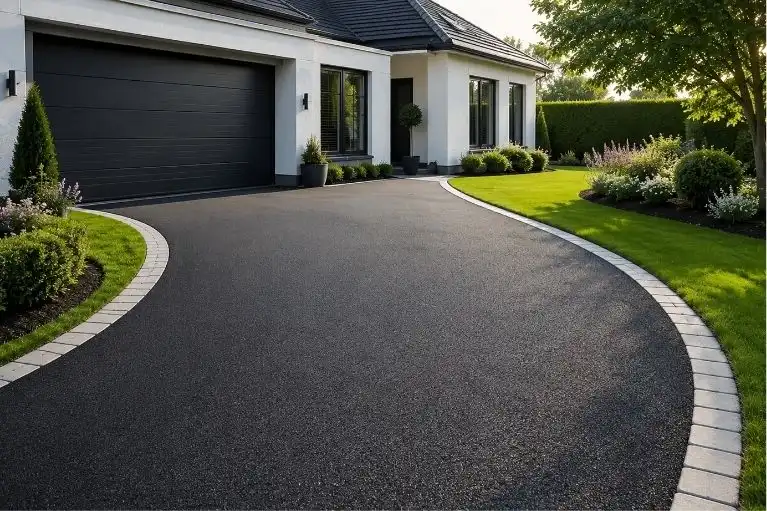
Tarmac is not a single product. It takes a few different forms depending on the finish and performance required:
1. Standard Black Tarmac
The most common and cheapest option, laid in a single uniform black finish across the full driveway area. It prioritises speed of installation and low cost over appearance, making it the default pick for large driveways, commercial forecourts, and budget-conscious homeowners who want a durable surface without paying for decorative extras or bespoke colour blending.
2. Coloured or Decorative Tarmac
A small number of coloured tarmac systems exist for homeowners who want more than plain black, though the colour range remains far narrower than resin overall. Some decorative finishes also use loose chippings to add colour, but the design range is still more limited. These systems typically use pigmented binders or chippings to introduce red, green, or buff tones, and resin driveways cost more precisely because that flexibility is built into the process.
3. Porous or Permeable Tarmac
A specialist tarmac mix designed to allow some water drainage through the surface, used where standard tarmac’s non-permeable nature would otherwise cause drainage problems. This variant blends open-graded aggregate with a modified binder, letting rainwater pass through rather than pool on top, generally suiting properties facing local SuDS requirements without switching to full resin surfacing. This helps surface water move away more effectively, as water drains through the structure instead of collecting on top.
What Is Resin Driveway?

A resin driveway is a newer type of surfacing made by mixing natural aggregates with a clear polyurethane resin, then trowelling the mixture by hand onto a prepared sub-base. Understanding what is resin driveway at a material level starts with the resin itself: because it is clear, the natural colour of the aggregate shows through, giving homeowners far more control over the finished look than tarmac allows.
The resulting flexible surface is highly durable, helps prevent weeds growing up from below, and drains rainwater rather than letting it pool. Compared with tarmac, resin surfaces are generally less prone to cracking, which is exactly why homeowners now treat it as a serious tarmac alternative when resurfacing their own driveways. Weighing up resin driveway pros and cons usually settles the are resin driveways good question well before installation day, since its core strengths rarely change from property to property.
What Processes Are Used In Resin Installation?
Resin bound installation as a resin bound system involves a specific sequence of steps, and the most common stages include:
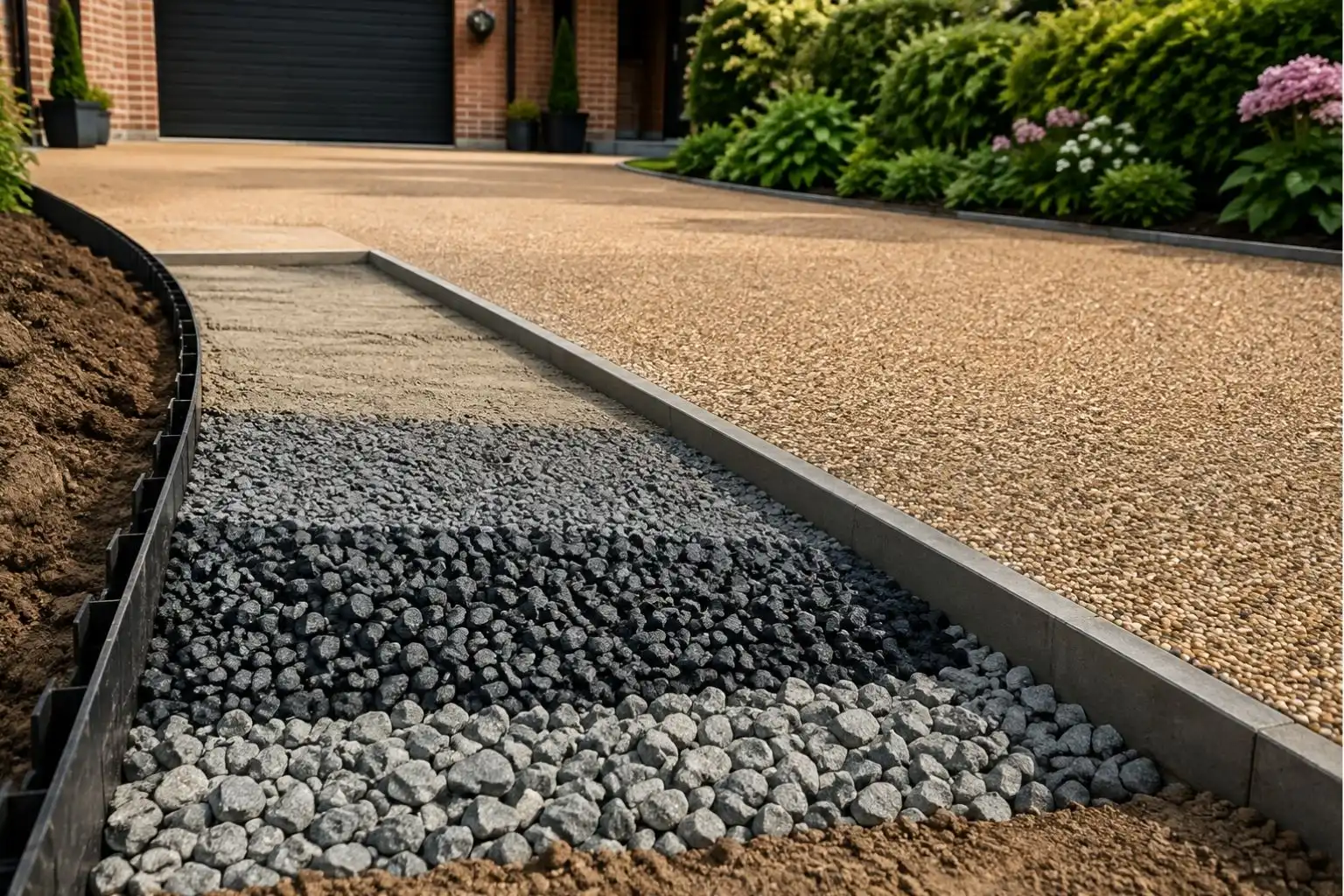
- Sub-base preparation: The existing surface is excavated and a compacted stone sub-base, typically around 150-160mm of MOT Type 1, is laid to support the finished driveway.
- Regulating layer: A porous asphalt or concrete regulating layer is often added over the sub-base to create a smooth, even base for the resin wearing course.
- Mixing: Natural aggregate is blended with clear polyurethane resin in carefully measured ratios immediately before laying.
- Trowelling and finishing: The resin and aggregate mixture is spread and trowelled by hand to a thickness of around 18-20mm, allowing for borders, curves, and bespoke pattern work that tarmac cannot replicate.
- Curing: The surface cures over 24 hours to a few days depending on weather, after which light traffic can typically resume. To achieve its expected lifespan, it should be installed correctly on a sound base by an experienced contractor.
Modern resin systems also rely on uv stable resin to prevent yellowing and maintain colour retention over time, along with correctly graded aggregates to keep the surface fully porous rather than partially sealed. A properly installed resin bound driveway typically lasts around 10 to 20 years.
What Sets Tarmac and Resin Apart?
Tarmac covers the fastest, most budget-friendly route to a finished driveway. Resin bound surfacing is a more specialist process built around drainage, appearance, and long-term low maintenance. For homeowners choosing the best surface and the right material, the tarmac or resin driveway decision usually becomes clearest in this table.
The table below summarises the key differences across the dimensions that matter most to homeowners:
| Aspect | Tarmac | Resin (Bound) |
| Average cost | £40-£70 per m² installed; generally cheaper to install | £50-£90 per m² installed |
| Lifespan | Around 15-20 years with proper care | Around 15-20 years with proper care; lower failure risk |
| Permeability | Non-permeable or semi-permeable; prone to pooling | Fully porous and generally SuDS-compliant |
| Maintenance | Resealing, weed/moss control, patch repairs | Low; occasional sweep or rinse |
| Appearance | Mostly black; limited colour range | Wide range of colours, blends, and patterns |
| Heat tolerance | Can soften from around 50°C | Stable to roughly 200°C |
| Installation time | 1-3 days | A few days up to about a week |
| Best suited for | Strict budgets, heavy vehicle use, fast turnarounds | Aesthetics, drainage, low maintenance |
Choosing between both tarmac and resin is mainly a balance of cost, aesthetic appeal, and maintenance needs. When people weigh up resin driveway pros and cons against this table, the pattern that emerges is fairly consistent: tarmac wins on speed and upfront price, resin driveways cost more at installation but tend to win on almost everything else over a longer ownership period.
Where Tarmac And Resin Are Each Used
Tarmac and resin are not competing on every job. In practice, the tarmac or resin driveway choice depends heavily on the property and how the driveway gets used. Examples across different situations include:
- Large residential driveways: Where a large area needs covering on a tight budget, tarmac remains the practical default, delivering a durable surface at a lower initial cost.
- Period and character properties: Homeowners restoring a period property often choose resin specifically for its wide colour range, since it can be matched to brickwork, render, or existing garden features in a way plain black tarmac cannot. This is often where are resin driveways good conversations start, since kerb appeal tends to matter more on these properties than raw square-metre pricing. In contrast, resin driveways offer strong visual flexibility and are also commonly preferred on modern residential properties for their kerb appeal.
- Flood-prone or drainage-sensitive areas: Where local drainage rules or a history of surface pooling are a concern, resin’s SuDS-compliant, fully porous structure is generally the stronger tarmac alternative. During heavy rain, it allows water to pass through the surface and can help reduce the risk of local flooding.
- Commercial or high-traffic surfaces: For car parks and heavy-use commercial areas where speed and cost dominate the decision, tarmac’s fast installation and lower price per square metre usually win out. It also remains better suited to heavy loads than resin in these settings.
Matching the surface to the property type, rather than defaulting to whichever material is cheaper or more familiar, is what separates a driveway that lasts from one that needs early repairs. If your project extends beyond the driveway itself, L&R Surfacing also offers:
How To Decide Between Tarmac And Resin Driveway
There’s no single correct answer to the tarmac or resin driveway question, since it depends entirely on your own priorities. If budget and speed matter most, and the driveway covers a large area with heavy daily traffic, tarmac remains a solid, proven surface that delivers reliable performance at a lower initial cost.
If low maintenance, drainage compliance, and kerb appeal sit higher on your list, resin is generally the stronger long-term investment. Given its guarantee periods, drainage benefits, and design flexibility, it’s easy to see why so many homeowners conclude that are resin driveways good deserves a confident yes, provided the installation is carried out properly over a correctly specified sub-base. Weighing up resin driveway pros and cons against your own budget, timeline, and drainage requirements is really the only reliable way to reach a decision that fits your property.
A short list to help decide:
- Choose tarmac if you need a large area covered quickly and affordably, and don’t mind a black, functional finish.
- Choose resin if drainage rules apply to your property, you want a specific colour or pattern, or you’d rather avoid ongoing repairs.
- Treat resin as a genuine tarmac alternative if kerb appeal and low maintenance matter more to you than the lowest possible upfront cost.
- Get a written quote for both surfaces, based on your actual driveway size, before making a final call, since regional pricing varies more than national averages suggest.
Whichever way the tarmac vs resin driveway decision goes for your property, the right answer usually comes down to matching the surface to how the driveway will actually be used, not just to the headline price on a quote.
Make The Right Choice For Your Driveway
Now that you understand how tarmac and resin compare on cost, durability, and drainage, the next step is choosing a new driveway and selecting the surface that best fits your property. Whichever option you lean toward, a professionally installed driveway improves kerb appeal, reduces long-term maintenance, and stands up to daily use for years to come.
If you are still weighing up tarmac vs resin driveway options for your home or business, working with experienced professionals makes the decision easier. At L&R Surfacing, our experienced team assesses your property and provides tailored recommendations to suit your budget, style, and drainage needs, helping you save money by recommending the right surface before work begins. Check out our Resin Driveways services to explore available colours, patterns, and finishes. Contact us at enquiries@landrsurfacing.co.uk or call 0161 399 0351 to schedule a consultation or request a free quote.
Frequently Asked Questions About Tarmac And Resin Driveway
Can resin be installed directly over an existing tarmac driveway?
In many cases, yes, provided the existing tarmac surface is structurally sound, free of major cracks, and not suffering from serious subsidence or standing water. A qualified installer will usually carry out a short site survey first, checking the condition of the sub-base, the depth of the existing tarmac, and the drainage of the driveway before confirming whether a resin overlay is suitable.
In some situations, the old tarmac can act as a stable base layer, reducing both cost and installation time compared to a full excavation. Where the tarmac has failed badly, removing it and starting from a properly compacted sub-base is usually the safer long-term option for durability.
How do I get a quote for a tarmac or resin driveway?
Getting a quote for a tarmac or resin driveway is usually straightforward, and most reputable installers, including L&R Surfacing, offer this free of charge with no obligation to proceed. You will typically need to provide the approximate size of the driveway, some photos of the current surface, and details of access to the property, such as gate width or nearby parking restrictions.
Any known drainage issues, existing damage, or preferences around colour, texture, and finish are worth mentioning upfront, since these can affect both pricing and the recommended surface type. Many installers can then arrange a short site visit to confirm measurements and provide a firm, written estimate within days.
Do I need planning permission for a resin or tarmac driveway?
In most residential cases, planning permission is not required for a tarmac or resin driveway, provided the surface allows rainwater to drain naturally rather than running off directly onto a public road or pavement. Permeable resin bound surfacing generally meets this requirement by design, since it lets water pass freely through into the ground below.
Standard, non-permeable tarmac laid over a certain surface area, often around five square metres at the front of a property, can require permission in parts of the UK unless drainage is included. Rules vary by council and property, so it is worth checking directly with your local planning authority or installer before committing to work.
Can I use my driveway immediately after installation?
Tarmac driveways generally allow light foot traffic once the surface has cooled, which usually takes just a few hours, though vehicles are typically kept off for at least two to three days while the material fully hardens underneath. Resin bound driveways often allow light use, including walking and occasional parking, within around 24 hours of installation.
Since the resin begins setting almost immediately once trowelled into place, full curing for both surfaces can take longer, particularly in cooler or damper weather, so installers usually advise avoiding heavy vehicles, sharp turning, or dragging heavy furniture across either surface for at least the first week to avoid marking the brand new finish. Proper curing can also help limit early algae growth where drainage is poor, especially on damp sites, and neither surface should face heavy loads immediately after installation.