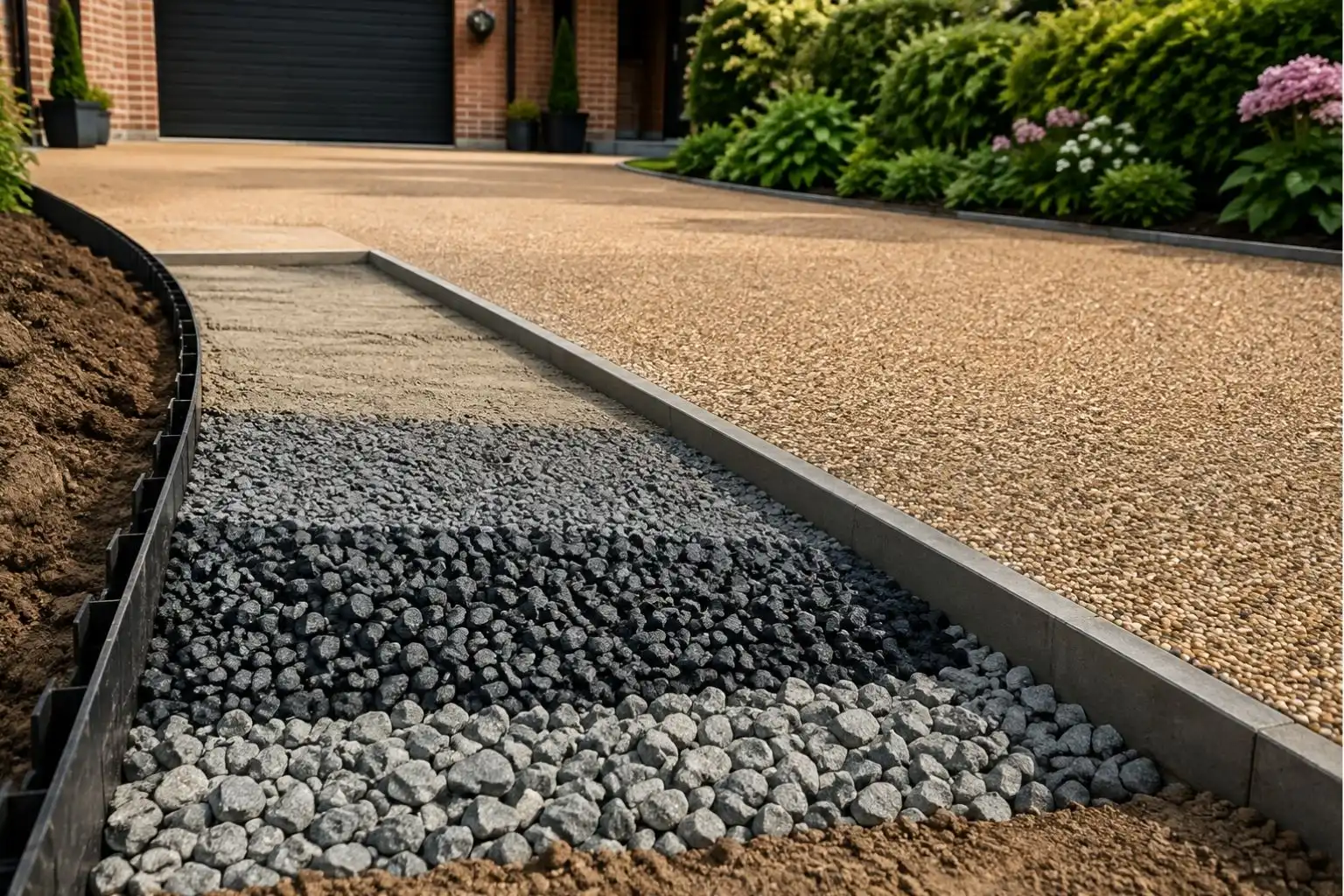
A lot of people ask about driveway resurfacing when their driveway starts looking rough. Cracks show up, stains don’t shift, and it just looks tired. The first thought is usually that it all needs to come out, but that’s not always the case. If the base is still holding up, the existing driveway can often be used.
Most of what you see on the surface builds up slowly. Cars going over it every day, the weather changing, bits of dirt and the odd oil stain all leave their mark. When it’s just the top layer that’s worn, you can work over the existing surface rather than start again. It’s more about improving what’s already there than replacing the whole thing.
What Is Driveway Resurfacing?
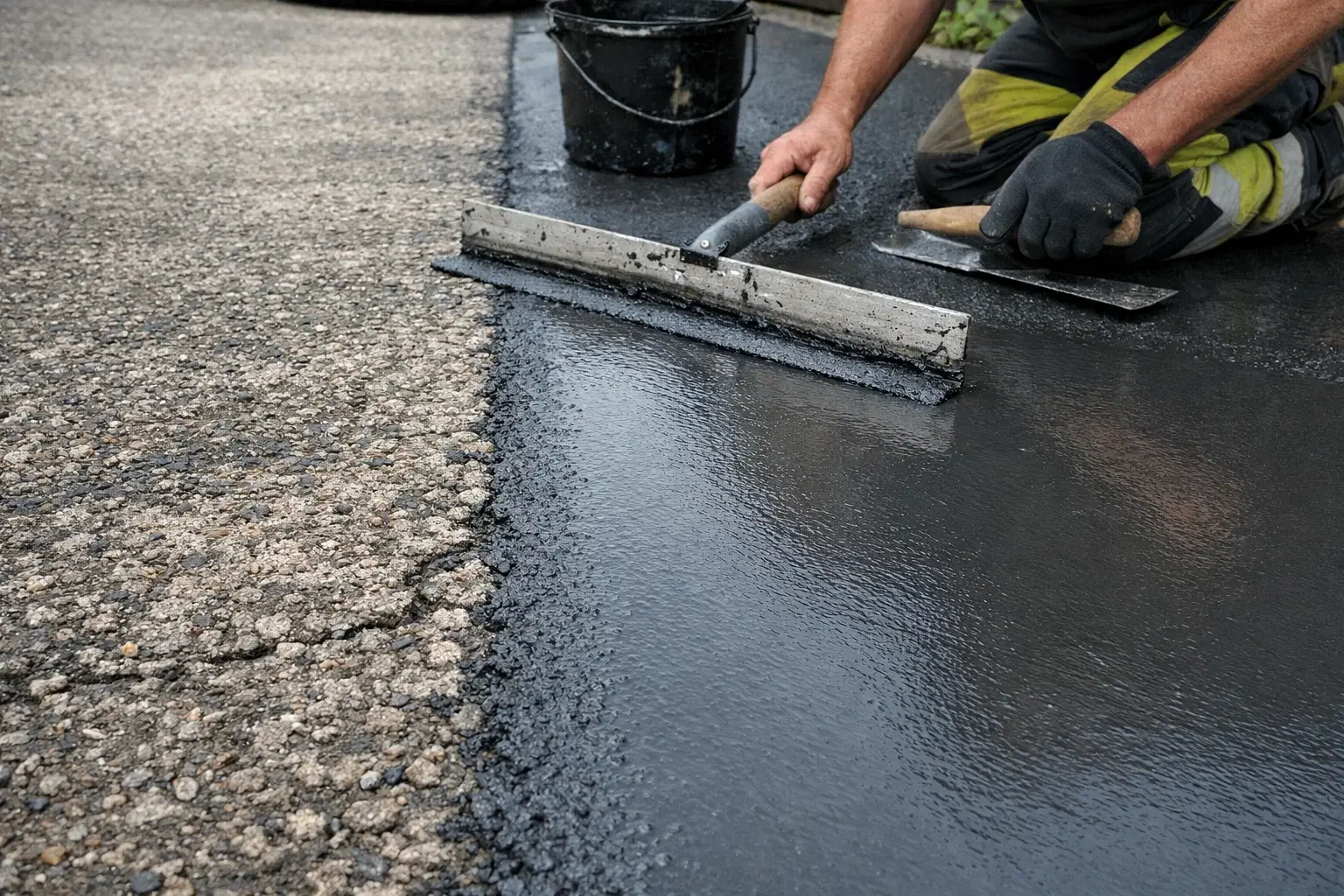
When people talk about driveway resurfacing, they’re usually just talking about sorting the top of the driveway surface rather than digging everything out. If the existing driveway is still holding up underneath, there’s no real reason to start again from nothing. It’s more a case of working with what’s already there.
You’ll see it done in a few different ways. On a concrete driveway, it might be a thin overlay or some form of concrete resurfacing to cover marks and level things out. In other cases, people go for resin bound finishes over existing concrete or even over an old tarmac driveway. Some older block paving driveways can be resurfaced too, depending on how stable they are.
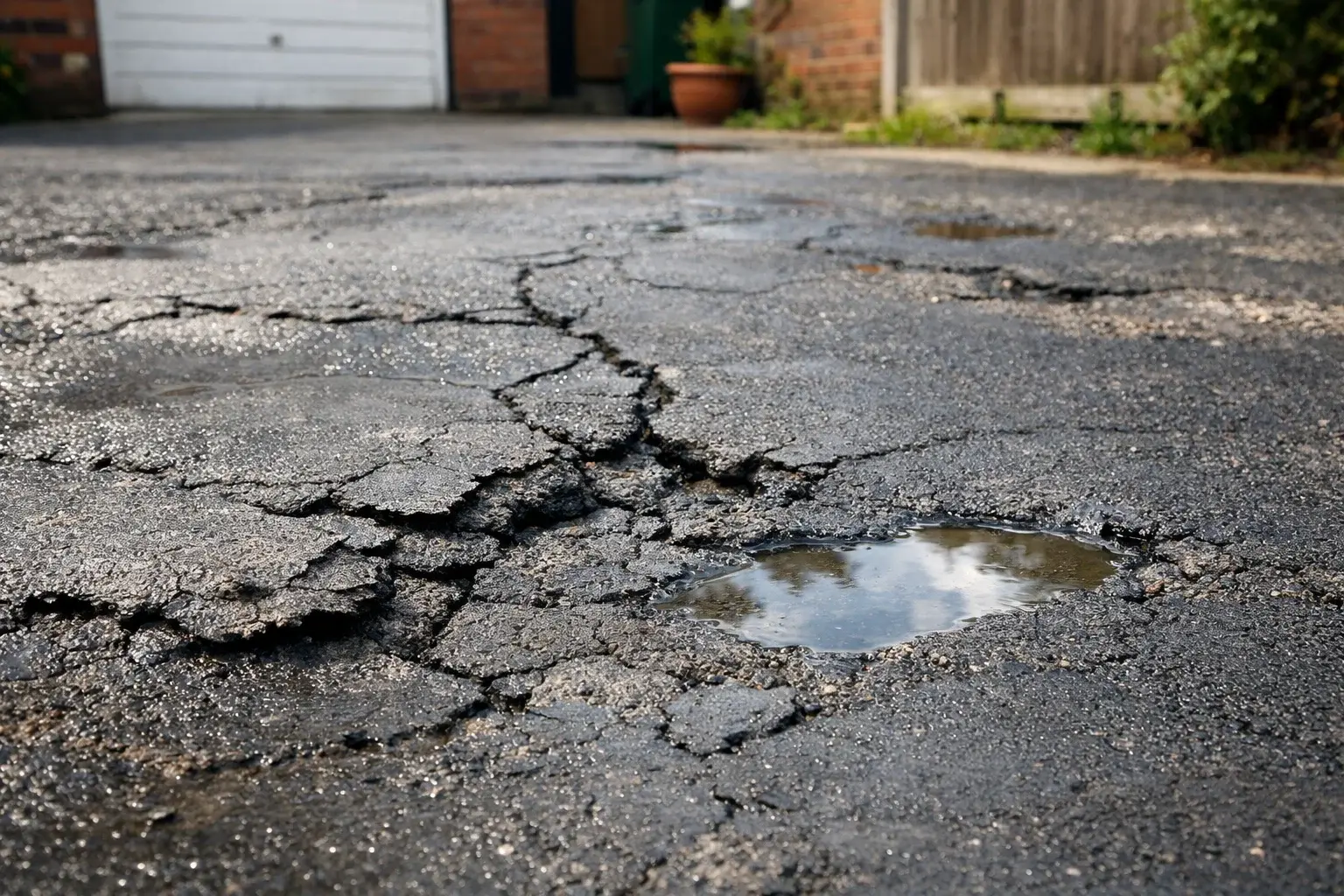
It’s worth saying though, this only really works when the base is still in decent shape. If there are deep cracks, movement, or bigger structural issues, then resurfacing will not fix that. In those cases, the driveway itself is the problem, not just the surface.
Can You Resurface Any Driveway?
Short answer, no. Some driveways are fine for resurfacing, others just aren’t. It mainly comes down to what is going on underneath. If the base is still solid and there’s no real movement, then resurfacing is usually an option. If the driveway surface is the only issue, that’s where it works best.
Problems start when the damage runs deeper. Things like deep cracks, sinking areas, or loose sections usually point to structural issues rather than just surface wear. In that situation, putting a new layer over the top will not last. The same goes for driveways with poor drainage. If there is water pooling or signs of flooding and water damage, it needs sorting properly before anything goes over it.
That said, a lot of driveways can be resurfaced if they’ve just worn down over time. Older concrete driveway areas, tarmac driveway bases, and even some block paving driveways can all be worked on, as long as they have a stable foundation. It really comes down to a proper look at the existing surface before deciding what makes sense.
Signs Your Driveway Is Suitable for Resurfacing
You can normally tell just by looking at it. If the driveway still feels solid when you walk on it and nothing’s moving about, that’s usually a good sign. A worn driveway surface, a few marks or light cracks are pretty normal and don’t always mean there’s anything wrong underneath.
A lot of the time it’s just the top that’s gone. You see it on older concrete driveway areas where the finish has faded or picked up oil stains over the years. Same with some tarmac driveway or even bits of block paving that have started to look tired. If it’s only surface wear, that’s where driveway resurfacing makes sense.
It’s different if parts of it feel loose or uneven. Bigger cracks, dips, or spots where water just sits there usually mean there’s more going on. Once the base starts to go, covering it up will not really solve it, it just hides it for a bit.
Driveway Resurfacing Options Explained
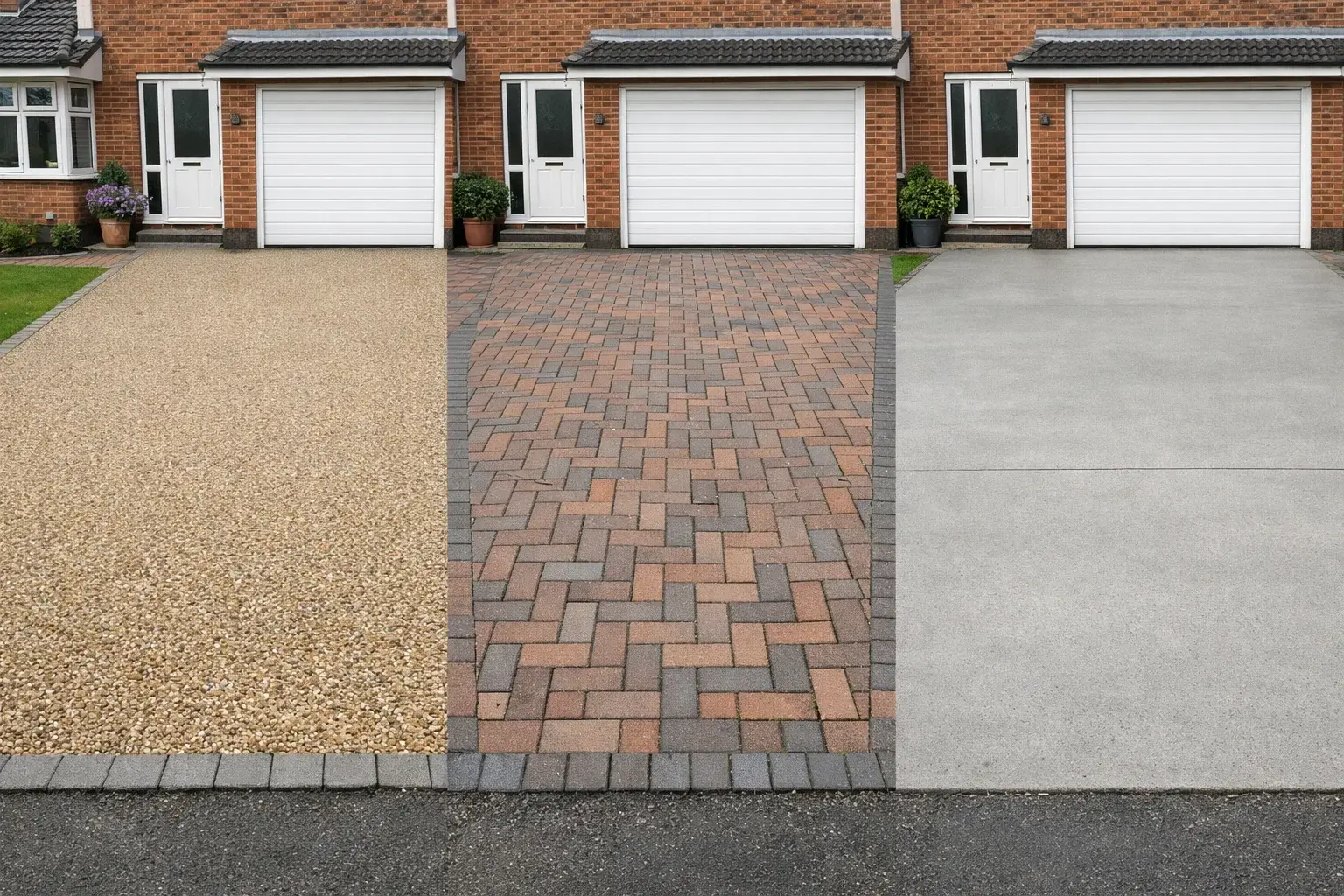
There isn’t just one way to go about driveway resurfacing, it depends what you’ve already got down and what sort of finish you’re after. Some people stick with what’s there and just improve it, others use it as a base for something completely different. It’s not always a straight swap.
With a concrete driveway, you’ll often see some form of concrete resurfacing used to smooth things out and cover marks. That works well on plain concrete that’s still in decent shape. Others go further and opt for imprinted concrete, which adds pattern and texture rather than just a plain finish. On the other hand, a lot of homeowners go down the resin bound route, especially when they want something cleaner looking and more modern. These systems can go over an existing surface if it’s been prepped properly.
You’ve also got options like block paving driveways, gravel driveways, or even refreshing a tarmac driveway depending on the situation. It really comes down to the condition of the base and what’s going to hold up long term. Some surfaces just need tidying up, others need a bit more work before anything new goes on top.
When Resurfacing Isn’t Enough
Not every driveway can be saved with resurfacing. Sometimes it looks alright at first, then you notice bits dipping or moving when you walk across it. That’s usually a sign the problem isn’t just the driveway surface, it’s what’s underneath.
Cracks are another one. Small ones are normal, but if you’ve got deep cracks or ones that keep coming back, that’s different. Same with areas where water just sits there after it rains. Those kinds of drainage issues tend to get worse over time, not better, even if you cover the top.
At that point, it’s not really a resurfacing job anymore. The existing driveway needs proper groundworks first, otherwise anything you put over it won’t last. Sometimes that means repairs to the base, sometimes it means starting again, just depends how far it’s gone.
How Driveway Resurfacing Is Done
It’s not as complicated as people think, but it’s not just a case of throwing a new layer on either. The first step is always checking the existing driveway properly. If there’s loose bits, they get taken out. If parts of the driveway surface are uneven, that needs sorting before anything else goes down.
Prep is where most of the work is. Things like removing loose material, cleaning off dirt and oil stains, and making sure the existing surface is solid all matter. If that part is rushed, the new layer won’t bond properly. That’s usually where problems come from later on.
Once it’s ready, the new finish goes on. That might be concrete resurfacing, a resin bound system, or something else depending on the job. The idea is to create a smooth, even layer over the top that holds up to vehicle traffic and everyday use. If it’s done right, it should feel like a completely different driveway once it’s finished.
How Long Does a Resurfaced Driveway Last?
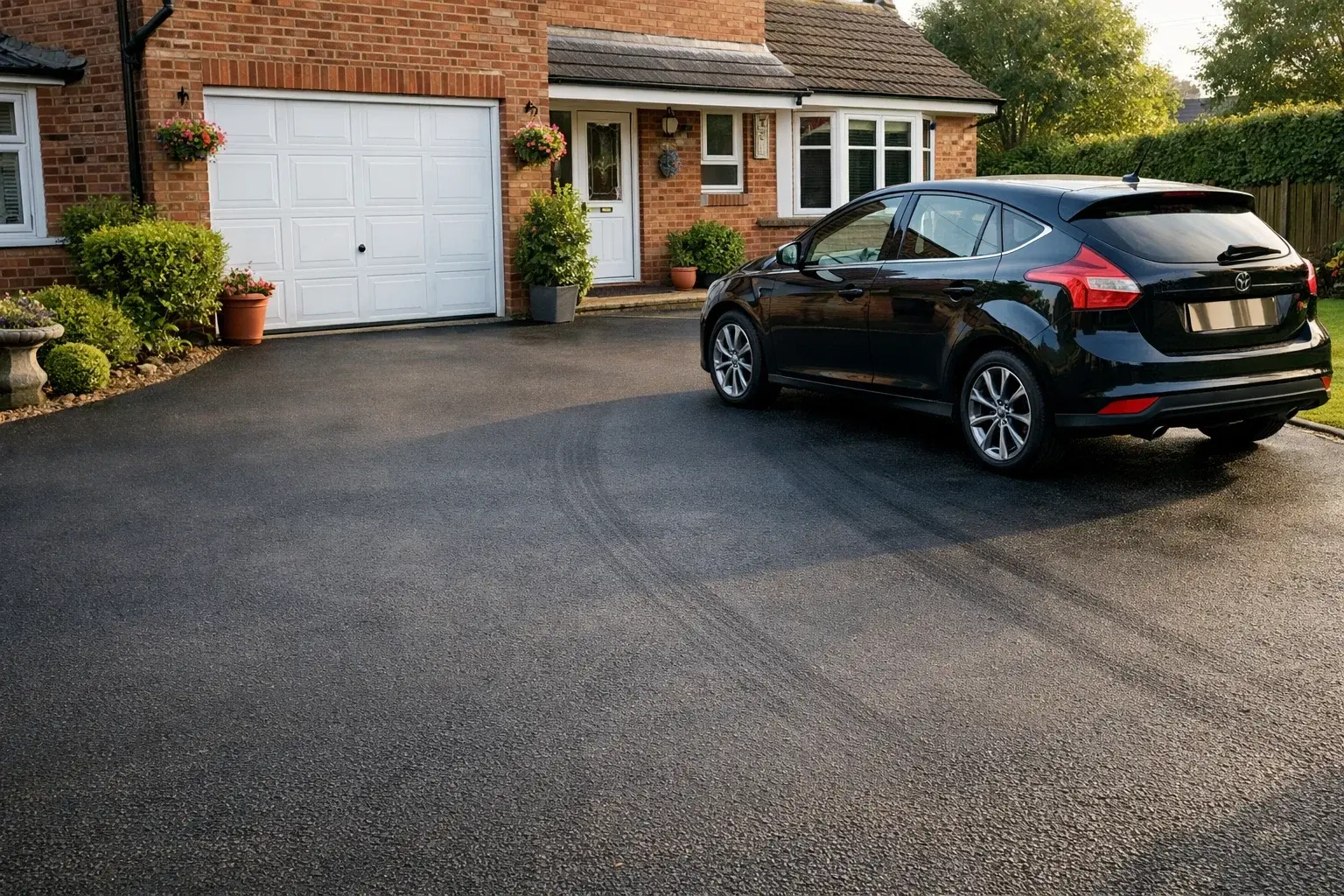
This is one people ask all the time. Truth is, it depends on what’s underneath and how well it’s been done. If the existing driveway is solid and the prep work has been done properly, a resurfaced driveway surface can last for years without much trouble.
What usually shortens the life of it is what was already there before. If the base wasn’t right, or there were early signs of structural issues, those tend to come back through over time. Things like water pooling, heavy vehicle traffic, or poor drainage can also wear it down quicker than expected.
If everything’s been done right though, it holds up well. Most surfaces just need a bit of proper maintenance now and again to keep them looking decent. Nothing major, just keeping it clean and dealing with small issues before they turn into bigger ones.
Is Driveway Resurfacing Worth It?
For a lot of people, it makes sense. If the driveway is still solid and it’s mainly the top that’s worn, resurfacing can sort it without turning it into a bigger job than it needs to be. It’s a way of improving what’s already there rather than starting again for no real reason.
You see it a lot with older concrete driveway areas or tired tarmac driveway surfaces where the structure is still fine, just the finish has gone. A decent driveway resurfacing project can tidy all that up and give it a cleaner look. It also tends to improve kerb appeal, especially when it ties in with the surrounding landscaping.
It’s not always the right call though. If the existing surface is breaking up or there are signs of deeper problems, it can end up being a short-term fix. In those cases, it’s better to deal with it properly once rather than keep going over the same issues.
Choosing the Right Finish for Your Driveway
Once you know resurfacing will work, the next thing is deciding what to actually put down. There isn’t one set answer here. It depends on the existing driveway, how it’s used, and what sort of finish you want day to day. Some people just want it cleaned up, others want something that looks completely different.
A concrete driveway can be resurfaced to look a lot smoother and more uniform, especially if it was just plain concrete to begin with. Others go for resin bound finishes, which tend to give a neater, more modern look and are known for being low maintenance. You also still see block paving driveways and gravel driveways used in resurfacing projects, depending on what suits the property.
It usually comes down to what will hold up best over time. Things like how much vehicle traffic it gets, whether there are any past drainage issues, and how the driveway surface has performed before all play a part. A good finish is not just about how it looks on day one, it needs to last without becoming a problem again a year later.
Common Mistakes With Driveway Resurfacing
One thing that happens a lot is people jumping in too quickly. The driveway looks worn, so it feels like it just needs a new surface. Sometimes it does, sometimes it doesn’t. If the existing driveway has any movement in it, that tends to come back through whatever you put on top.
Prep is another one. It doesn’t get much attention, but it makes a difference. If there’s loose bits left on the driveway surface or things like old oil stains, the new layer doesn’t always sit right. It can look fine at the start, then after a bit of use you notice small cracks or patches lifting.
Then there’s picking the finish. Not everything works everywhere. Some driveway material holds up better than others depending on how it’s used. If there are drainage issues or a lot of vehicle traffic, that needs thinking about first, otherwise you end up back where you started.
Is Driveway Resurfacing the Right Choice for You?
It really just comes down to the condition of the driveway. Some are still solid underneath and only look bad on the surface, so resurfacing works fine. Others have a few more issues going on, and that’s where it starts to fall short.
You don’t always spot it straight away either. A surface might look like it just needs tidying up, but then you notice dips, cracks opening back up, or water hanging around after rain. That’s usually a sign the existing driveway needs a bit more attention before anything goes over it.
If you’re unsure, it’s easier to get it looked at properly. At L&R Surfacing, we’ll take a look at the driveway as it is and tell you what makes sense from there. No guessing, just a straightforward answer based on what’s actually in front of us.