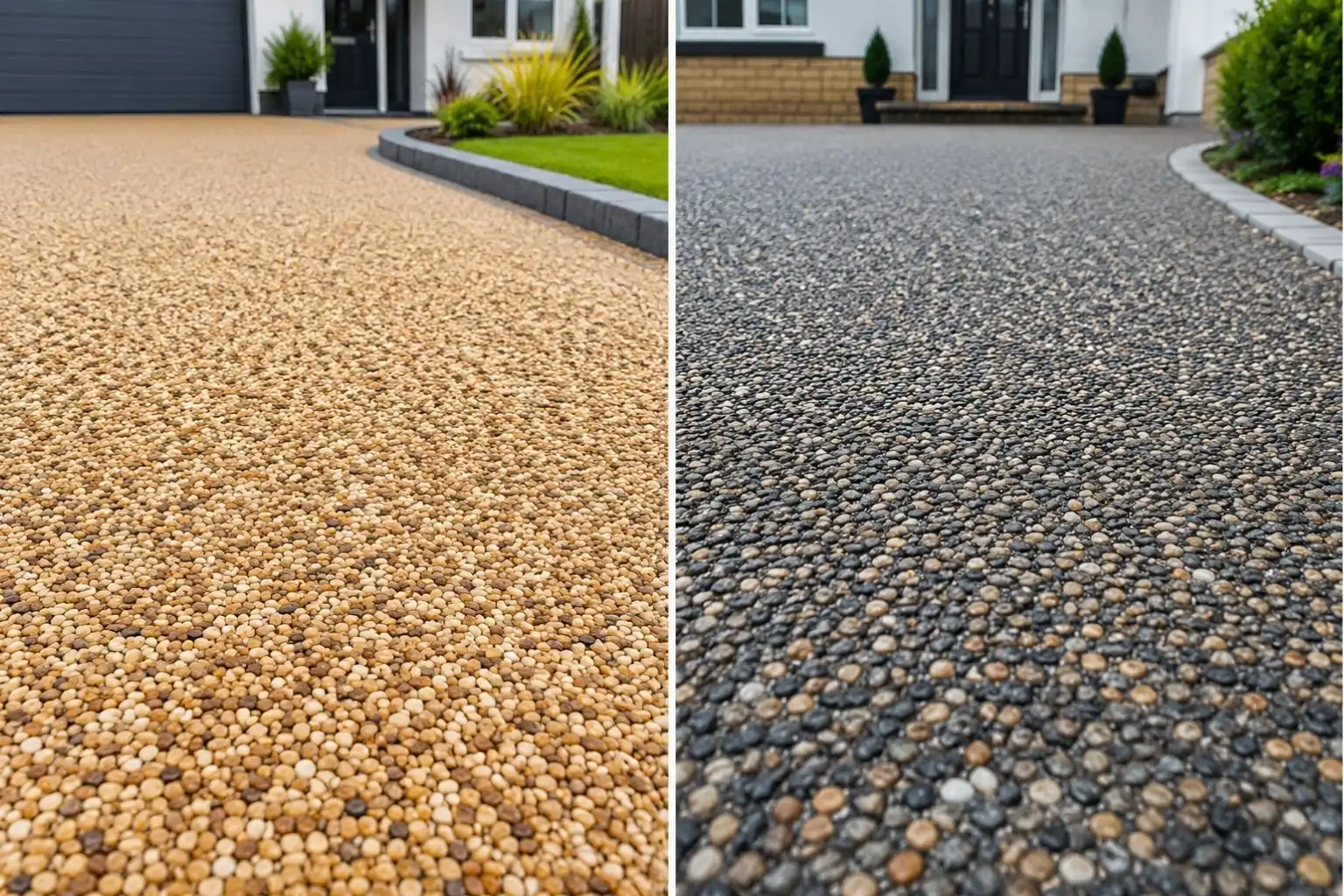
A driveway can look perfectly finished on installation day and still be set up to fail beneath your feet. When the sub-base is too shallow, poorly compacted, or unsuitable for the ground, the surface can gradually sink, crack, develop wheel ruts, and hold water. By the time those problems become visible, repairing the surface alone may mean paying twice for the same driveway.
Research by the Royal Horticultural Society found that around one in four front gardens in Britain is now completely paved over, putting more pressure on ground that was never originally built to carry vehicles. That makes the sub-base one of the most important parts of a driveway project. So, what is the best sub base for a driveway, and how can you tell if yours has been built to handle the load?
Why Does the Sub Base Decide How Long Your Driveway Lasts?
A driveway is a layered structure, and the part you see is the thinnest layer of the lot. Underneath sits the sub base, a compacted, load-bearing bed of crushed stone that combines strength, stability, and good compaction characteristics to spread the weight of a vehicle sideways across the ground below so no single point carries the full load. Build it well and a resin or imprinted concrete surface holds its shape for decades. Build it badly and the finish cracks, dips, or ponds water within a few winters, however smart it looked on day one, whereas a strong sub-base resists surface shifting over time.
Ground conditions across Greater Manchester and Cheshire make this more pressing than homeowners tend to expect. Much of the region sits on clay and glacial till, and those soil conditions affect both weight bearing and drainage capabilities because the ground takes on water through winter, softens, then shrinks back in a dry summer. A sub base that would be perfectly sound on firm gravel will move on ground like that. It is why every project starts at the groundworks stage with proper excavation and an honest look at what is underneath, rather than working to a fixed depth and hoping.
Which Sub Base Materials Are Actually Worth Using?
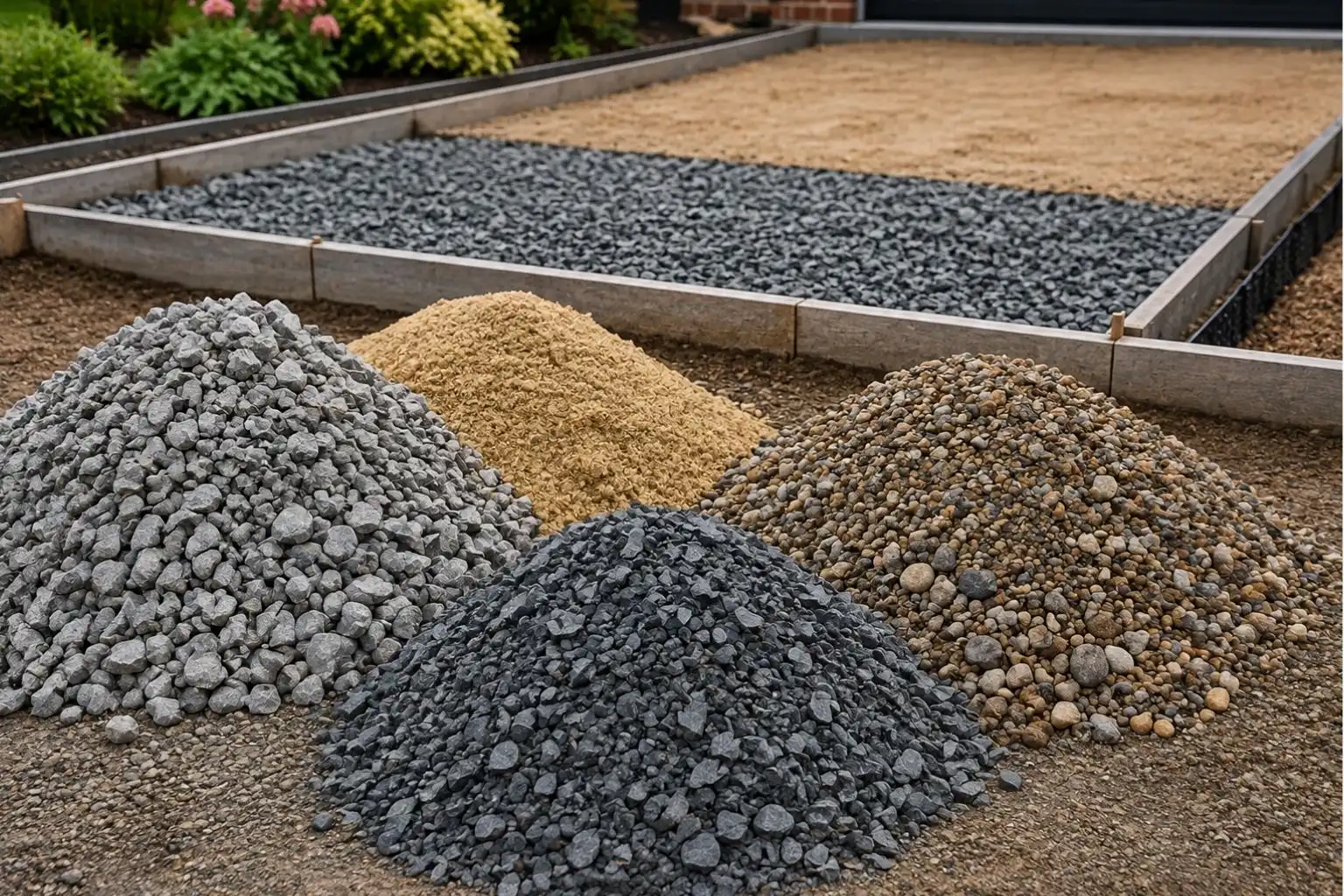
Merchant names vary from yard to yard, which is where much of the confusion starts. The table below sets out what you are likely to be offered.
| Material | Grading | Best used for | Watch out for |
| MOT Type 1 | 0 to 40mm, well graded with fines | A sub base aggregate with excellent load-bearing capacity for heavy traffic areas, widely used in road construction for driveways and car parks | Not suitable under permeable systems; for highways, standard-compliant material should meet SHW Clause 803 for highway works |
| Open graded clean stone (Type 3 or 4/20mm) | Fines removed | Permeable paving and SuDS build ups | Lower density, needs the correct laying course |
| Recycled Type 1 | 0 to 40mm crushed concrete | Domestic driveways on a tighter budget; crushed concrete is a recycled alternative that still offers load-bearing strength | Batch consistency varies, so check the source |
| 6F2 selected fill | Coarse recycled concrete and brick | Capping over very soft ground | Not a sub base in its own right |
| Scalpings or crusher run | Uncontrolled, often 0 to 75mm | Tracks and temporary access | Not graded to Type 1 standard, avoid on a finished drive |
| Type 2 | 0 to 50mm, higher fines content | Largely superseded as fill | Rarely specified for driveways now |
Worth checking before the wagon turns up:
- Ask what the material is, not just what it costs. Scalpings and crusher run are cheaper than Type 1 for a reason, and neither is graded to the same standard; scalpings may shift if not properly capped.
- Recycled crushed concrete graded to Type 1 is a sound, lower cost option, and recycled materials can help reduce the project’s carbon footprint, but batch quality varies, so ask where it came from.
- Check the compaction plan. A single pass with a light wacker plate over a deep layer is the commonest corner cut in driveway work.
- Confirm whether your build up needs to be permeable. Since October 2008, laying more than five square metres of impermeable hard surface to the front of a house has generally required planning permission unless run off is directed to a permeable area within your own boundary. The Planning Portal sets out the current position.
- Do not let anyone lay resin directly onto loose stone. Resin bound needs a solid base of new tarmac or concrete over the sub base, never the sub base alone.
How Do You Build the Best Sub Base Aggregate for a Driveway?
The process runs the same way whether the finish is resin bound, imprinted concrete, or block paving. Only the depth, the material, and the installation method change, because proper installation is critical for sub-base integrity.
1. Excavate and Inspect the Ground
Strip out topsoil, roots, and the old surface down to firm formation level. Soft or springy ground needs treating now, not covering over, and heavy or weak ground may need a thicker or engineered sub-base.
2. Match the Material to the Surface Going on Top
MOT Type 1 sub base is the standard choice under resin, imprinted concrete, tarmac, and block paving. A permeable sub base of open graded clean stone is used where water has to pass straight through into the ground below for water drainage.
3. Set the Depth Against the Ground, Not a Rule of Thumb
Roughly 100mm is enough on firm gravel. 100mm to 150mm is the usual range for a standard family car on average subsoil, but site conditions can require more. Soft clay calls for 200mm or more, and very wet or made ground can need 300mm.
4. Lay a Separation Membrane Where the Ground is Soft
A non woven geotextile stops sharp stone punching down into clay and fine soil migrating up into the sub base, which is what destroys the interlock.
5. Compact in Layers
Place the stone in lifts of no more than 150mm, compacting each before the next goes down. A full 300mm tipped in and rolled once is solid on top and loose underneath, which is where first year sinking comes from.
6. Build in Falls and Drainage
The finished surface should fall away from the house, with water drainage directed away from house foundations as well as away from the public highway. A permeable resin driveway deals with this within the surface itself and performs well across normal weather conditions.
Which Driveways Need Which Sub Base?
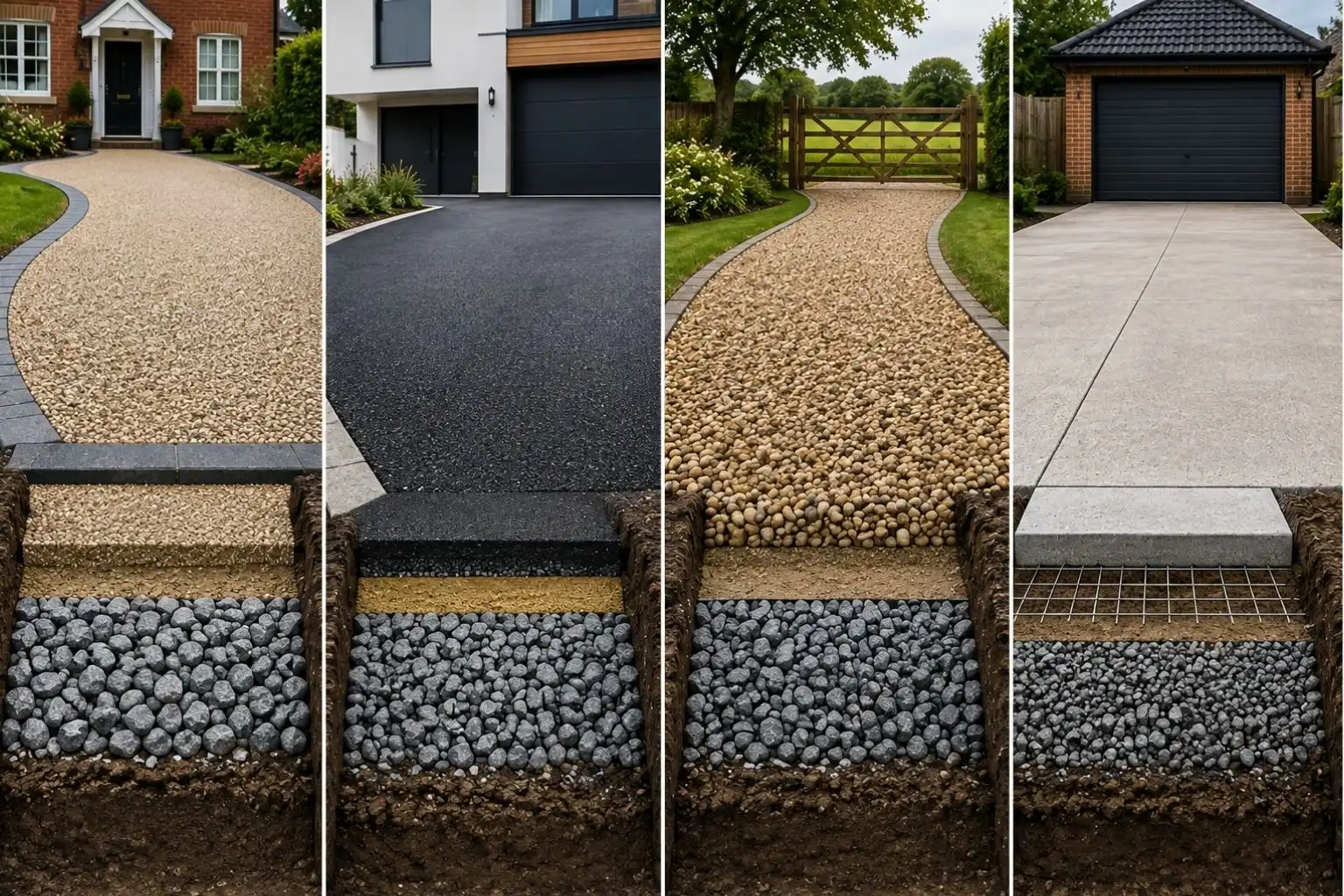
The right answer depends on the surface material going on top and what is underneath, because the finish affects sub-base requirements. For a front driveway finished in imprinted concrete on average Cheshire subsoil, 150mm of well compacted MOT Type 1 sub base over a membrane is the sensible specification, and Type 1 Granular Sub-Base is the industry default for driveways in the uk because it creates a stable base.
For a permeable resin surface, drainage needs dictate whether Type 1 or Type 3 is used, and for permeable driveways built to satisfy SuDS guidelines that restrict runoff into public drains, a free-draining sub-base of open graded stone is usually the right choice; new driveways over 5 m² must meet those drainage rules through the chosen build-up, especially in an environment with heavy rain. Fines in the stone would block the voids the design depends on, trap water, and contribute to frost damage.
A typical example: a front driveway in Wilmslow of around 40 square metres, finished in resin bound gravel. Lifting the old surface revealed soft clay with standing water in the ruts, so the dig went deeper than planned, a geotextile went down across the formation, and 200mm of Type 1 was compacted in two lifts rather than the 150mm allowed for.
Clay soils often need extra coarse aggregate or a deeper build-up for stability, and that matters even more on wetter plots. That drive needed roughly 17 tonnes of stone instead of 13, an unwelcome extra at the time and far cheaper than relaying a sunken surface three winters later.
As a rough guide, one tonne of Type 1 covers about 10 square metres at 50mm compacted depth. Homes on made ground, old garden plots, or anywhere a drive has already settled are worth surveying before any driveway sub base depth is committed to paper. The same applies where a new path or patio ties into the drive, since paths and patios sit on shallower foundations and need levels planned across the scheme.
Build It Right From the Ground Up
If you take one thing away, make it this: ask any contractor quoting for your driveway to state the sub base material and compacted depth in writing on the quotation, alongside the finish. Measure the length and width in metres first so you can check the quantity properly. Then multiply the area by the depth to get cubic metres, multiply that by 1.3 for compaction, by 1.1 for wastage, and by 1.6 to convert to tonnes; for example, a 5m x 5m patio at 100mm depth needs 5.72 tonnes.
A quote specifying 150mm of compacted MOT Type 1 over a separation membrane can be compared fairly against another. A quote that says only “prepare base and lay resin” cannot, and the price difference usually sits in the layer you will never see again.
L&R Surfacing has been installing resin driveways and imprinted concrete across Greater Manchester, Cheshire, and Salford since 2016, from Altrincham and Hale to Wilmslow, Bramhall, Stockport, and Didsbury. Our groundworks stage is quoted properly rather than glossed over, because the base is what the ten year written guarantee ultimately rests on. Get a free quote and site survey at landrsurfacing.co.uk or call 0161 399 0351.
Frequently Asked Questions About Sub Bases for Driveways
Can you check my existing driveway sub base before quoting?
Every quote begins with a free site survey, where we properly assess the ground. Trial holes, checking for standing water, and seeing what a previous installer left behind all tell us whether the existing driveway sub base can be reused or needs digging out.
That assessment happens before any figures go in writing, so the specification you receive reflects your actual ground rather than a standard depth applied to every job.
Do you remove the old driveway and excavated material?
Excavation and spoil removal form part of the groundworks stage, so there is no need to arrange skips or tipping yourself. How much comes out depends on how deep the dig goes, which is set by what the survey finds underneath.
Where a driveway sub base has to go deeper than first expected, we explain why before the work continues rather than after the material has already left site.
Does the ten year written guarantee cover the sub base?
L and R Surfacing issues a ten year written guarantee on completed installations, and the base is part of what we install rather than a separate item bolted on. Guarantee wording matters, so ask for a copy of the terms alongside your quote and read what is covered before work begins.
A contractor unwilling to put sub base preparation and guarantee cover on paper is worth a second thought.
How long does it take to lay a driveway sub base?
Timescales come down to access, the size of the drive, and what the excavation uncovers. On a typical front driveway the dig and base preparation take a day or two, with compaction done in layers rather than rushed into a single pass.
Wet weather can stretch that, because a driveway sub base binds best slightly damp and will not compact properly when saturated. Your site survey should give a realistic window.