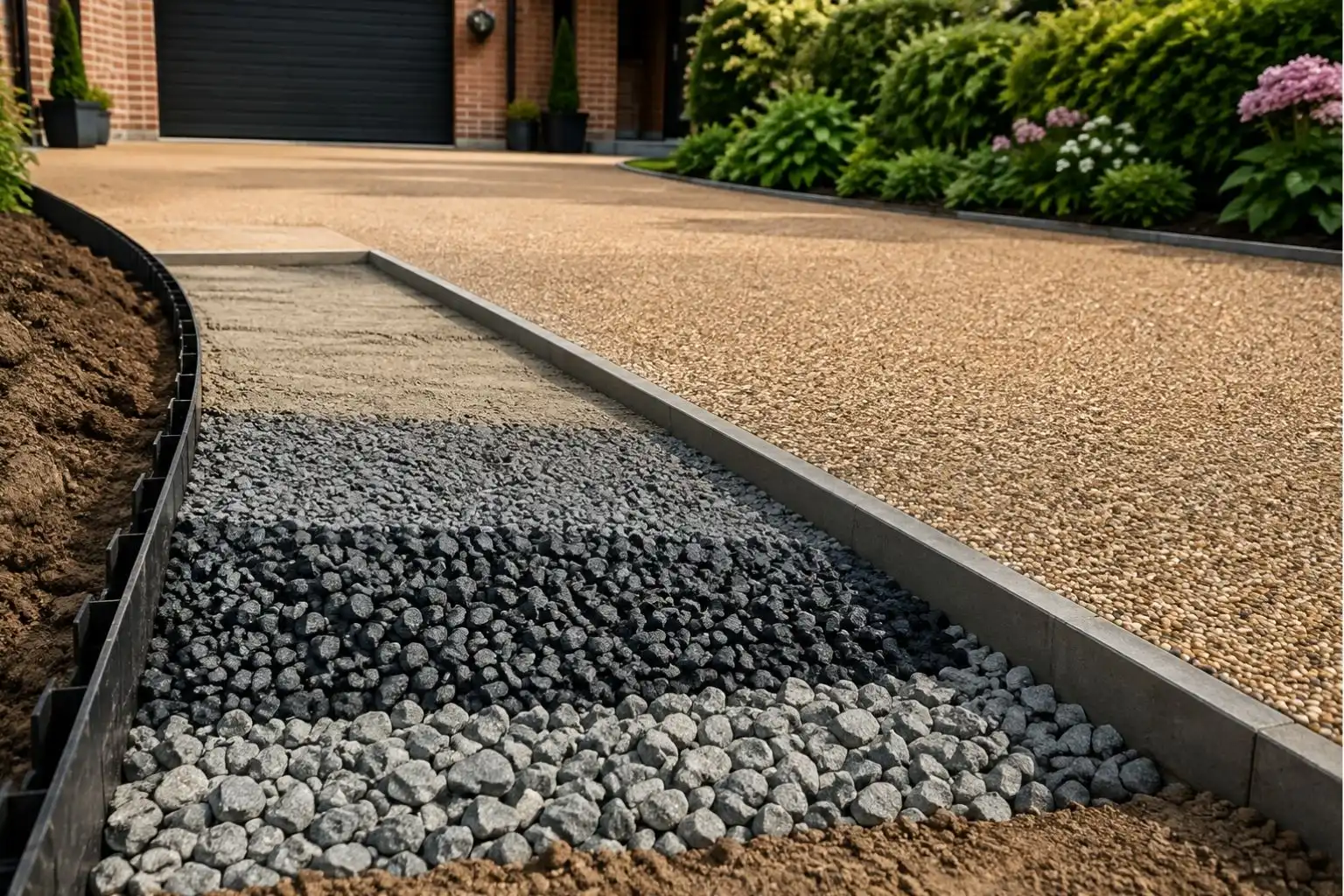
Your driveway is more than just a parking space for your car. It welcomes you home each day, frames your property, and shapes first impressions. An imprinted concrete driveway offers one of the most impressive alternatives available today, combining decorative detail with long-lasting strength in a way few other surfaces can match.
We’re not talking plain grey concrete, it’s a decorative surface that is textured and coloured to replicate brick, slate, cobblestone or natural stone. It looks like premium paving without the loose blocks, shifting joints or constant weed growth. Homeowners across the UK are choosing this option because it makes good sense, combining visual impact with a durable finish.
In this guide, we’ll lead you through everything you need to know about imprinted concrete, why it works, and how to extend its lifespan. By the end of the journey, you’ll be amazed by the colour and pattern choices and know what represents good value.
What Is Imprinted Concrete?
Imprinted concrete is a solid concrete slab textured and coloured to look like other materials, like brick or slate. Brick and slate have their downsides: laying them is time-consuming, and imprinted concrete cuts the time and labour cost to create the look you want for your driveway, patio or courtyard.
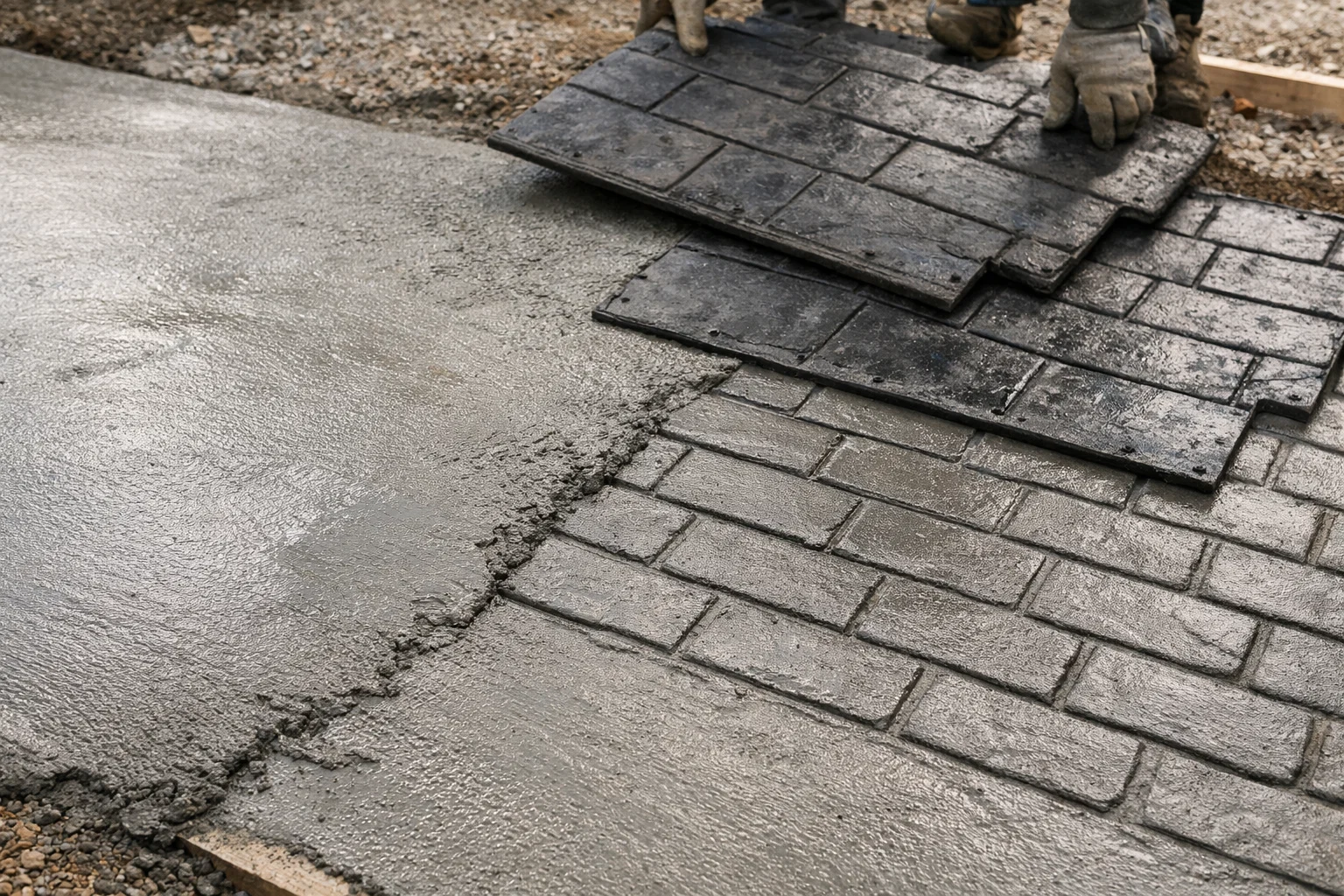
Concrete is poured into a continuous layer to create an imprinted concrete area. Then, the installer presses specialist tools into the wet cement to make the desired pattern. Colour is added during the process, then the concrete is cured and sealed to produce the beautiful, enduring surface you’ve selected.
How Imprinted Concrete Differs from Standard Concrete
Concrete is strong and long-lasting, but plain cement is – well, boring. Plain and grey, it is uninspiring and can make your home look somewhat industrial. Imprinted concrete is decorative, textured and coloured. Yet, unlike block paving, it has no loose joints for weeds to take root.
This material delivers the strength of traditional concrete with the appearance of high-end paving, without the weed issue.
The Pros and Cons of an Imprinted Concrete Driveway
If you’re planning a new driveway, you’ll want to weigh up the pros and cons of the various options.
Advantages
Imprinted concrete offers several benefits:
- It’s one of the most durable options when correctly installed
- You have a wide choice of patterns and colours
- It has no joints for weeds to grow through
- Maintenance is low
- Well-chosen, the finished product is beautiful and will add value to your property
- The surface is strong and continuous
Disadvantages
Like all products, imprinted concrete has some downsides
- Concrete can crack if poorly installed
- Repairs are visible on the surface
- Concrete requires resealing every few years
- If neglected, the surface can become slippery, though imprinted concrete is less slippery than a standard concrete driveway.
Popular Patterned Imprinted Concrete Driveways
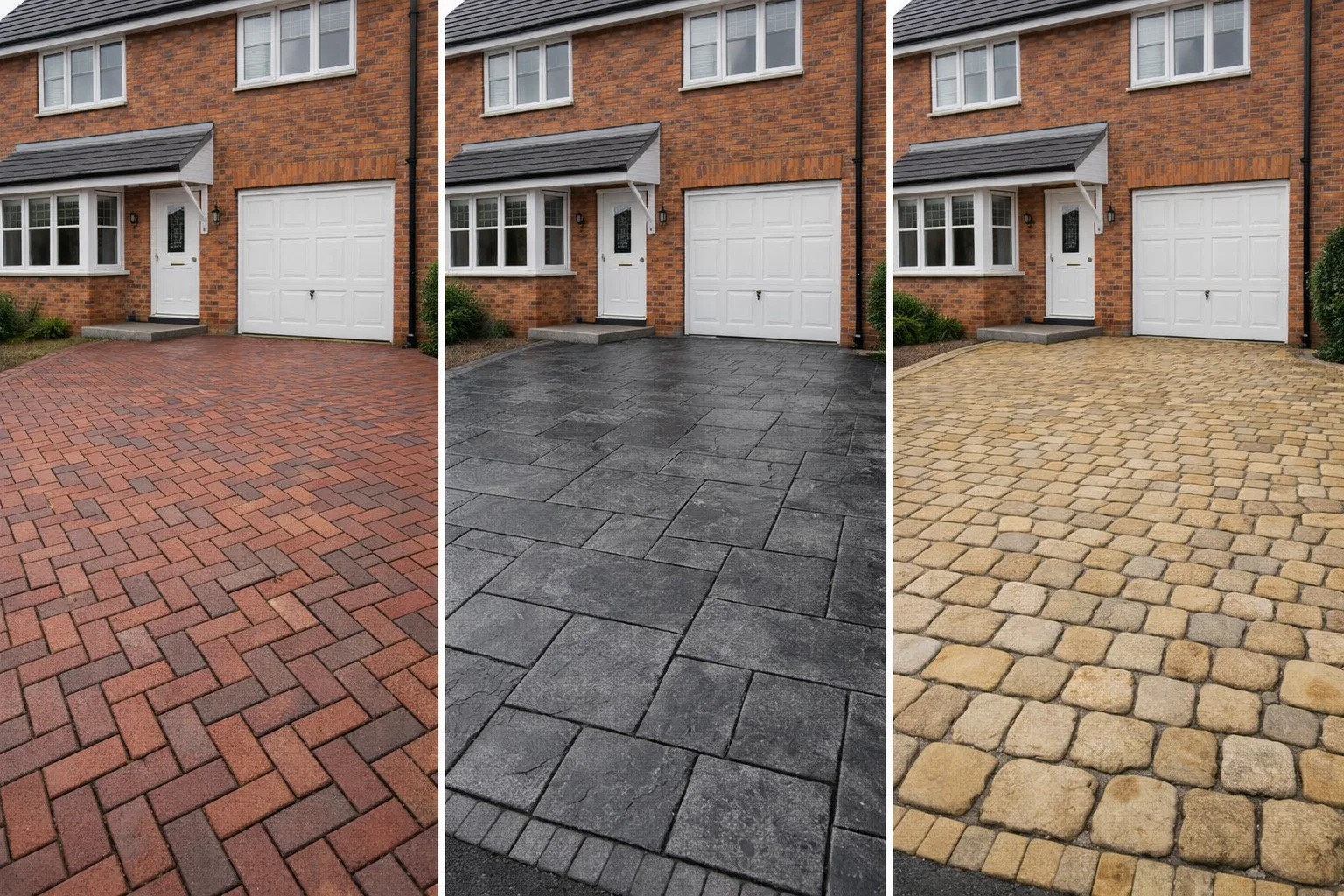
Imprinted concrete is as popular as it is because it brightens up the dull, industrial look of plain, grey cement. There are so many exciting choices, enabling you to create the look of brick, paving, stone, or cobbles. You can even mix and match your colours and chosen patterns. With a little bit of artistic style, you can completely change your property’s character as you choose from a range of patterns and colours.
Below are some options available to you when you choose imprinted concrete.
Brick-Effect Patterns
Brick-style patterns are a firm favourite. They suit traditional homes and blend well with brick façades.
Brick effect options include:
- Herringbone: This classic zig-zag layout adds a sense of movement to your yard.
- Basket Weave: This is a more decorative, period-style finish often seen on older properties.
- Stretcher Bond: This pattern mimics standard brickwork. It’s a great choice for smaller driveways.
Slate and Natural Stone
Slate and natural stone create a premium look, providing texture and depth. Stone patterns are among the favoured patterns for imprinted concrete.
Popular designs include:
- Ashlar Slate is one of the most popular finishes, admired for its smart, high-end finish and clean lines.
- Yorkstone offers a traditional British paved stone appearance that works well with modern and period homes.
- Cobblestone does well with character properties or country-style homes.
- Random Stone creates a more natural, less uniform appearance.
These patterns look good on larger driveways where the texture can really stand out.
Large Modern Slabs Designs
Modern homes often look better with cleaner, minimalistic designs.
Contemporary designs include:
- Patterns with large slabs
- Lightly textured finishes
These styles are often chosen for new builds and property upgrades where the lines are kept simple.
Borders and Features
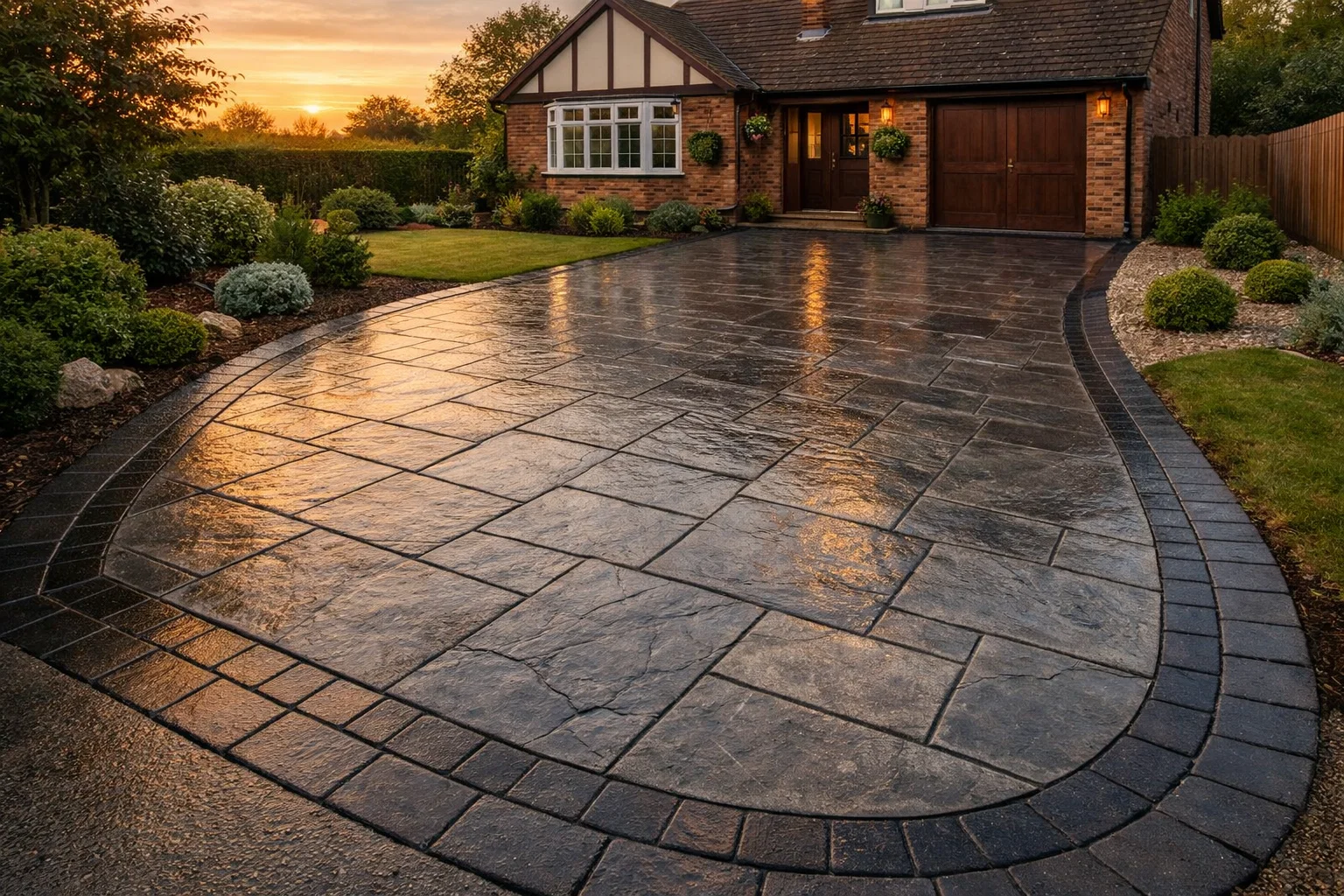
Many homeowners choose contrasting borders or a central feature that draws the eye and adds personalised style and definition. Pairing your driveway with complementary landscaping can further tie the whole frontage together.
Choosing the Right Pattern
Once you’ve chosen a pattern, you’re going to live with it for many years, so you need to choose well. Consider the property’s age and style when choosing. The size of the driveway can significantly influence the final appearance. A busy pattern can make a small driveway feel crowded, while a simple slate effect can make the space look larger.
Also, match or contrast the patterned concrete to the brickwork colour on the building. The key is balance. The driveway should complement the house, not compete with it.
The Right Colour for Your Driveway
Colour is a vital feature in your home décor, inside and out. The right shade can lift the appearance and make the space look better. If you choose just the right colour, you could pull the décor together. The wrong colour, on the other hand, can look harsh or outdated. Here’s how to choose the best colour for your driveway.
Start with Your Property
Consider the brick and render colours, the frames and doors, and the roof colour. Red brick homes often do well with warm tones like red, terracotta or brindle. Modern homes with grey windows look great with charcoal or slate. Cream or rendered properties pair well with buff, sandstone or light brown tones.
Rather err on the side of conservative if you have doubts. You can’t really go wrong if you match your brickwork.
Popular Colour Choices
Some shades are consistently higher sellers, favoured for their versatility. These include:
- Charcoal bricks are smart, modern, and they hide tire marks well.
- Red tones are the classic choice for traditional brick homes.
- Sandstone in lighter shades brightens the space.
- Mid-brown or chocolate hues work well with country and older properties.
Two-tone combinations are also popular. A darker border around a lighter centre looks good and adds depth.
Practical Factors
Colour affects maintenance, so you should consider practical matters when choosing. Darker shades wear well and hide oil spots. Lighter colours reflect heat and can project the illusion of space. However, they may quickly show dirt marks. Bear in mind, the sealant will make the colour look slightly darker and richer.
Think Long Term
Think twice before choosing a really trendy shade. What looks great today may not look so good in a decade. Neutral tones appeal to buyers. They also age better.
Always Ask for Samples
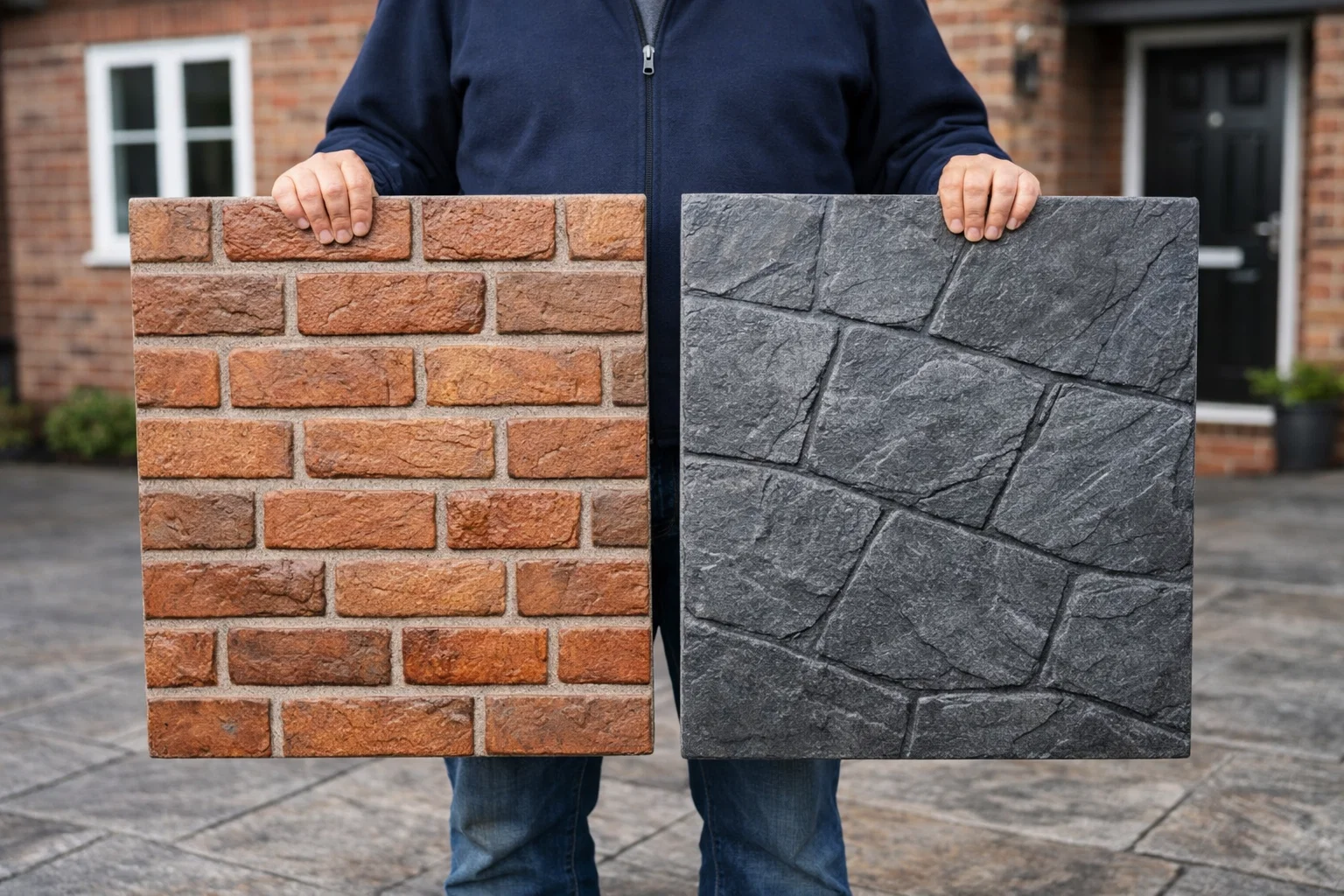
It’s not wise to make your final pattern or colour choice from a brochure. Use it for guidance, but ask for samples and look at them in sunlight and shade. Take the samples home and look at them alongside the brickwork on your house. Light and the surrounding conditions may make the pattern or colour look very different. If at all possible, take a look at an example of a completed driveway.
The Installation Process
The finished driveway may look decorative, but the strength comes from careful preparation and proper installation.
Ground Preparation
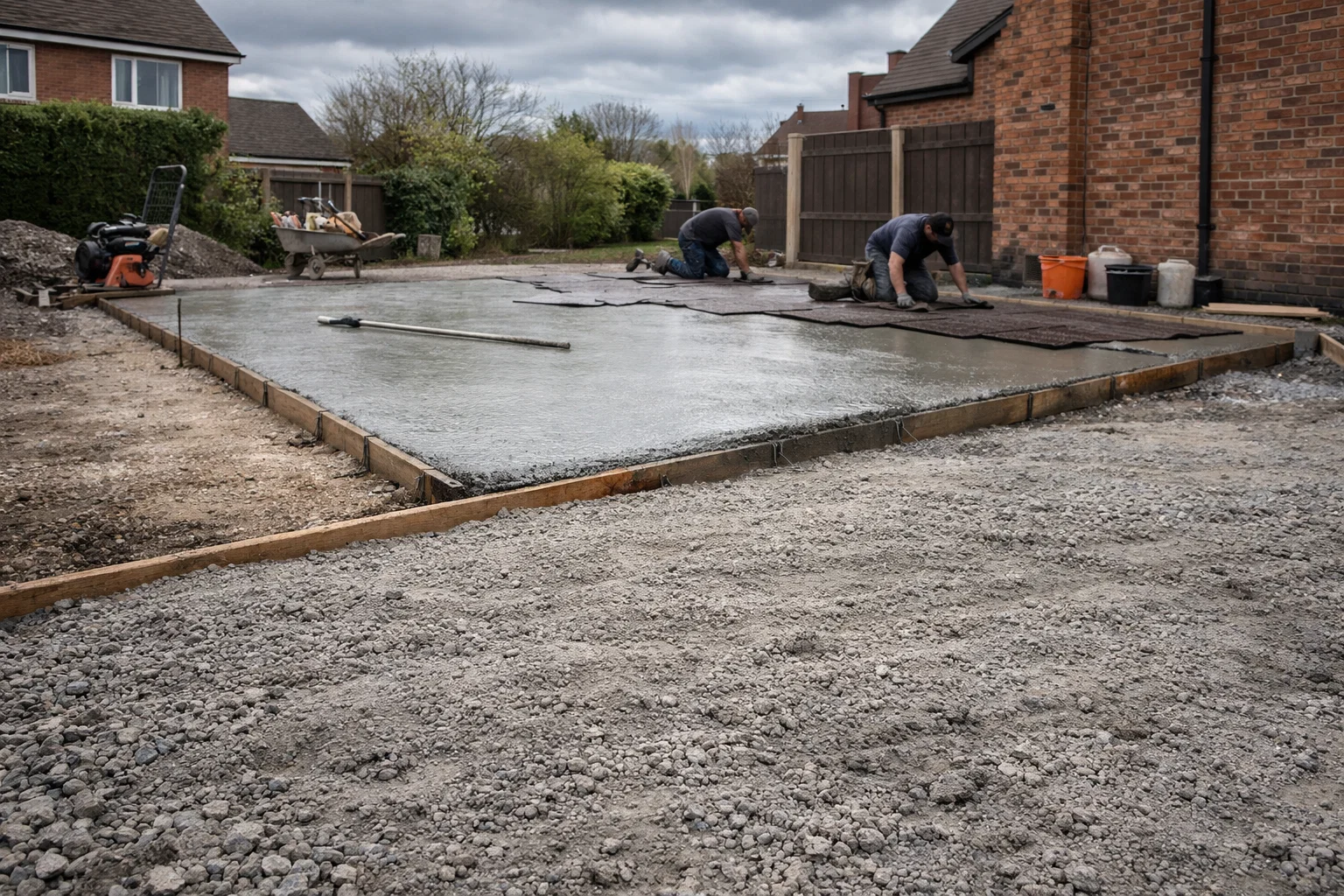
A concrete driveway’s strength and reliability start below the surface. The installers will dig a hole to the correct depth to accommodate the sub-base. Then they will construct a solid sub-base, typically from compacted hardcore. Proper groundworks provide the strength and prevent movement, which can cause cracks. This is a critical part of the installation process.
Pouring the Concrete
The reinforced concrete slab is poured over the base at a carefully calibrated thickness and strength. Vehicle weight is the primary concern in concrete strength calculations.
The concrete is levelled and smoothed to create a flat surface.
Applying the Colour Hardener
The installer spreads the coloured powder hardener across the surface before the concrete sets. The purpose is twofold: it adds colour and strengthens the top layer of concrete.
Imprinting the Pattern
Now it’s time to create the pattern you’ve chosen. Here, timing is all-important. If the concrete is too wet, the pattern won’t hold. Too dry, and it won’t imprint properly. Patterned mats are pressed firmly into the still workable concrete. The mats create the texture, from slate to brick or cobblestone.
Expansion Joints
Once the surface begins to cure, the installer will cut expansion joints into the concrete. These controlled joints manage natural movement and reduce the risk of random cracking.
Sealing the Surface
Sealant protects your new imprinted concrete against stains. It reduces the amount of water that can seep into the concrete and helps prevent plant growth. It also enhances the colour and adds a slight gloss to the surface. The installer will apply protective sealant when the driveway is fully installed.
Maintenance
Imprinted concrete is popular among homeowners because of its low maintenance requirements. Still, it’s not completely maintenance-free.
Cleaning
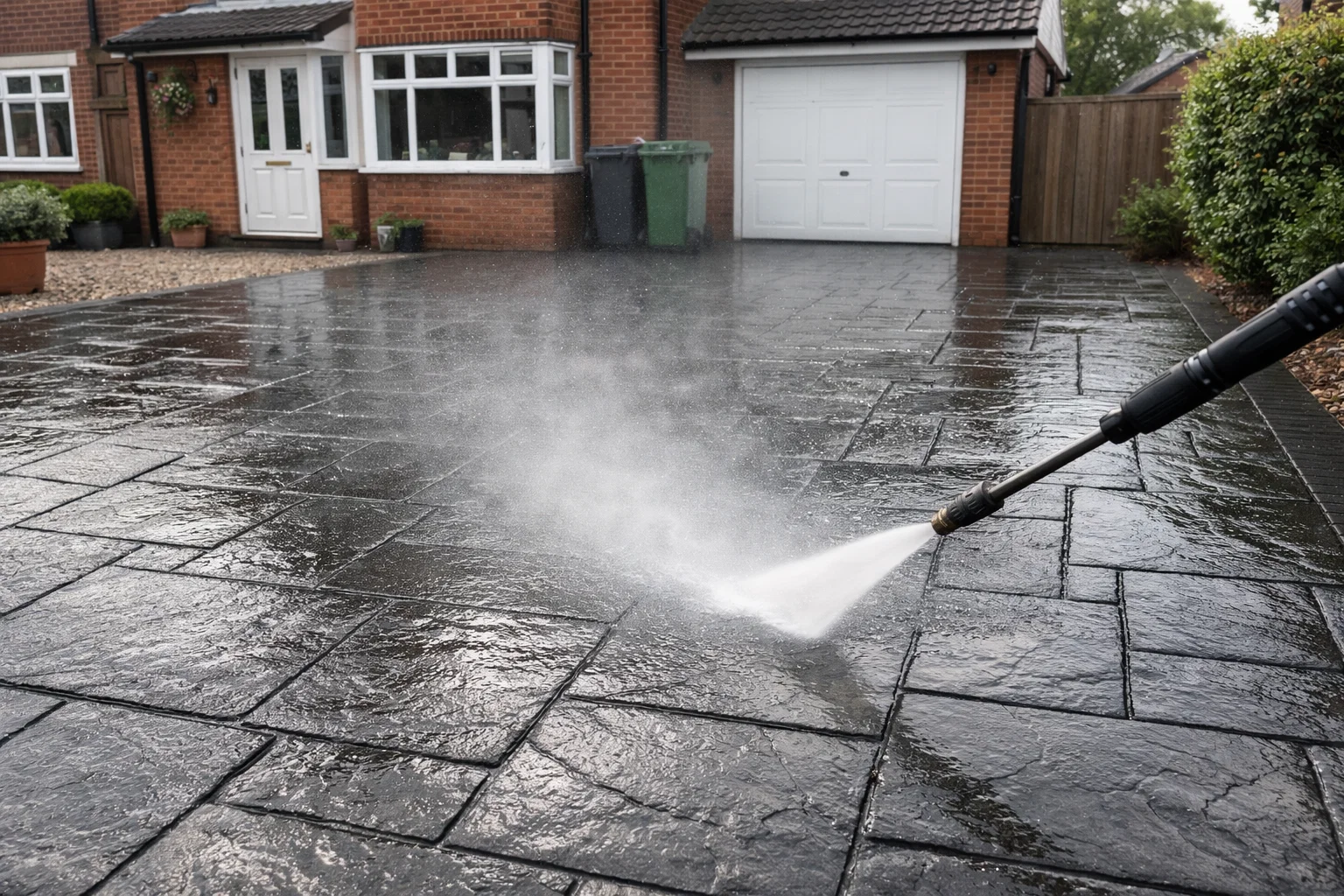
Like everything else in your home, you’ll have to clean your concrete driveway from time to time. Sweep away the debris and give it a medium-pressure wash with a pressure hose. Make sure to remove any moss or algae that may have formed since your last wash. Never use harsh chemicals to clean your concrete, as they may damage the sealant.
Avoid Oil Stains. The surface of your concrete can absorb untreated oil spills, despite the sealant. Clean spills as they happen. Consider a fresh seal coat if staining becomes noticeable.
Regular Sealing
Resealing protects the surface against stains, maintains its water resistance, reduces wear and restores the depth of colour. Reseal your driveway surface every 3–5 years. The frequency depends on traffic levels and weather exposure.
How Long Does an Imprinted Concrete Driveway Last?
Concrete is a hardy and long-lasting material, and when professionally installed and properly maintained, it should outlast its 20th anniversary. Structurally, it usually outperforms block paving and tarmac.
Because it is a continuous slab, there are no joints where weeds can gather and no blocks to sink or shift.
Stronger than Block Paving
Block paving is built on a bed of sand and relies on hundreds of bricks, laid together. In changing weather conditions and under the weight of moving vehicles, blocks can move. Imprinted concrete is a single, reinforced slab. It evenly distributes vehicle weight and resists movement.
Cracking
Concrete is strong, but like all rigid surfaces, it can crack if poorly installed. Preparation is the crucial factor in preventing cracked concrete. Several factors make concrete installations more durable: These include
· Ground preparation: Installers must excavate to the correct depth. Then they must properly compact the base level.
- Correct thickness: Domestic driveways should be 100mm thick
- Reinforcement: Steel mesh or fibre reinforcement provides extra strength
- Expansion joints: Joints in the concrete allow for controlled movement
A well-installed driveway should not crack. Cracks usually happen when the installer cuts corners, which is why it is so important to carefully choose your partner in driveway installation.
Costs: Is Imprinted Concrete Good Value?
The cost of an imprinted driveway depends largely on material and labour costs. These are the factors that contribute to the square metre cost:
- Pattern complexity: Detailed designs require more labour
- Ground preparation: Poor ground conditions make excavation more difficult and may affect the material usage
- Drainage requirements: Drainage problems complicate matters, adding to the costs
How Imprinted Concrete Compares with Other Driveway Types
If you’re planning a new driveway, you’ll want to know the alternatives. Here’s what you can expect:
- Block paving: The cost is similar, but you’ll pay more for long-term maintenance
- Resin driveways: Generally priced slightly higher, in price but they are smooth, sleek and modern
- Tarmac: Costs less, but it doesn’t enjoy the same aesthetic value and doesn’t last as long. Tarmac maintenance requirements include regular sealing and occasional crack repairs.
Upfront Cost vs Long-Term Value
A pattern-imprinted concrete driveway may not be the cheapest option, as upfront costs go, it offers:
- Fewer repairs
- No sinking blocks
- Minimal weed growth
- An attractive finish that will endure for years
Lifetime costs are, therefore, lower than you might expect.
Is an Imprinted Concrete Driveway the Best Choice for Your Home?
A patterned concrete driveway is a fantastic choice for traditional brick homes and new builds where a clean finish is preferred. It may be less suitable if you have significant ground movement issues, or where your initial outlay is your main priority.
The Lasting Legacy of Pattern-Imprinted Concrete
Imprinted concrete is strong and stylish, and when correctly installed, should last for 20 years or more. The continuous slab design eliminates sinking blocks and weed-filled joints, making it a low-maintenance alternative to traditional paving.
Although the upfront investment may be higher than for basic tarmac, homeowners often save money over time because there are fewer repairs and less maintenance. Choose the right pattern and colour for a finished surface that suits you and meets practical needs.
As you would expect with any major project, results depend on the installer. An experienced team, from a company like L&R Surfacing, ensures that standards are met from start to finish. Contact us to discuss options. We’ll install an imprinted concrete driveway that you’ll be proud of, an investment in your property that will look good for years.