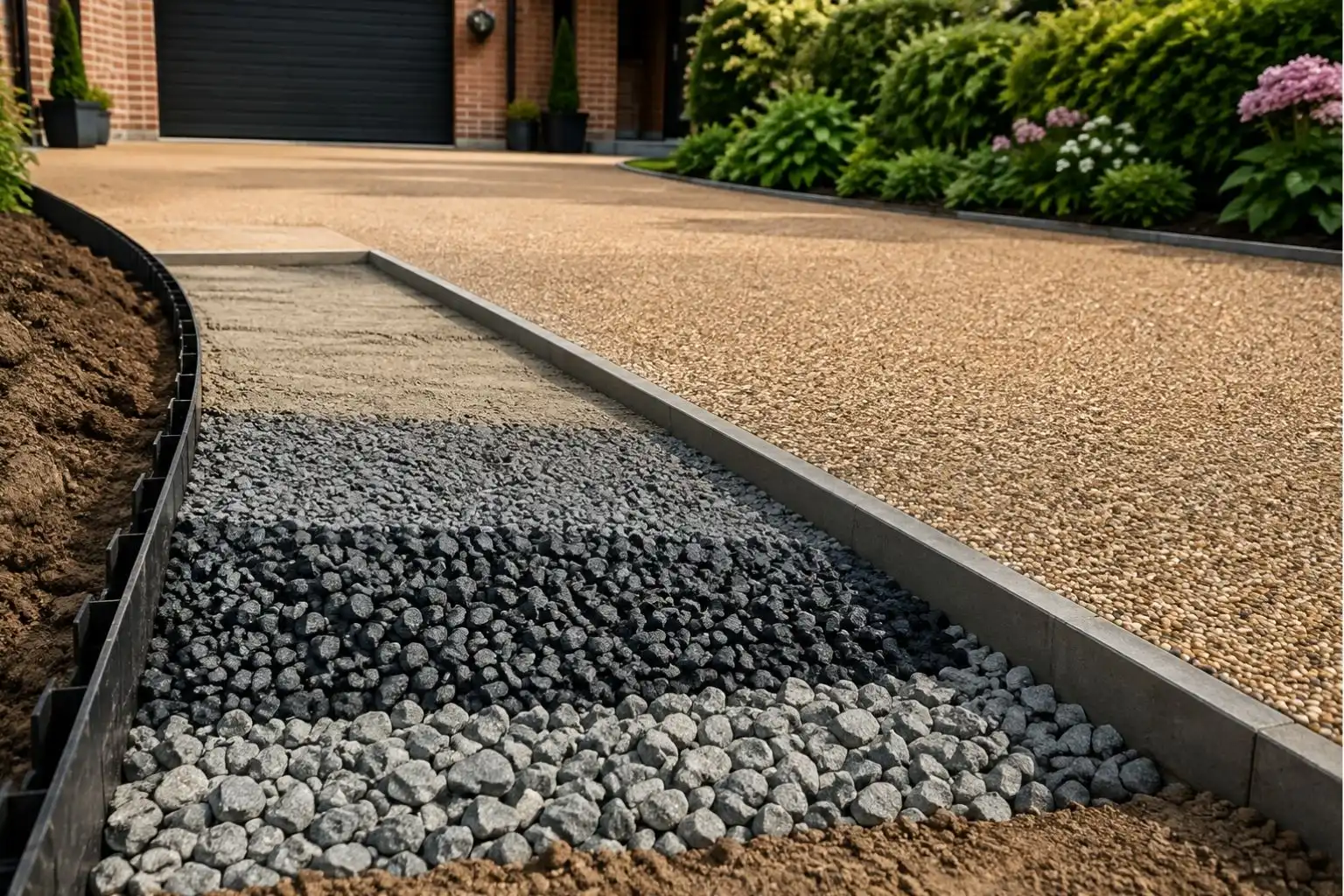
A poorly installed driveway can crack within a year, pool water after every rainfall, and cost far more to repair than it would have cost to install correctly the first time. In fact, research from the Federation of Master Builders found that one in five UK homeowners have lost money to unqualified or unlicensed builders, contributing to an estimated £14.3 billion lost nationwide.
It is a risk that applies just as much to driveway installation as any other home improvement work. That’s a steep price for what often starts as a simple decision to save a few hundred pounds upfront. So what actually separates a contractor worth trusting from one that isn’t?
What Does A Driveway Contractor Actually Do?
A driveway contractor does far more than pour concrete or lay asphalt. The job starts with assessing the ground itself, checking drainage patterns, soil composition, and slope before any material is chosen.
A qualified concrete driveway contractor will typically handle:
- Site assessment and drainage planning
- Excavation and sub-base preparation
- Material selection suited to the property and climate
- Reinforcement and jointing to prevent early cracking
- Sealing and finishing for long-term durability
- Compliance with local permit and building regulations
Skipping any one of these steps is exactly how DIY and unqualified installations fail. A concrete driveway contractor with proper training treats each stage as part of a single system, not a checklist of separate tasks.
7 Reasons Why You Should Hire A Driveway Contractor
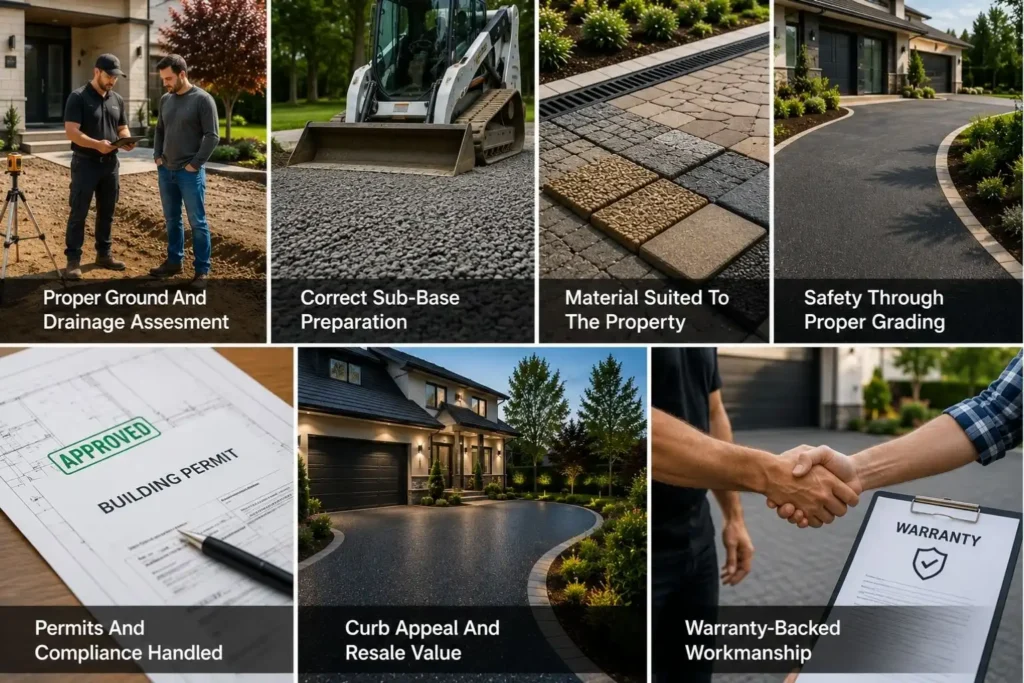
Hiring a driveway contractor makes the difference between a surface that lasts for decades and one that fails within a year. Here’s exactly where that value shows up.
1. Proper Ground And Drainage Assessment
A qualified installer always checks soil condition, slope, and drainage patterns before any material goes down, alongside existing utilities and nearby structures that could affect the finished surface; where an impermeable surface is planned, suitable drainage is needed to prevent runoff and water buildup.
This step catches hidden problems early, and proper drainage helps prevent cracking or pooling that would otherwise surface months after installation and cost significantly more to repair than addressing it properly beforehand, on virtually every project.
2. Correct Sub-Base Preparation
Excavation and compaction handled to exact specification give the surface a stable foundation for years of daily use. Improper foundation installation can lead to subsidence later on. Skipping this stage is the leading cause of failure in DIY and unqualified installations.
This is why an experienced concrete driveway contractor matters. To make sure excavation and compaction are handled to exact specification, our Groundworks team builds the stable foundation your driveway needs so the driveway lasts and supports years of daily use.
3. Material Suited To The Property
A specialist selects material based on ground conditions and local climate, not a one-size-fits-all approach. Resin bound surfacing, block paving, asphalt, and concrete each perform differently under frost, rainfall, and daily vehicle weight. For a low-maintenance, permeable finish, our Resin Driveways service stands out, while our Imprinted Concrete service delivers decorative patterns with lasting durability.
4. Safety Through Proper Grading
A professional grades and levels the surface correctly, creating a smooth finish with a gentle fall so water drains away from the property instead of pooling across the driveway. This step also protects the sub-base beneath, since standing water that seeps into unsealed joints or cracks can weaken the structure over time and shorten the driveway’s lifespan.
Left unchecked, poor grading turns slippery and hazardous during wet or icy weather, creating a genuine trip and slip hazard for visitors, delivery drivers, and family members using the driveway daily throughout the year, making correct grading as much a safety measure as a structural one.
5. Permits And Compliance Handled
Many driveway installations require council permission from the local council or drainage compliance, especially where a dropped kerb or vehicle crossover is involved, and requirements can vary considerably between neighbouring local authorities. Building regulations approval is usually not needed for a standard replacement driveway, but local council requirements may still apply for dropped kerbs, drainage changes, or altered access. A
professional team manages this process directly, submitting applications, liaising with the planning department, and confirming standards are met before any excavation work begins on site, while checking planning rules with the local authority to avoid costly delays much later on.
6. Curb Appeal And Resale Value
A professionally installed driveway strengthens curb appeal, boosts kerb appeal, and adds measurable resale value, often forming a buyer’s first impression before they reach the front door. Clean lines and proper edging signal quality maintenance, giving buyers confidence the rest of the home has been cared for.
The right driveway surface and finish, including natural stone driveways as a premium choice, can improve aesthetic appeal, add value, and make the entrance more inviting. To carry that same polished look through the rest of your property, our Landscaping service can complement your new driveway and tie the whole exterior together.
7. Warranty-Backed Workmanship
A reputable driveway contractor stands behind the finished job with a written workmanship warranty, something no DIY project or unlicensed installer can offer. This warranty reflects genuine confidence in the materials and methods used, since a contractor unwilling to guarantee their own work is rarely one worth hiring in the first place.
If cracking, sinking, or drainage failure occurs within the warranty period, the contractor returns and corrects it at no extra cost, protecting homeowners from unexpected repair bills down the line. That accountability gives homeowners genuine peace of mind long after the initial installation work has been fully completed, knowing the investment is protected well beyond the first year.
DIY vs Professional Driveway Contractor

Comparing DIY installation against professional work makes the differences easy to see side by side. The table below breaks down how each approach handles ground assessment, base preparation, material handling, permits, and long-term outcome.
| Factor | DIY Installation | Professional Driveway Contractor |
| Ground assessment | Often skipped or guessed | Drainage, soil, and slope checked before work starts |
| Base preparation | Frequently under-compacted | Properly excavated and compacted to spec |
| Material handling | Limited by available tools and experience | Mixed, poured, or laid under correct conditions |
| Permits and regulations | Easy to overlook | Identified and handled as part of the job |
| Warranty | None | Written workmanship warranty included |
| Long-term outcome | Higher risk of cracking, sinking, or pooling | Built to last with accountability if issues arise |
The comparison makes one thing clear: cutting corners on a driveway rarely saves money in the long run. An experienced professional brings the assessment, preparation, and accountability that a DIY approach simply cannot replicate.
How To Find A Good Driveway Contractor
Knowing how to choose a driveway contractor comes down to a handful of checks that act as key factors in separating a reliable hire from a costly mistake. Before signing anything, check online reviews to gauge reliability and quality, then confirm the following:
- Insurance and certification: Ask to see proof of public liability cover, relevant trade certifications, and proper insurance, and request proof that protects both you and the contractor during the driveway project.
- Past work references: Request references or photos from at least two recent, comparable jobs, and review completed projects where possible to look for a proven track record, customer satisfaction, and quality driveways rather than relying on marketing photos or vague promises alone.
- Written quote: Get a written, itemised quote rather than a verbal estimate, covering dimensions, material, labour, payment terms, and the total price for the chosen driveway type. This makes it easier to understand what you’re paying for, compare pricing across different materials, and avoid hidden costs appearing once work has begun.
- Written contract: Avoid any driveway company or driveway contractor that refuses to provide a written contract.
- Warranty coverage: Confirm the warranty period and exactly what it covers, including whether cracking, sinking, or drainage failure would be repaired at no extra cost within that timeframe.
- Drainage approach: Ask directly how drainage and sub-base preparation will be handled for your specific plot, since skipping this step is the leading cause of early driveway failure, and remember that site access, groundwork, and design extras can lead to additional costs beyond the base quote.
A right driveway contractor or reliable driveway contractor will answer these questions clearly and without hesitation, while a good contractor or experienced driveway specialists should also explain the process in plain terms. Homeowners searching for driveway installation in Manchester should treat hesitation or vague answers as a warning sign, not a minor detail to overlook.
Ready To Work With A Driveway Contractor?
Now that the reasons behind hiring a driveway contractor are clear, from ground assessment and drainage to material selection and warranty backing, the next step is finding a contractor who treats your property as its own project rather than a template. Choosing the right driveway company for the whole project helps you avoid delays, hidden costs, and poor workmanship. A properly installed driveway protects your investment, reduces long-term repair costs, and stands up to daily use for decades.
If you are still deciding on working with a driveway contractor for your home or business, partnering with driveway specialists takes the guesswork out of the decision and gives you confidence in the final result. At L&R Surfacing, our experienced team assesses your property and provides tailored recommendations suited to your budget, ground conditions, and drainage needs, helping you avoid costly mistakes before work begins.
Contact us at enquiries@landrsurfacing.co.uk or call 0161 399 0351 to talk through your driveway options and request a free quote.
Frequently Asked Questions About Driveway Contractor
How long does a professional driveway installation take?
Most driveway installations take a few days to complete from start to finish, though the exact timeline depends on plot size, material choice, and how much groundwork is needed before surfacing begins; for example, a single car driveway may be finished in two to three days at a lower overall cost than a wider multi-car layout, while larger or more complex sites usually take longer.
When installing a new driveway, the schedule can also stretch if extensive groundwork is required. Excavation and sub-base work often take longer than the surfacing stage itself, particularly on properties with poor drainage, clay-heavy soil, or difficult access for machinery.
Larger driveways naturally add time, as do jobs requiring a full base rebuild rather than a straightforward overlay. Weather also plays a role, since materials like asphalt and concrete need dry, stable conditions to cure properly. A driveway contractor will confirm a realistic timeline during the initial site assessment, based on these specific conditions.
Do driveway contractors handle old driveway removal and disposal?
Many driveway contractors will first assess whether they can work over an existing driveway or existing drive before choosing excavation and disposal, since the condition of the old surface affects whether removal is needed before new work begins. This should always be confirmed upfront, since some contractors quote removal and disposal as a separate line item rather than folding it into the overall price.
Disposal costs can vary depending on the volume of material removed, the existing surface, and local tip or skip charges in the area, with skip hire sometimes added as an extra cost. Asking this question early avoids unexpected costs appearing later in the project, and a clear written quote should always state this detail plainly.
When is the best time of year to install a driveway?
Warm, dry conditions during spring and summer are generally the strongest window for asphalt and concrete installation, since both materials need stable temperatures to cure and set properly without cracking or shifting early on. Installing during colder, wetter months can slow curing times and increase the risk of complications during the process itself.
Booking a driveway contractor outside peak season can also mean shorter wait times and more flexible scheduling, since demand for driveway work typically rises through the warmer months. Homeowners planning ahead often find better availability and pricing by scheduling projects during quieter periods of the year.
Is a permit needed before hiring a driveway contractor?
This depends largely on the property itself and the surface material planned for installation, since some permeable options can reduce runoff, while an impermeable existing surface may need proper drainage before work starts. Permeable paving is a drainage-friendly choice, while non-permeable designs may need additional drainage. Non-permeable materials over a certain size, or projects involving a dropped kerb, are more likely to require council approval before work can start.
A driveway contractor typically confirms this during the initial site visit, checking local rules that apply to the specific property and material choice, confirming planning permission, local permit needs, and whether standard building regulations apply. Getting this clarified early helps you choose the right driveway, whether that means gravel driveways with crushed stone, cobblestone driveways, or a tarmac cost effective option, before materials have already been ordered.
Material choice also affects ongoing maintenance and maintenance costs: gravel may need more maintenance, concrete often needs a minimum thickness of 4 inches and can last 25 to 50 years with proper maintenance, and neglected tarmac or cracked surfaces can develop potholes when the surface disintegrates or allow weeds to grow in cracks.