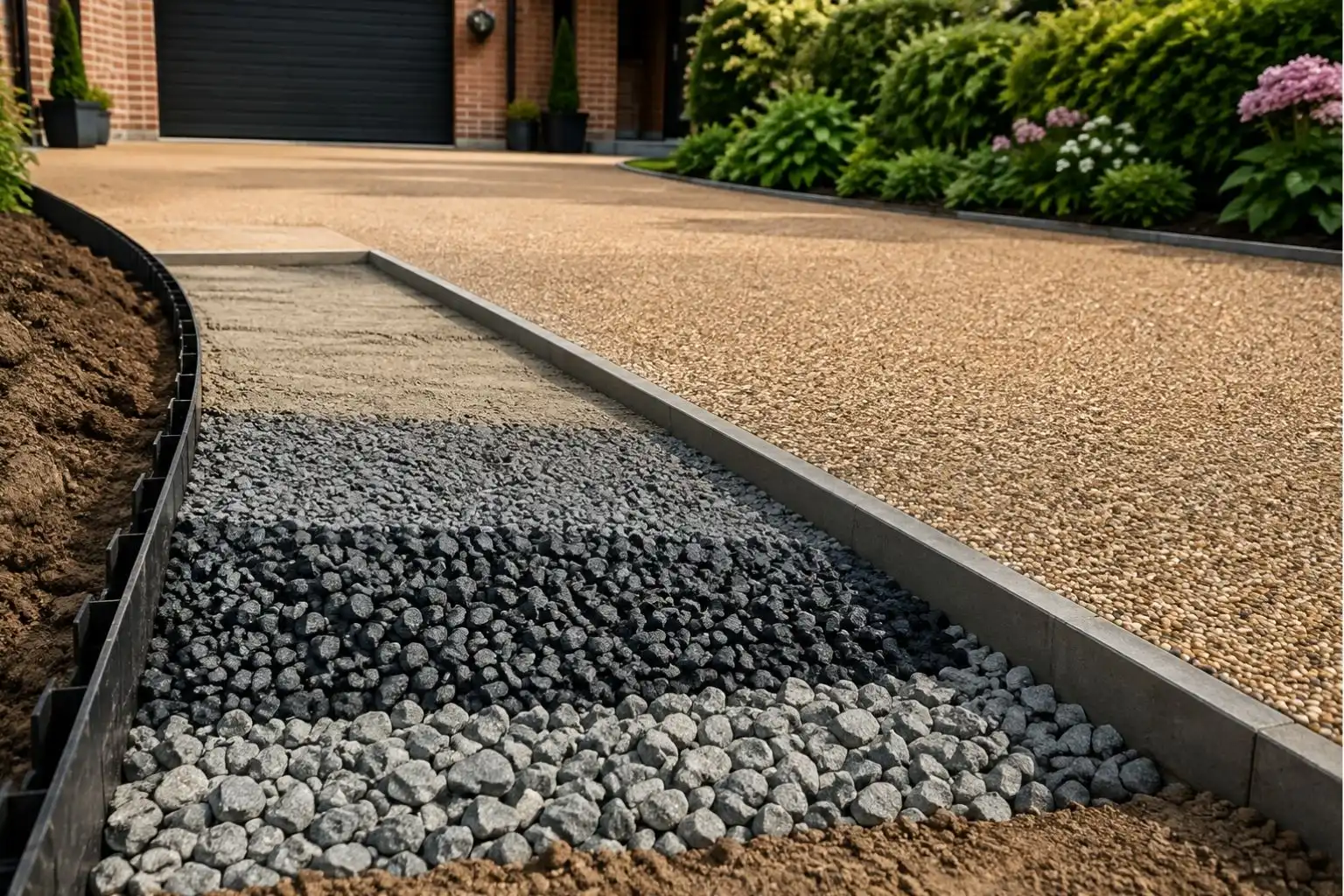
Many homeowners struggle to tell the difference between resin bound and resin bonded driveways. At first glance, the two surfaces look almost identical, yet choosing the wrong one can lead to drainage problems, loose stones, and higher maintenance costs over time.
Interest in resin driveways continues to grow across the UK. According to Resin Mill’s 2026 market analysis, online searches for “resin driveway” increased by 23% month on month in February 2026, reflecting rising homeowner demand for this type of surface. As more people consider resin for their properties, understanding the difference between resin bound and resin bonded has become an important step before investing.
So, what exactly separates resin bound from resin bonded, and which option is the right choice for your driveway?
What Is A Resin Bound Surface?
A resin bound surface is created by mixing dried aggregate with a two-part polyurethane resin in a forced action mixer. Every stone is coated before the material is laid, so the finished surface is a single solid layer rather than stone sitting on a film of resin.
The mix is poured onto a prepared base and trowelled down by hand to a smooth, level finish. Depth depends on use. Around 15mm is usually enough for footpaths and patios, while a resin bound driveway carrying vehicles needs 18mm or more, and heavier traffic areas may call for 20mm and above.
Because the aggregate is fully encapsulated, there are no loose stones to kick out onto the lawn or track into the house. The surface is UV stable when the correct resin is used, resists weed growth, and needs very little upkeep beyond an occasional sweep or light pressure wash. Laid properly onto a sound base, a resin bound surface should give you 20 to 25 years of service.
The system is also flexible in the design sense. It can be laid around trees, manhole covers, kerbs and awkward corners, and it works on slopes and uneven ground where rigid materials struggle. That versatility is why you see it used well beyond driveways, on car parks, cycle paths, school playgrounds and commercial walkways.
What Is A Resin Bonded Surface?
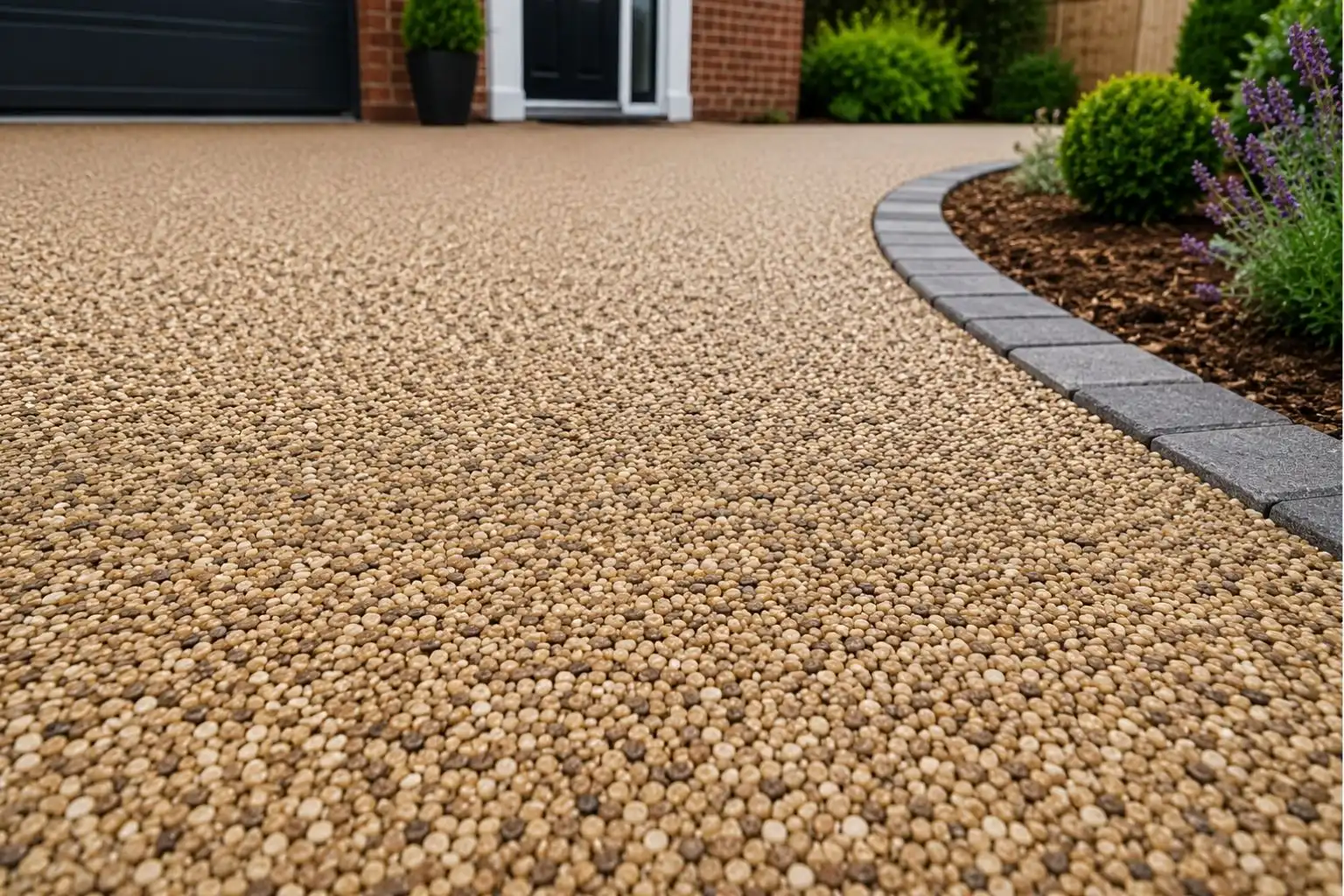
A resin bonded surface works the other way around. The base is primed first, then a coat of bonded resin is spread evenly across the area and loose aggregate is scattered over the top by hand while the resin is still wet. Once it has cured, the excess stone is brushed off.
Only the underside of each stone is held by the resin, which leaves most of the aggregate exposed. That is what gives a resin bonded surface its rough, gravel-like texture and its high grip. Stone sizes are smaller than those used for bound systems, typically in the 1mm to 3mm range.
It is worth stressing that the resins are not interchangeable. Bound resin is formulated for bound systems and bonded resin for bonded systems. If you are ordering materials yourself, check with the supplier before you buy.
The trade off is durability. Because the stones are not fully locked in, wear over time can pull them free, which shows up as bald patches where the resin has been exposed. A resin bonded surface is also non permeable, so water sits on top of it and has to be dealt with by channels, gullies or a soakaway.
Resin Bound vs Resin Bonded: Which Resin Surface Suits Your Driveway?
For most front driveways across Manchester and Cheshire, a resin bound driveway is the stronger long-term choice. It takes vehicles, it drains, and it holds its appearance with very little effort.
| Consideration | Resin Bound | Resin Bonded |
| Permeable and SuDS compliant | Yes | No |
| Finish | Smooth and seamless | Textured, gravel look |
| Loose stone | None | Possible over time |
| Grip | Good | Excellent |
| Suitable for vehicles | Yes | Light use only |
| Maintenance | Low | Moderate |
| Upfront cost | Higher | Lower |
A typical job looks like this. A semi-detached house in Altrincham with a front drive of roughly forty square metres, previously laid in ageing tarmac that was structurally sound but cracked along the edges. Because the base held up under inspection, no full dig-out was needed. The edges were made good, the surface was cleaned and primed, and a bound gravel blend was trowelled over the top in a single day, with the drive back in use inside twenty-four hours. The blend was matched to the brickwork so the new finish sat comfortably with the house rather than fighting it.
New edging and planted borders followed, tying the drive into the rest of the front garden. That finishing work is usually what makes a driveway look like part of the house rather than something bolted onto it, and our landscaping team handles it alongside the surfacing itself.
Homeowners often ask us at that point, is resin bound gravel permeable enough for a busy family drive in a wet Manchester winter, and on a job like that one the answer is comfortably yes. Bonded resin still earns its place on the same property, though. A steep side path or a garden route that needs maximum grip underfoot is exactly where that textured finish works hardest, and it pairs well with a resin or imprinted concrete patio at the rear.
Resin Bound vs Resin Bonded: What Each Resin Surface Costs?
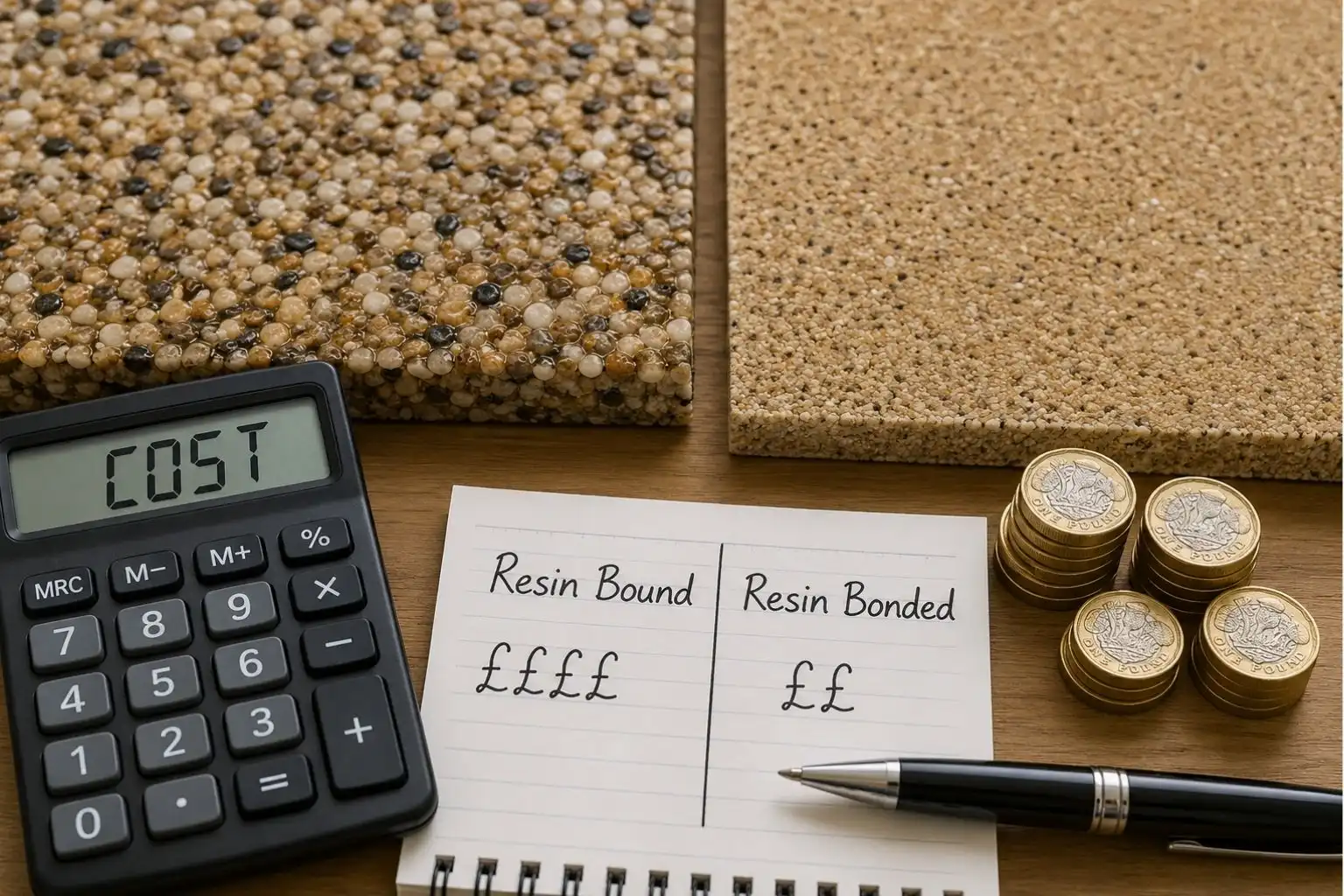
Cost is usually the point where the two systems separate most clearly, and it is the main reason resin bonded still gets specified. Resin bonded is the cheaper of the two. It uses less material and is laid at a shallower depth, so supply and installation costs sit lower per square metre. Resin bound requires more resin, a greater volume of aggregate and a more skilled install, so the figure per square metre is higher.
Published prices vary widely depending on the source, so treat any online figure as a guide only. What you actually pay depends on the size of the area, the condition of the existing base, whether groundworks or a new sub-base are needed, the aggregate blend you choose, and access to the site. A small, awkward driveway needing a full dig out will cost more per square metre than a large, straightforward one laid over sound tarmac.
The more useful way to think about it is cost over the life of the surface. A resin bound driveway carries a higher upfront figure but rarely needs anything beyond cleaning, and it should still look good two decades later. A bonded surface saves money on day one but may need stone topping up or resin reapplied as it wears. Always get a written quote and a written guarantee before work starts.
Get the Front Your Home Deserves
If you take one thing from all of this, make it the base. The resin bound vs resin bonded decision matters far less than the quality of what sits underneath, because either surface will only ever be as good as the ground it is laid on. It is the commonest reason a new drive fails early. Before you accept any quote, ask the contractor to put in writing what they intend to do to the existing base, whether they are laying over it or digging it out, and what depth of material they are laying on top. A quote that skips over that detail is not one you can fairly compare against anybody else’s.
L&R Surfacing has been installing driveways, patios, and hard landscaping across Greater Manchester, Cheshire, and Salford since 2016, from Altrincham and Wilmslow through to Stockport, Bramhall, and Didsbury. Our BBA-approved resin driveways are permeable, SuDS compliant and backed by a ten-year written guarantee, and every project begins with a free site survey and a written quote so you know exactly where you stand. Get a free quote now!
Frequently Asked Questions for Resin Bound vs Resin Bonded
Is resin bound gravel permeable?
It is. Voids remain between the coated stones, so rainwater drains through into the sub-base rather than running off. That matters for planning: front gardens over five square metres surfaced in non-permeable materials generally need permission unless run off is directed to a permeable area. Resin bound avoids that and meets SuDS guidance. Resin bonded seals the ground beneath the stone, so drainage has to be designed in from the start.
Which is cheaper, resin bound vs resin bonded?
Bonded generally carries the lower upfront cost, because it uses less material and is laid at a shallower depth. That gap narrows once drainage is priced in, since a sealed surface often needs channels or a soakaway added. Comparing resin bound vs resin bonded on headline rate alone is misleading anyway: base condition moves the final figure far more, and laying over sound tarmac costs considerably less than a full excavation. Always ask for a written breakdown, so quotes can be judged on the same terms.
How much does a resin bound driveway cost in Manchester?
Pricing shifts with the size of the area, the aggregate blend chosen and, above all, the condition of the existing base. A resin bound driveway laid over sound tarmac sits at the lower end of the range, while one requiring full excavation, a new sub-base and fresh edging costs noticeably more. Access and site conditions matter too. The only reliable figure comes from a site survey followed by a written quote you can keep.
What should you check before choosing a resin bonded surface installer?
Start with the base. Ask what preparation is included, whether they intend to lay over the existing drive or excavate it, and to what depth. Confirm the resin is UV stable, because a resin bonded surface can discolour badly within weeks if it is not. Check the guarantee length, exactly what it covers, and whether the company holds current insurance. Recent local work you can view in person tells you more than any brochure.