Driveway repair tends to get pushed to the bottom of the list until something becomes obvious. A small crack here, a bit of fading there, maybe a slight dip you hadn’t noticed before. It doesn’t always look serious at first, which is why a lot of people leave it longer than they probably should.
The thing is, driveways don’t just fail for no reason. There’s usually something going on underneath or over time that’s caused it. Daily use plays a part, weather doesn’t help, and sometimes it comes down to how it was installed in the first place. Getting on top of driveway repair early can make a big difference before things start breaking up properly.
In the UK, surfaces go through a lot with constant rain, cold snaps and general wear. Some damage is expected, but knowing what’s normal and what isn’t can save you a lot of hassle later. Once you understand the cause, the next step becomes much clearer.
What Causes Driveway Cracks in the First Place?
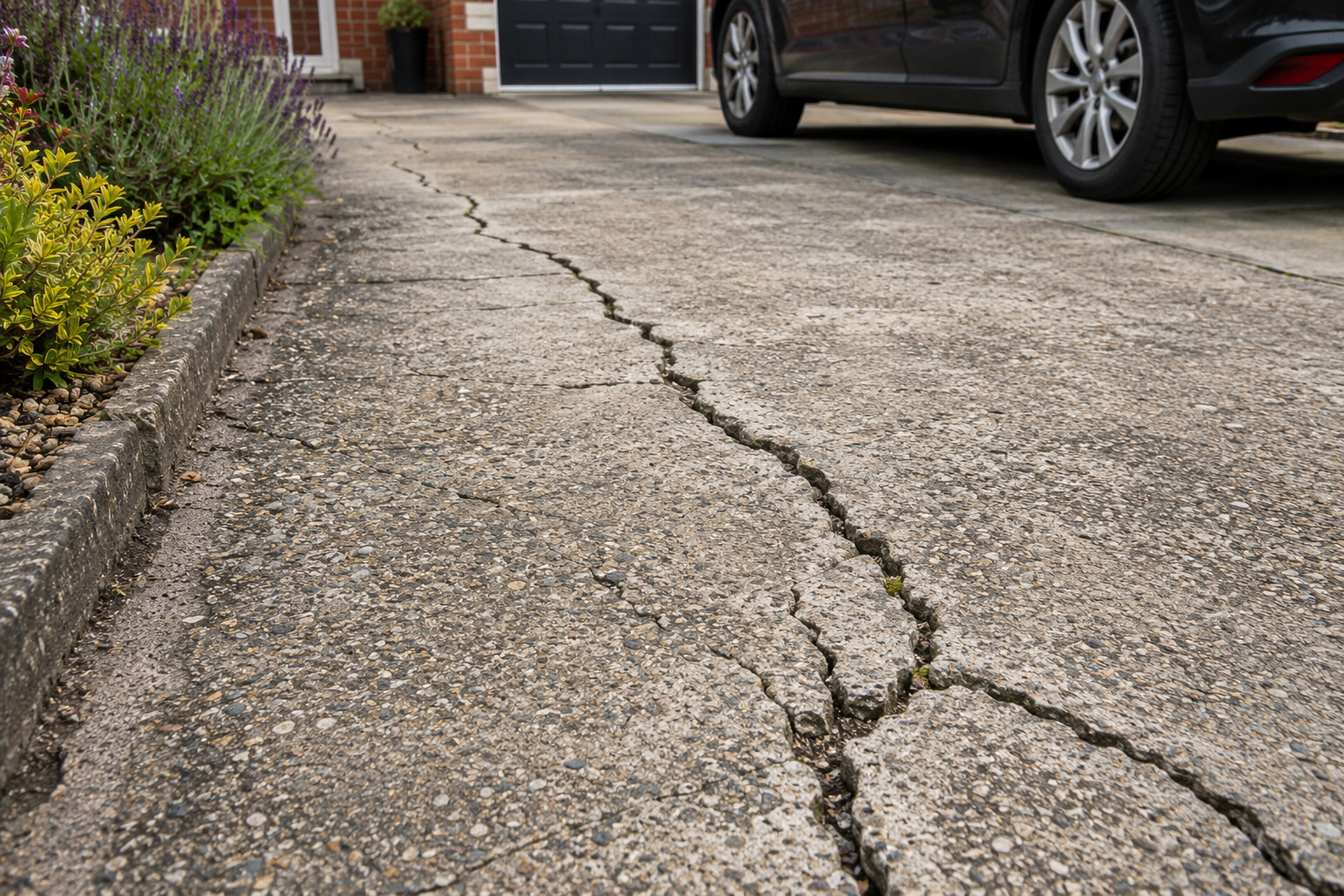
Most people first notice something’s wrong when cracks start appearing. Sometimes they show up suddenly, other times they creep in slowly and get worse without you realising. A lot of driveways go through this at some point, even ones that looked solid when they were first put down.
What’s happening underneath is usually the real issue. The ground shifts more than people think, especially with changes in weather. Wet conditions, dry spells, even just time can cause movement. That pressure has to go somewhere, so it ends up showing on the surface as cracks in the concrete driveway.
It’s not always just the ground though. Regular use, parked cars, delivery vans, all of it adds up. Small cracks might not seem urgent, but leaving them alone rarely helps. Sorting driveway repair early can keep things simple and stop the damage spreading across the rest of the surface.
The Role of Poor Groundwork and Sub Base Failure in Driveway Repair
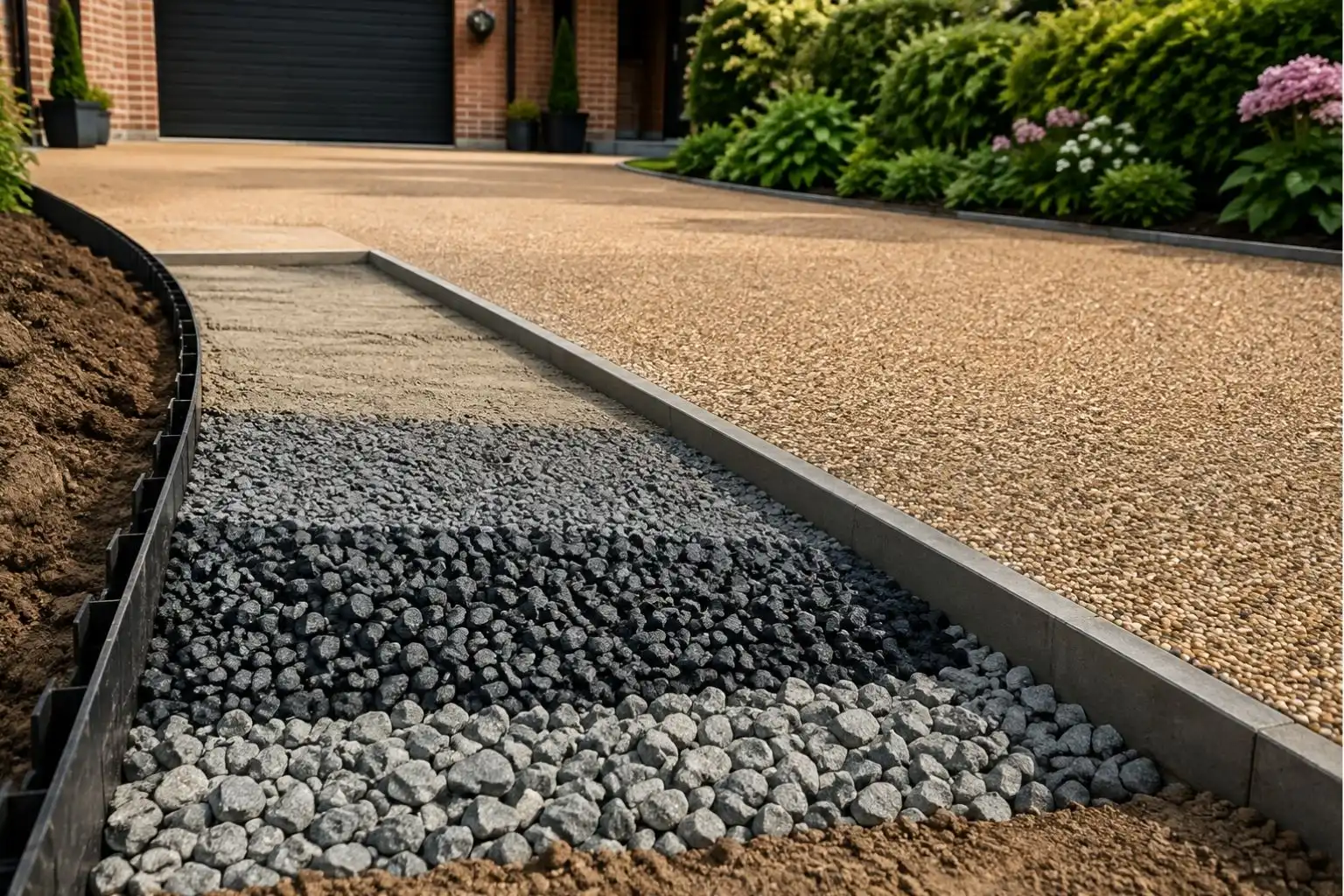
A lot of driveway problems actually start below the surface. It’s easy to focus on what you can see, but the sub base is what holds everything together. If that wasn’t done properly at the start, issues tend to show up later no matter how good the surface looks.
When the ground underneath isn’t stable, the driveway has nothing solid to sit on. Over time, that leads to sinking, uneven areas, and cracks forming across the surface. This type of base failure is one of the more common reasons people end up needing driveway repair sooner than expected.
Fixing the surface alone doesn’t always solve it either. In some cases, the existing surface needs lifting so the base can be sorted properly. Getting that right improves structural stability and gives the driveway a much longer lifespan, which is what most homeowners want in the long run.
How Weather and Drainage Issues Affect Your Driveway Repair
Weather plays a bigger part than most people expect. Rain sits on the surface, then colder nights come in and that moisture starts causing problems. Over time, that back and forth weakens the concrete and you end up seeing cracks or worn patches appearing.
Drainage is usually where things go wrong. If water isn’t moving away properly, it just hangs around or soaks into the ground underneath. That can soften the soil, which then affects the support below the driveway and leads to uneven areas or sinking.
Once that starts happening, driveway repair becomes more about fixing the cause rather than just the surface. Sorting drainage properly gives the driveway a better chance of holding up, instead of the same damage showing up again not long after.
Tree Roots, Heavy Loads and Everyday Use
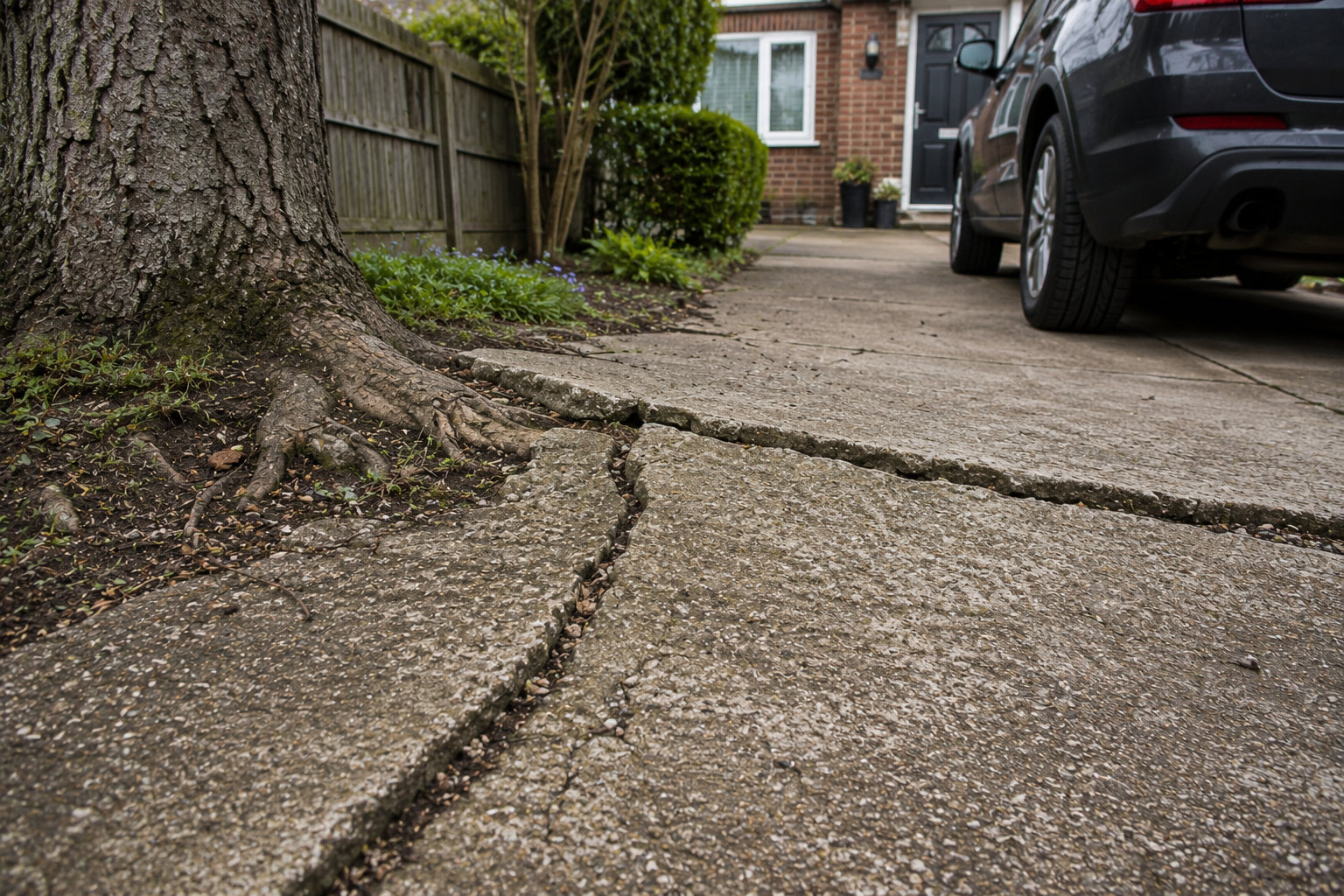
Some causes are a bit less obvious until you really think about it. Tree roots, for example, can slowly push up from underneath and start lifting sections of a driveway. It doesn’t happen overnight, but once it starts, cracks and uneven spots usually follow not long after.
Weight is another factor that gets overlooked. Most driveways are built for regular cars, not constant heavy loads. Vans, delivery vehicles, or anything heavier passing over the same area again and again can put pressure on the surface and the ground beneath it.
Even general daily use plays its part over time. Nothing dramatic, just wear building up little by little. That’s why driveway repair is often about stopping things early, before that steady pressure turns into something more noticeable across the surface.
Small Cracks vs Structural Damage – When Should You Worry?
Not all cracks are a big deal straight away. You might notice a few small cracks appear and nothing really changes for a while. That’s pretty normal, especially on older driveways. It’s easy to ignore them, and a lot of people do.
It becomes more of a concern when things start shifting. Cracks getting wider, sections not sitting level, maybe even a slight dip forming in one area. That usually points to something deeper going on rather than just surface wear.
At that stage, driveway repair isn’t just about filling it in and moving on. Sorting it early still helps though, as it can stop the damage spreading further across the surface and turning into a much bigger job later.
How Driveway Repair Works (And When It’s Enough)
When people hear driveway repair, they usually expect something complicated. Most of the time, it isn’t. If the damage is only on the surface, it can be a fairly simple fix and doesn’t take as much work as you’d think.
Small cracks are often just filled and sealed to stop them spreading. If a section has started to break up, that part can be patched instead of touching the whole driveway. It’s more about dealing with the problem area rather than starting again from scratch.
That said, it doesn’t always hold if the issue runs deeper. In those cases, driveway repair might only be a short-term fix. Catching it early still gives you a better chance of keeping things simple and avoiding a bigger job further down the line.
When Resurfacing or Replacement Is the Better Option for Driveway Repair
Sometimes you fix one part of a driveway and something else shows up not long after. It can feel like you’re just chasing it around. That’s usually when it’s not just one issue anymore, it’s the whole surface starting to give up a bit.
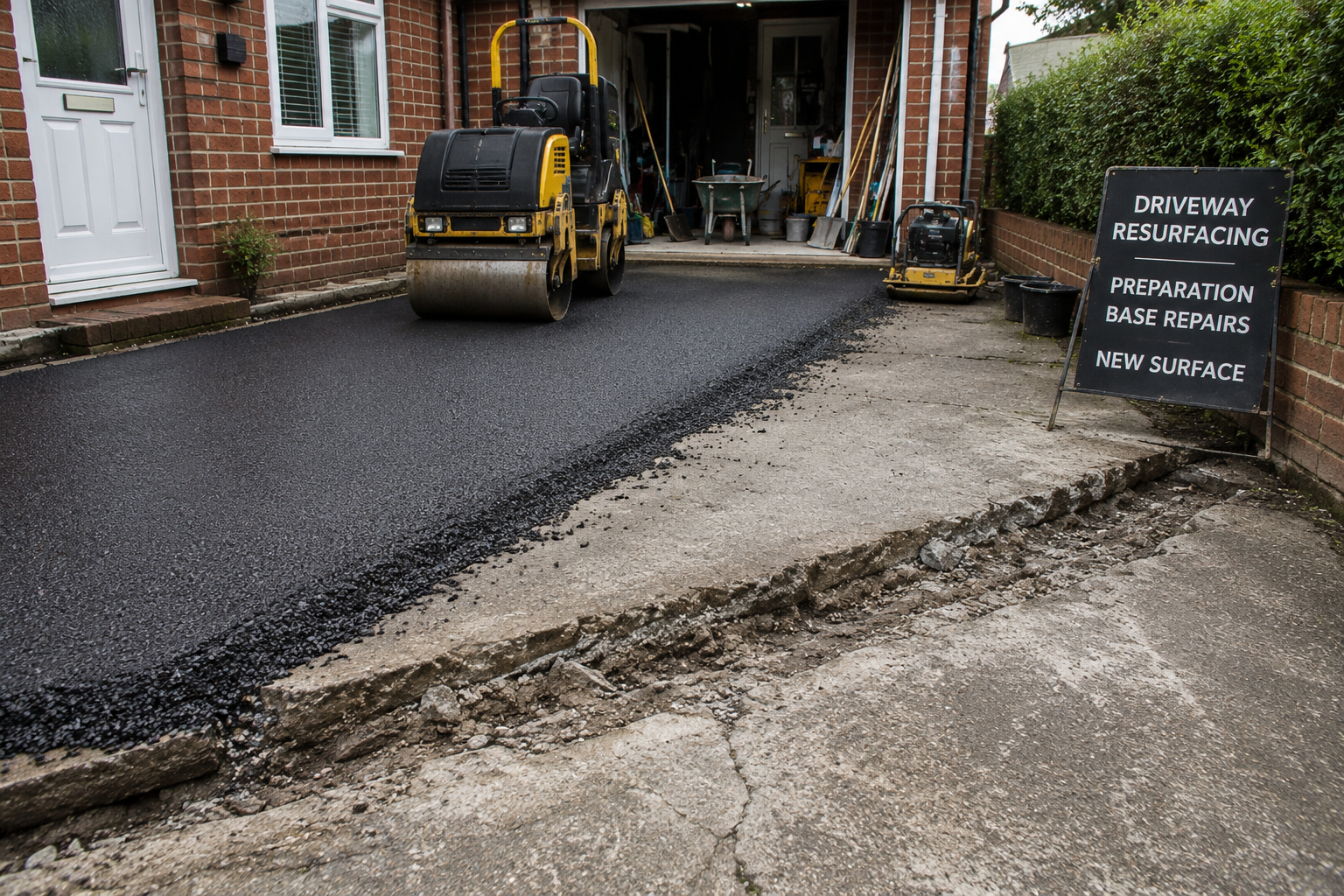
Resurfacing tends to come into it at that point. Instead of patching different spots, the surface is covered again so everything looks more even. It also helps hide older wear that’s built up over time, rather than focusing on each crack on its own.
If the problem is underneath, repairs don’t really hold for long. That’s where replacement makes more sense, even though it’s a bigger job. Getting the base sorted properly means the new surface has something solid to sit on, which usually saves hassle later.
Simple Ways to Protect Your Driveway and Avoid Future Repairs
A lot of it just comes down to not leaving things too long. You’ll usually spot small changes before anything major happens. A bit of dirt sitting there, water not draining properly, that sort of thing. Easy to ignore, but it’s often where problems start.
Giving it a clean now and then helps more than people think. Nothing over the top, just enough to stop build-up. Some surfaces benefit from being sealed as well, especially if they’re starting to look worn. It gives them a bit more protection from daily use and the weather.
It’s not about constantly maintaining it. Just keeping an eye on it makes a difference. Small issues are much easier to deal with early, and it usually means less need for bigger driveway repair later on.
Not Sure What Your Driveway Needs?
Not sure whether your driveway needs repair, resurfacing or a full replacement? Getting a professional opinion early can make all the difference. L&R Surfacing can assess the condition of your driveway and recommend the right approach, so you’re not wasting time or money on the wrong fix.