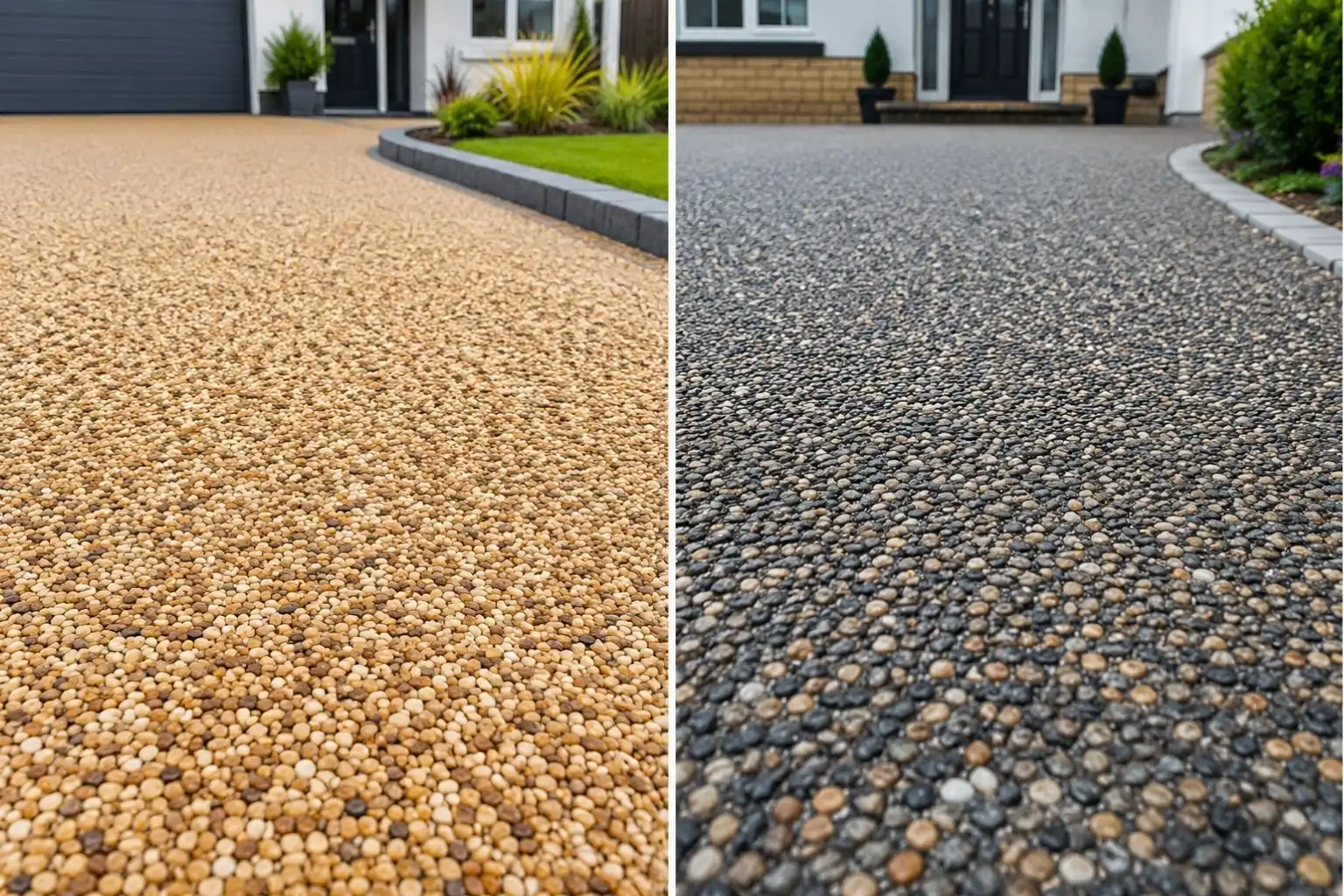
Damage to a resin driveway rarely makes it clear whether it is cosmetic or structural, leaving homeowners guessing at what actually needs fixing. A small surface crack may have a straightforward solution, while the same crack accompanied by movement or sinking can point to a failure in the layers beneath.
UK Department for Transport guidance notes that cracking can indicate structural damage rather than a defect confined to the surface. This is why a driveway’s visible condition may not tell the whole story, and why the cause of the damage needs assessing before choosing a repair.
So, how can homeowners tell which resin driveway damage can be repaired, and which problems call for more extensive work?
What Causes Damage to a Resin Driveway?
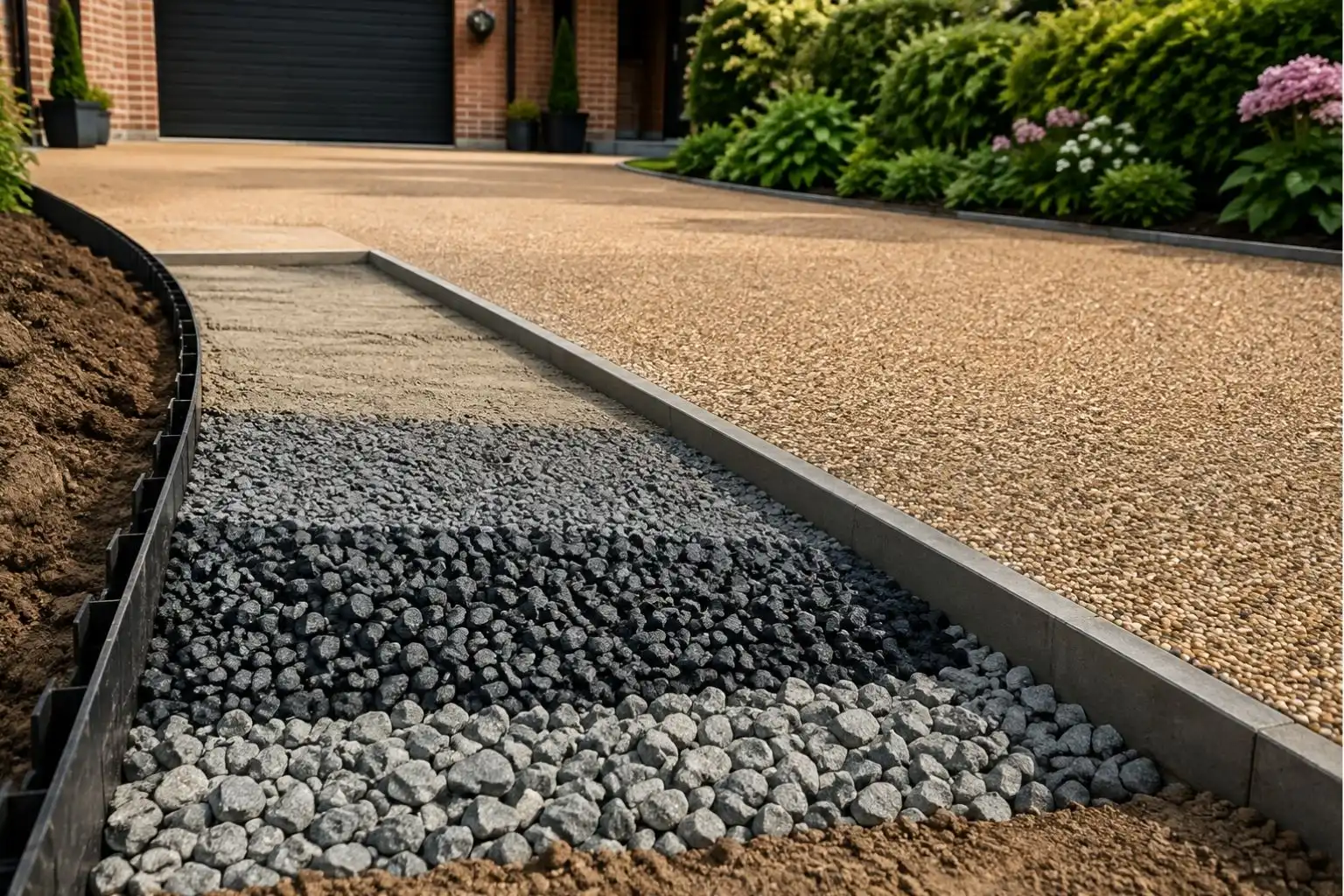
A resin surface is a system, not a single layer. The resin and aggregate sit on a base, usually tarmac or concrete, which in turn sits on a compacted sub-base. Problems can start in any of those layers, which is why identifying the cause matters more than describing the symptom.
Common causes of resin driveway damage include:
- Ground movement. Settlement in the sub-base, tree roots, or clay soils shifting through wet and dry seasons can all pull the surface out of shape.
- Water and frost. Water that finds its way into a small crack expands as it freezes, widening the gap a little more each winter.
- Point loading. Skips, delivery lorries, caravan jockey wheels, motorbike side stands and trailer legs concentrate weight into a small area and can dent or fracture the surface.
- Poor installation. Insufficient depth, an incorrect resin-to-aggregate ratio, or laying in cold or damp conditions will usually show up as weakness within the first year or two.
- UV exposure. Sunlight gradually fades some pigments and can yellow certain resin systems.
- Contamination. Petrol, diesel, oil and hot tyre marks soften or stain the binder.
- Organic growth. Moss and weeds establish at edges and joints where debris collects and holds moisture.
Each of these leaves a different signature on the surface, and that signature is what a contractor reads during an inspection.
Which Resin Driveway Problems Can Be Repaired?
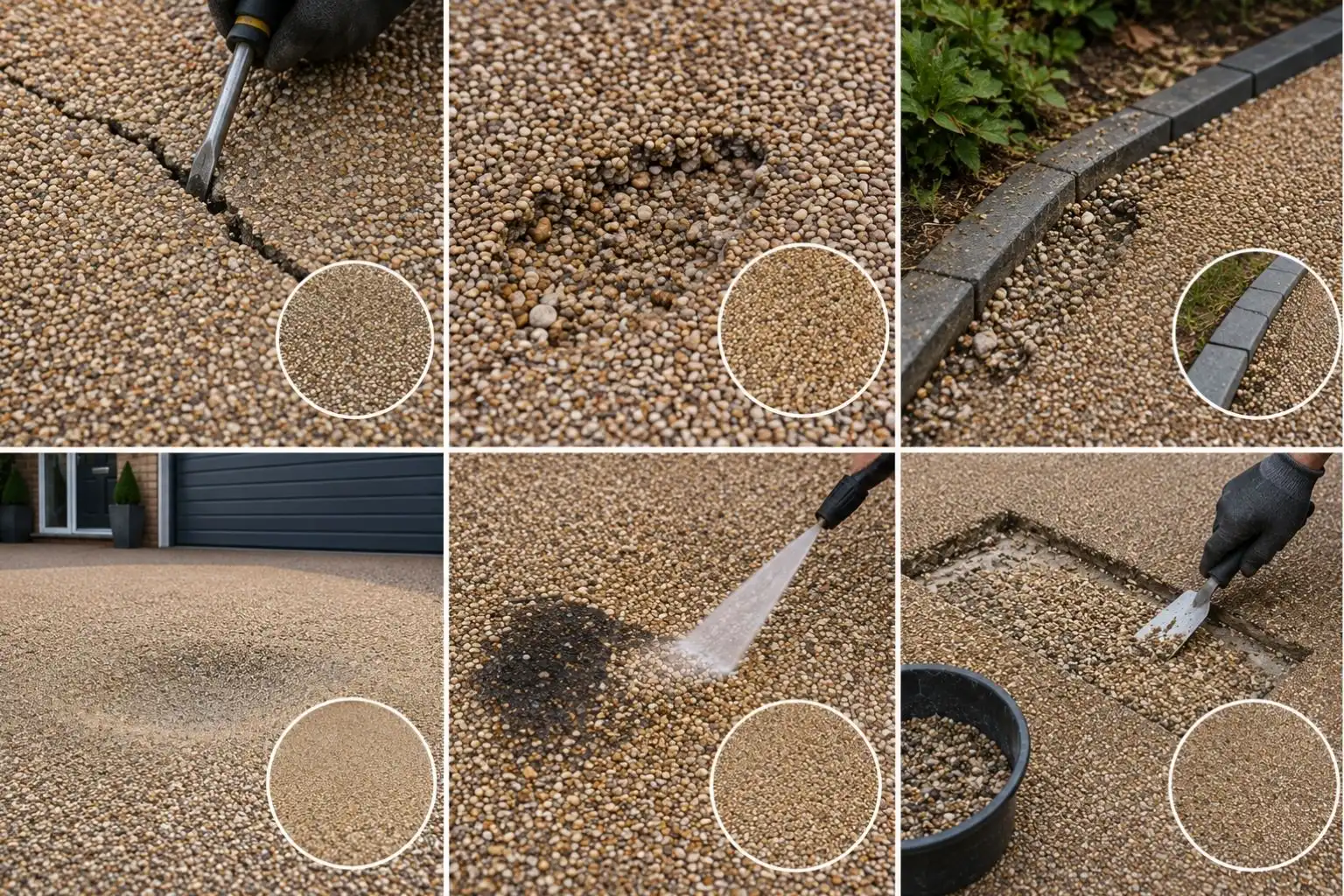
Plenty of faults are confined to the resin layer itself. Where the base underneath is stable, resin bound driveway repairs can restore both appearance and performance without disturbing the rest of the driveway.
1. Isolated cracks
Hairline and single-line resin driveway cracks can be cut out, cleaned and refilled with matching resin and aggregate. Treating small cracks early helps fix cracks before water gets into the layers below, but minor cracks are often too narrow for a standard aggregate blend to pack in effectively, so the repair method depends on crack width. Typical isolated, non-structural repairs usually cost £50 to £150 per square metre.
2. Loose stones or missing aggregate
Small bare patches, sometimes called ravelling or loose stones, appear where the binder has weakened in one spot; resin driveways can also develop cracking and staining, but here any damaged resin should be removed before new resin and stone are worked in. Fresh resin and stone can be worked into the repaired area and blended with the existing surface.
3. Edge breakdown
Edges take the heaviest wear, particularly where a driveway meets a lawn, border or kerb without proper restraint. If the sub-base is sound, these sections can be rebuilt and reinforced to prevent further loss, though where the adjoining landscaping has shifted or the edging has broken down, the restraint usually needs restoring at the same time.
4. Shallow dips and depressions
A slight hollow left by minor settlement, unlike deeper sinking areas caused by structural movement, can be corrected in place rather than across the whole surface. This holds so long as the movement has stopped and the base itself has not failed, because if the ground beneath still moves or does not drain properly, this kind of levelling becomes a temporary fix rather than a long term solution.
5. Stains, surface marks, and stain treatment
Oil spots, tyre marks and general grime sit on the surface rather than within the structure beneath it. Prompt stain treatment and surface cleaning usually clear them without any physical repair, and acting quickly helps prevent permanent marks. If prep is needed, pressure washing should only be done on a gentle setting so the resin binder is not damaged.
6. Impact chips
Damage from a dropped tool or a scraped skip is localised by definition and rarely spreads. In most cases, this is a patch repair, where the damaged patch or damaged area is cut out and replaced to match the finish around it. Patch repairs typically cost between £200 and £800, and the repaired section should be left to set according to product guidelines and the manufacturer’s instructions before use.
One point worth setting expectations on is blending. A repair uses the same materials, but the existing driveway has weathered, and the new section has not, so the patch is unlikely to be completely invisible against the original surface, especially on older driveways. A skilled installer will get very close, and the difference softens over the following months, though an exact match on an older surface is rarely achievable. Repairing early gives the neatest result.
What Resin Driveway Damage Cannot Be Fixed Easily?
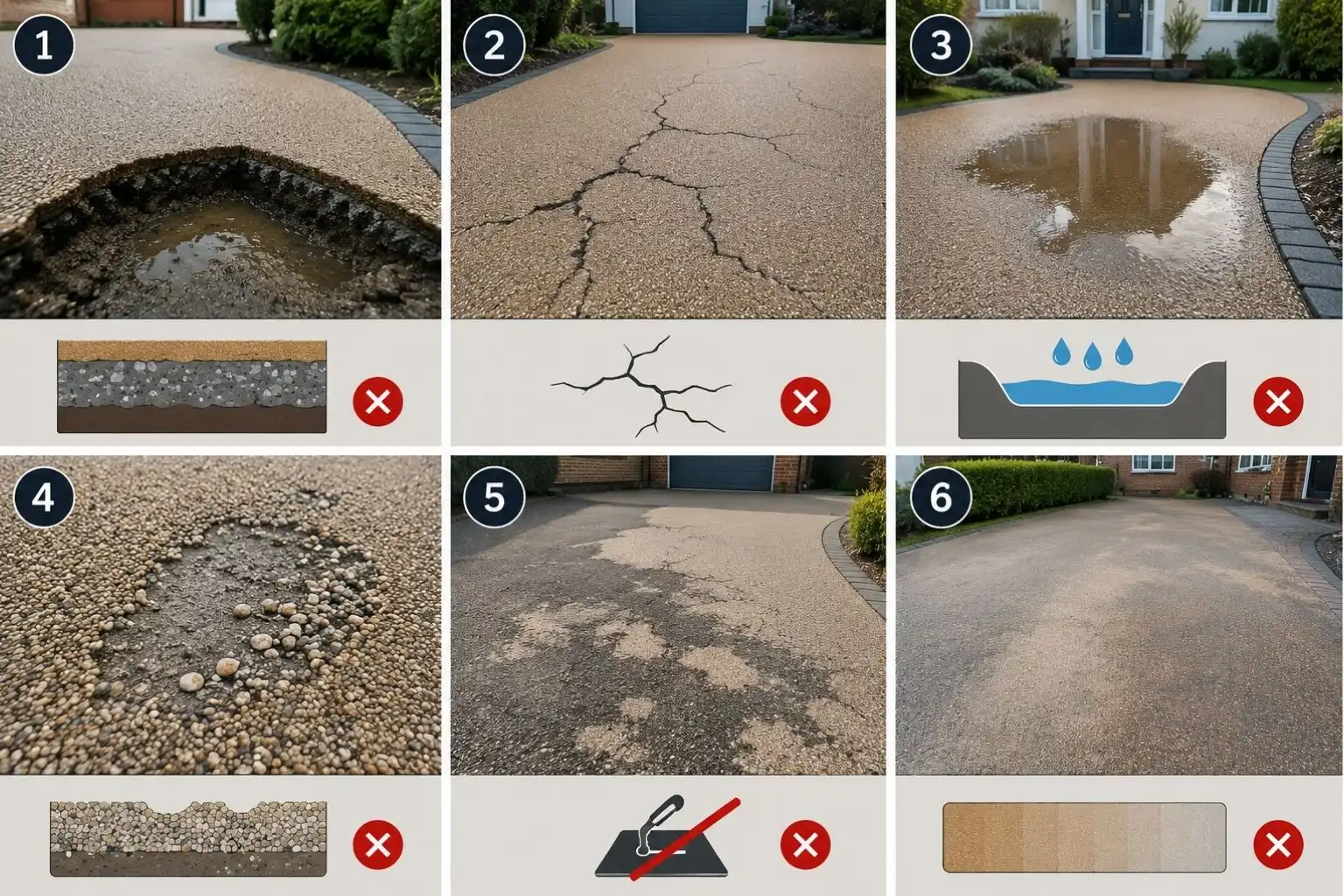
Some faults sit below the surface, and patching over them only hides the cause for a season or two. In these cases, resin driveway resurfacing or full replacement is the sensible route.
1. Sub-base failure
A resin surface is only ever as strong as what lies beneath it. If the base beneath was not compacted properly, was laid too thin, or has washed out, the resin relies on it entirely for support and no amount of surface work will hold. The base has to be excavated and rebuilt. A new resin surface should only go down once the groundworks beneath have been reinstated to the correct depth and compaction.
2. Widespread cracking.
A crack here and there is normal ageing. Cracking that appears in several places at once, or that returns in the same spot after repeated repairs, points to movement underneath rather than a surface defect, and heavy traffic can accelerate cracking where the structure is already vulnerable.
3. Drainage failure.
Standing water points to drainage issues, often caused by poor drainage, and shows that water pools because something has failed across the surface or in the ground beneath. If the surface has clogged, the falls are wrong, or the base no longer drain properly, filling the low spot will not solve the problem.
4. Extensive surface breakdown.
Where the resin layer has thinned across the whole driveway, unlike a resin bonded surface with a rougher texture and loose-stone finish, and aggregate is lifting in several areas at once or across multiple parts of the surrounding driveway, patch repairs stop being economical. Full resin driveway restoration over a sound base is usually better value than a running series of small fixes.
5. Repeated failure from poor installation.
Driveways laid to the wrong specification tend to fail again and again in new places. Each repair becomes a temporary fix when the original resin system was not properly installed and the underlying specification stays wrong, including where poor weather conditions during laying led to early problems.
6. Whole-surface fading.
If colour has shifted evenly across the driveway, a repaired section will always read as new. Overlaying the full area is the only route to a consistent finish.
A quick way to think about it: if the fault sits in the resin, it can usually be repaired. If the fault sits in the base, the drainage or the original specification, it has to be corrected at that level. Experienced resin driveway repair specialists will tell you which of the two you are dealing with, and will say so before quoting for work that will not last.
How Can You Prevent Future Resin Driveway Repairs?
Sensible resin driveway maintenance is undemanding, and while a resin drive is often sold as low maintenance, it still benefits from planned upkeep to help the surface last.
- Brush the driveway regularly with a stiff broom to clear leaves, moss, silt and routine debris before they build up in the surface and encourage weed growth.
- Wash it down with a pressure washer on a gentle setting and a wide fan nozzle, keeping the lance moving and away from the edges; occasional jet washing 2–4 times per year is usually enough.
- Treat moss and algae every 3–6 months, and deal with weeds around the perimeter early, since organic growth traps moisture against the surface; for persistent growth, use a suitable weed killer and follow the manufacturer’s instructions. Frequent weeds can also point to a poor weed membrane below.
- Keep drains, channels and soakaways clear, so the surface and the ground beneath drain properly and avoid repeat repairs.
- Spread the load. Put a board under jockey wheels, jacks, motorbike stands and skip feet.
- Avoid using de-icing salt in large quantities and strong solvents, and clean up fuel or oil spills promptly.
- Repair small faults while they are still small. A single crack sealed this spring is far cheaper than a section rebuilt next year.
An annual look over the surface is enough for many driveways. Walk it after heavy rain, note where water sits, and check the edges. For general resin bound cleaning, soft washing every 6–12 months and resealing every 3–5 years help protect the resin binder. Those two things reveal developing problems earlier than anything else.
Protect Your Driveway From Repeat Damage
The practical test for any resin driveway damage is whether the visible fault and its root cause have both been dealt with or whether the problem is still developing. A crack that has looked the same for two summers is a maintenance job; one that has widened since last winter is telling you the layers beneath are still moving, and resin bound driveway repairs applied over active movement fail on the same timescale as the movement itself.
Before agreeing to work, ask what caused the fault rather than what will be used to fill it, check what guarantee covers the result, and seek professional assistance where structural movement, drainage failure, or tree root damage is suspected. If your driveway has reached the point where patching no longer makes sense, L&R Surfacing installs resin driveways and imprinted concrete across Manchester and Cheshire, handling everything from the groundworks up and backing the finished surface with a 10-year written guarantee. Book a free site survey, and we’ll tell you honestly what the existing base can support.
Frequently Asked Questions for Resin Driveway Repairs
Can a resin driveway be repaired without replacing the whole surface?
In many cases, yes. Where the base underneath is stable, a local resin repair on a resin bound surface is usually the right solution when the fault sits in the resin layer, allowing the affected section to be restored without disturbing the rest of the driveway. Isolated resin driveway cracks, loose stones, staining, edge breakdown and impact chips all fall into this category. The deciding factor is not the size of the fault but whether the layers beneath it are still sound, which is why an inspection of the base and drainage should come before any quote for surface work, with the existing surface checked first to decide if a repaired area will be enough.
How do I know whether my driveway needs a repair or resurfacing?
Look at how the damage is distributed and whether it is still developing. A fault in one place that has stayed the same size usually points to a local repair, while widespread cracking, recurring failures or structural movement below more often mean a new surface is the better option, typically with resin driveway resurfacing over a rebuilt base. Resin driveway repair specialists should walk the surface, check where water sits after rain and assess the edges before recommending either route, especially as colour matching becomes harder as the original area weathers, which is one reason resurfacing is sometimes preferred over isolated patching.
Will a repaired section match the rest of my driveway?
It will come close, though not exactly on an older surface. In residential repairs, colour matching can be very close, but it is rarely completely invisible once the original surface has weathered. The existing driveway has weathered, and the new material has not, so a repair generally reads slightly fresher for the first few months before the difference softens, and a fresh aggregate blend with Daltex UVR Resin may still look newer than the surrounding driveway for a time. Where colour has faded evenly across the whole driveway, full resin driveway restoration over the existing area is the only way to achieve a consistent finish.
What should I ask a contractor before agreeing to resin driveway repairs?
Ask what caused the resin driveway damage and whether the contractor has assessed the existing surface, rather than what will be used to fill it, since a contractor who cannot explain the cause is unlikely to prevent it recurring. Ask whether the base and drainage have been assessed, what guarantee covers the finished work, and how the repair affects permeability. Repaired areas should then be left to cure in line with product guidance, and a full new resin section may need up to 7 days before normal use. Unlike block paving, where damaged individual blocks can be swapped out, resin repairs rely on proper preparation and colour matching. It is also worth asking what resin driveway maintenance the surface needs afterwards, as regular clearing and drainage checks do more to prevent repeat work than any patch.