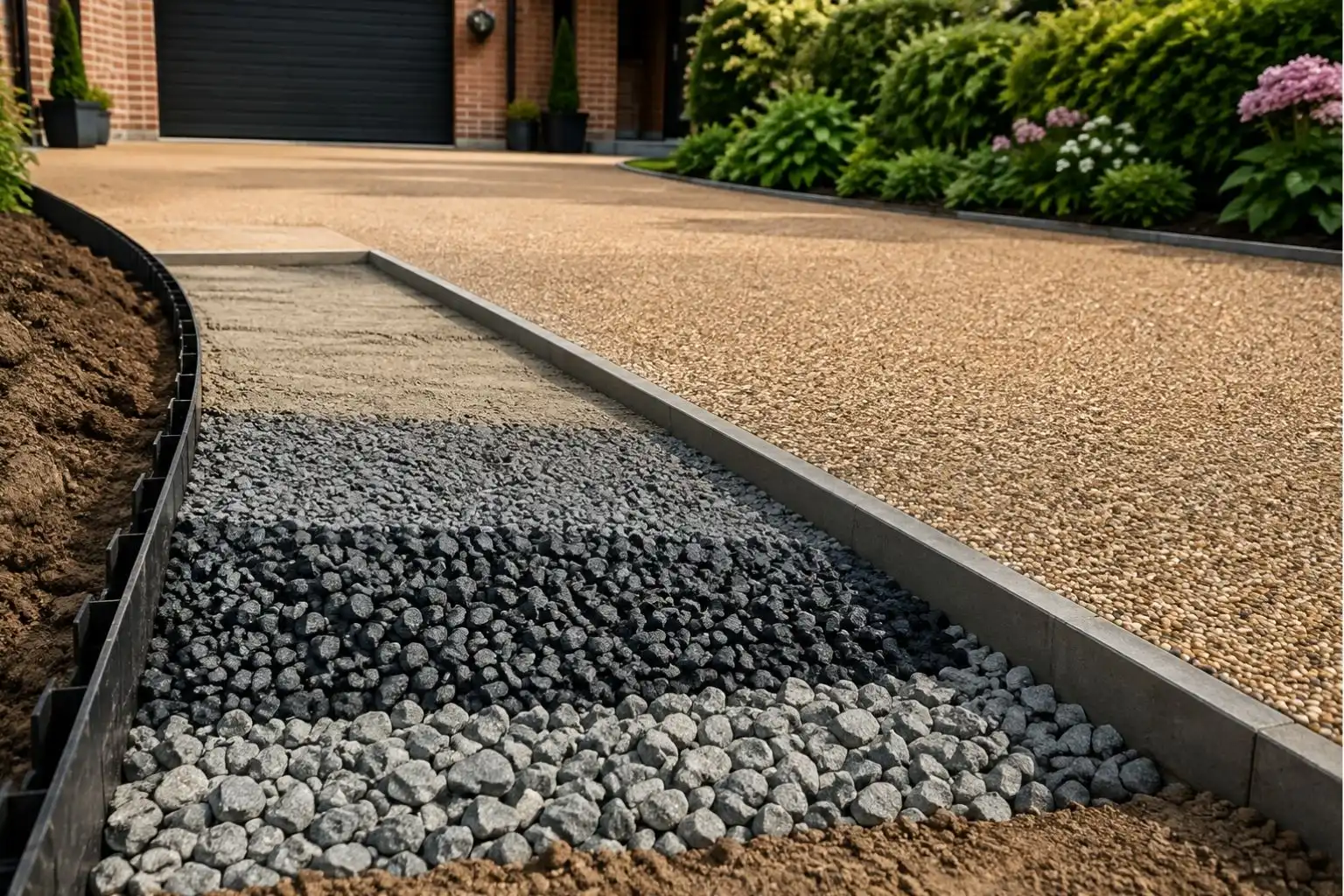
Stamped concrete driveways have become one of the strongest driveway materials for UK homeowners in 2025. The combination of durability, visual appeal and design choice makes them a popular upgrade for front gardens and entrance areas. Many households across Manchester, Cheshire and the North West now choose stamped concrete as an alternative to block paving, natural stone or resin, mainly due to its balance of cost and long-term performance.
A stamped concrete driveway offers aesthetic appeal that rivals premium materials without their maintenance demands. The driveway is created from wet concrete poured as a single slab. Installers then use pattern imprinted concrete techniques to press stone-like patterns and colour into the surface. The result looks impressive, remains low maintenance and suits both modern and traditional homes.
What Is a Stamped Concrete Driveway?
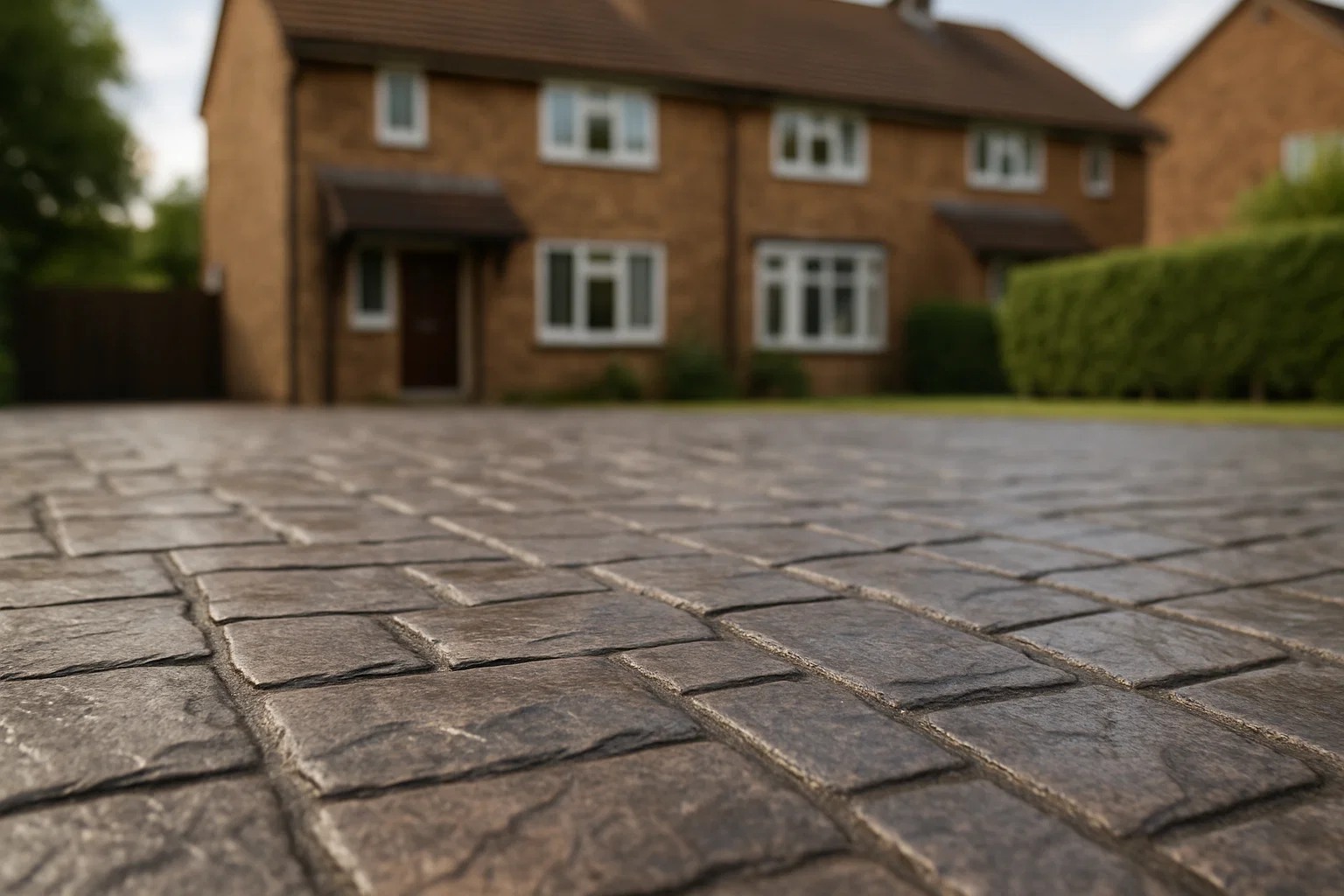
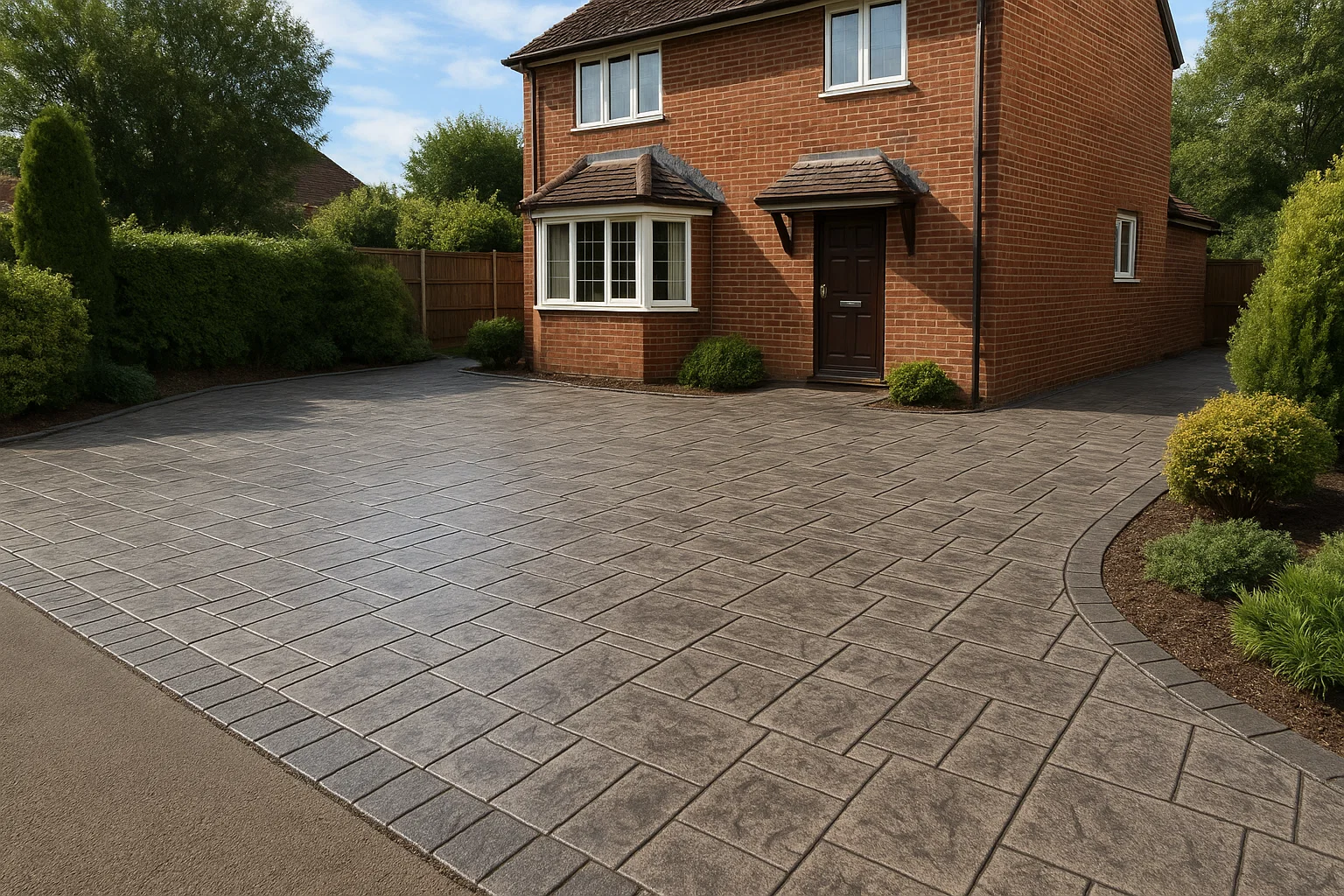
A stamped concrete driveway is created using a monolithic pour of concrete that is coloured and textured before it fully sets. While the concrete is still workable, rubber mats imprint patterns that replicate slate, cobble, ashlar stone or timber. These mats are pressed onto the wet concrete to produce highly realistic textures.
Colour hardeners and release agents are used to give depth and shading to the pattern. This technique has become extremely popular among homeowners looking to upgrade old concrete driveways without committing to the cost associated with natural stone. Pattern imprinted concrete driveways also avoid the jointing issues seen with block paving, keeping weeds out and maintaining a clean finish.
Homeowners comparing different decorative concrete options often look at, Imprinted Concrete Driveways: A Stylish and Durable Choice for Your Home as both approaches offer textured finishes with strong visual impact.
Popular Stamped Concrete Styles for 2025
Stamped concrete styles in 2025 have become far more advanced, offering a full range of patterns that suit different homes. Many homeowners prefer patterned concrete driveways with cobblestone textures, as they work beautifully with older properties. Slate and stone textures are popular too, providing a contemporary look for modern homes.
Patterns like ashlar stone, large slate pieces and textured stone continue to grow in popularity. These designs imitate real stone extremely well and create a premium appearance without the labour costs associated with natural stone installation. Some homeowners choose warm tones that match brickwork, while others prefer subtle greys that complement front gardens landscaping.
The versatility of patterned concrete means the finish can be tailored to any home. Larger driveways tend to suit broad slate or stone patterns, while smaller driveways work well with tighter cobble or brick textures that add detail without overwhelming the space.
How Much Does a Stamped Concrete Driveway Cost?
The cost of stamped concrete driveways depends on pattern complexity, colour combinations, excavation requirements and the size of the project. Labour costs play a significant role in the final price due to the skilled nature of the installation process. Stamped concrete often sits between plain concrete and high-end stone in terms of overall investment.
It usually costs more than basic tarmac or gravel, although it delivers a more decorative finish. Many homeowners choose stamped concrete when looking for a new driveway that lifts kerb appeal while staying within a realistic budget. The finish is long-lasting, and resealing every few years helps maintain colour and protect the surface. This makes stamped concrete a smart choice for anyone wanting lasting value without the regular upkeep seen in other driveway materials.
Stamped Concrete vs Resin Driveways
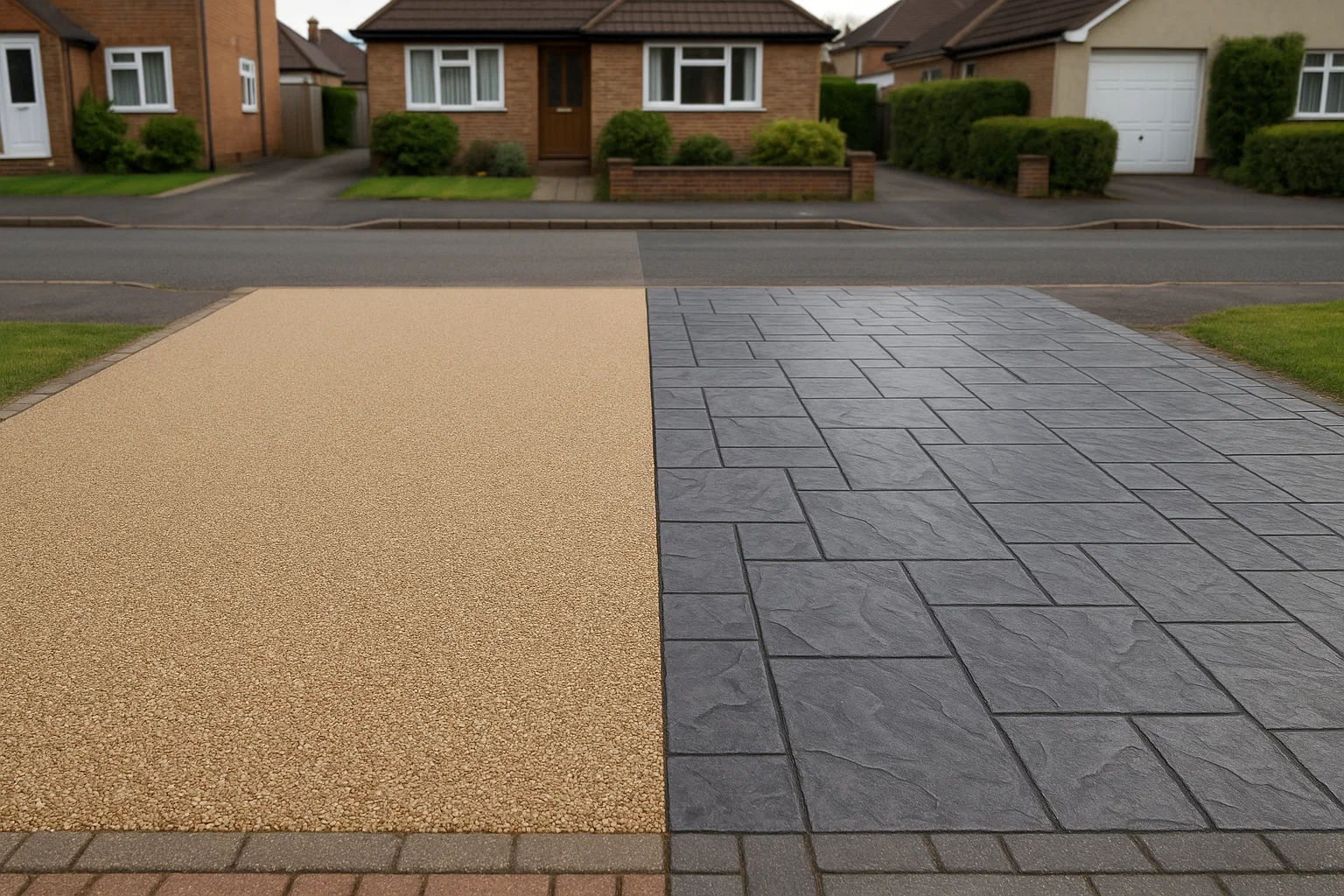
Stamped concrete and resin-bound surfaces serve different purposes, so the choice depends on the property. Resin driveways provide a smooth, permeable finish that suits modern landscaping. Stamped concrete offers a textured, patterned appearance that feels closer to natural stone.
Stamped concrete excels in visual appeal where a strong design statement is needed. Resin-bound driveways offer superior drainage due to their porous structure, which benefits homes dealing with frequent water run-off. Both options are durable, although resin handles minor ground movement better. Stamped concrete works best when laid on a stable, well-prepared base. Imprinted concrete vs resin driveways covers the key differences clearly.
Stamped Concrete vs Block Paving
Block paving remains a classic choice in the UK due to its flexibility and the huge variety of shapes available. Stamped concrete competes strongly with block paving because of its seamless slab, low maintenance needs and bold finish.
Block paving requires joint sanding, weed control and occasional levelling. Stamped concrete avoids these ongoing tasks due to its single-piece structure. It doesn’t rely on a sand bed, so it performs well under vehicle weight without shifting. Block paving can fade over time, particularly in sunnier spots. Stamped concrete retains its colour when resealed, which helps maintain the original aesthetic.
Homeowners comparing the two often choose stamped concrete for its realistic stone appearance and the cleaner overall look it creates.
The Installation Process for Stamped Concrete
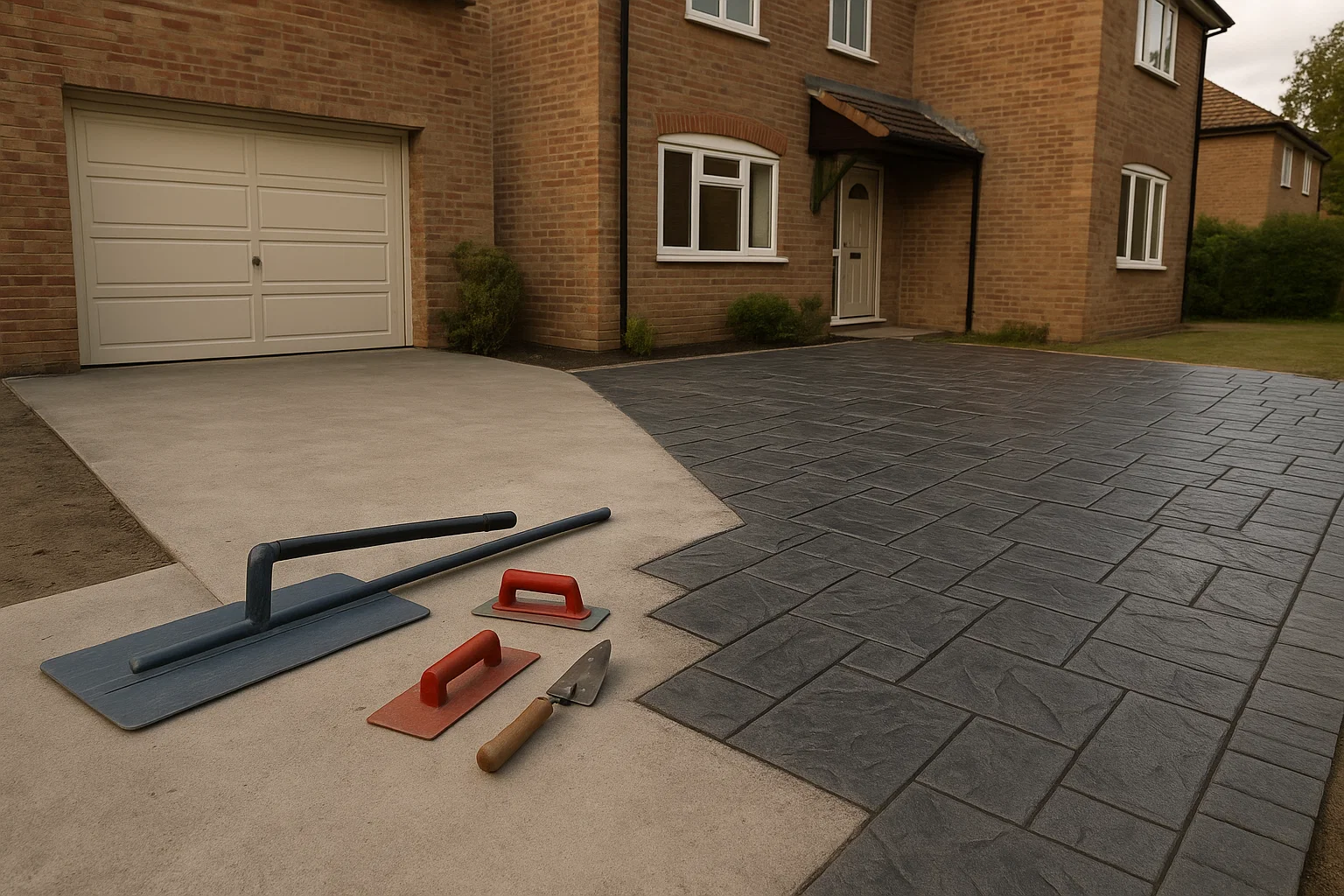
The installation process begins with preparing a strong sub-base. Once levelled and compacted, formwork is placed around the area, proper groundworks at this stage lay the foundation for a stable, long-lasting driveway. The concrete is poured while still wet and levelled to the correct height. Colour hardener is applied to the surface, followed by a release agent. At the correct stage of curing, pattern mats are pressed into the concrete to imprint the design.
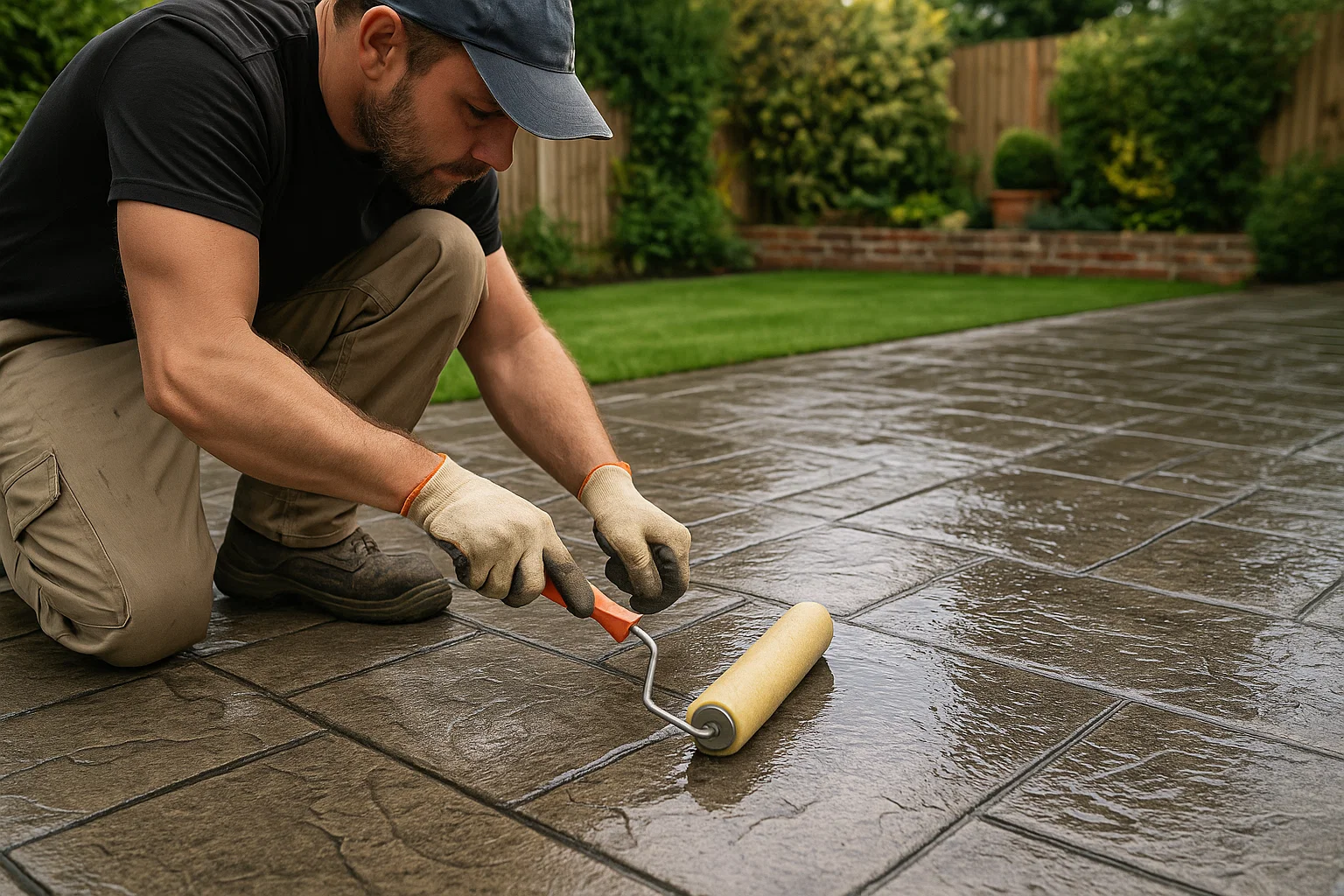
Once the surface has fully cured, the release agent is washed away and the slab is sealed. The sealer improves colour, weather resistance and overall durability. A high-quality installation produces concrete surfaces that remain attractive for many years.
For homeowners interested in learning more about how concrete behaves during installation, the Concrete Centre offers useful guidance on concrete surfaces and performance https://www.concretecentre.com/
How Long Does Stamped Concrete Last?
Stamped concrete driveways last for many years when they are sealed regularly and installed on a stable base. They handle daily use well and provide excellent resistance to weather, especially when protected from moisture. Resealing every few years prevents fading and keeps the surface looking fresh.
A well-sealed stamped concrete driveway performs better in winter than untreated concrete. The surface remains strong, and water struggles to penetrate once the sealer is applied. Homeowners who maintain their driveway find the finish remains bright and clear for a long time.
When Stamped Concrete Might Not Be the Best Option
Stamped concrete may not be ideal where the ground is prone to movement. Homes with poor drainage or unstable soil may find block paving or resin more forgiving. Cracks can occur if the base shifts, and patch repairs do not always blend seamlessly with the original pattern.
Properties surrounded by large trees may also struggle due to root growth beneath the slab. Areas with continuous shade can take longer to dry during installation, which requires careful planning.
Stamped Concrete Maintenance in the UK Climate
Maintenance remains simple. Occasional washing keeps the driveway clean, while resealing every few years protects against staining and fading. Avoiding de-icing salts helps maintain longevity. A regularly sealed driveway keeps water out and reduces the chance of surface wear.
Stamped concrete is considered low maintenance compared to block paving, which requires routine weed control and joint sanding. Regular cleaning enhances both the colour and the pattern, especially on high-traffic driveways.
Why Homeowners Still Choose Stamped Concrete in 2025
Stamped concrete remains popular because it creates impressive visual impact at a reasonable cost. The full range of patterns and colours can transform a home’s exterior. The driveway becomes a key design feature, boosting kerb appeal and improving the feel of the property.
The low maintenance nature of stamped concrete appeals to busy households. The surface stays neat and tidy without the constant attention required by other driveway materials. Homeowners value the strength, the lifespan and the aesthetic appeal of a decorative concrete driveway.
L&R Surfacing: Specialists in Decorative and Imprinted Concrete
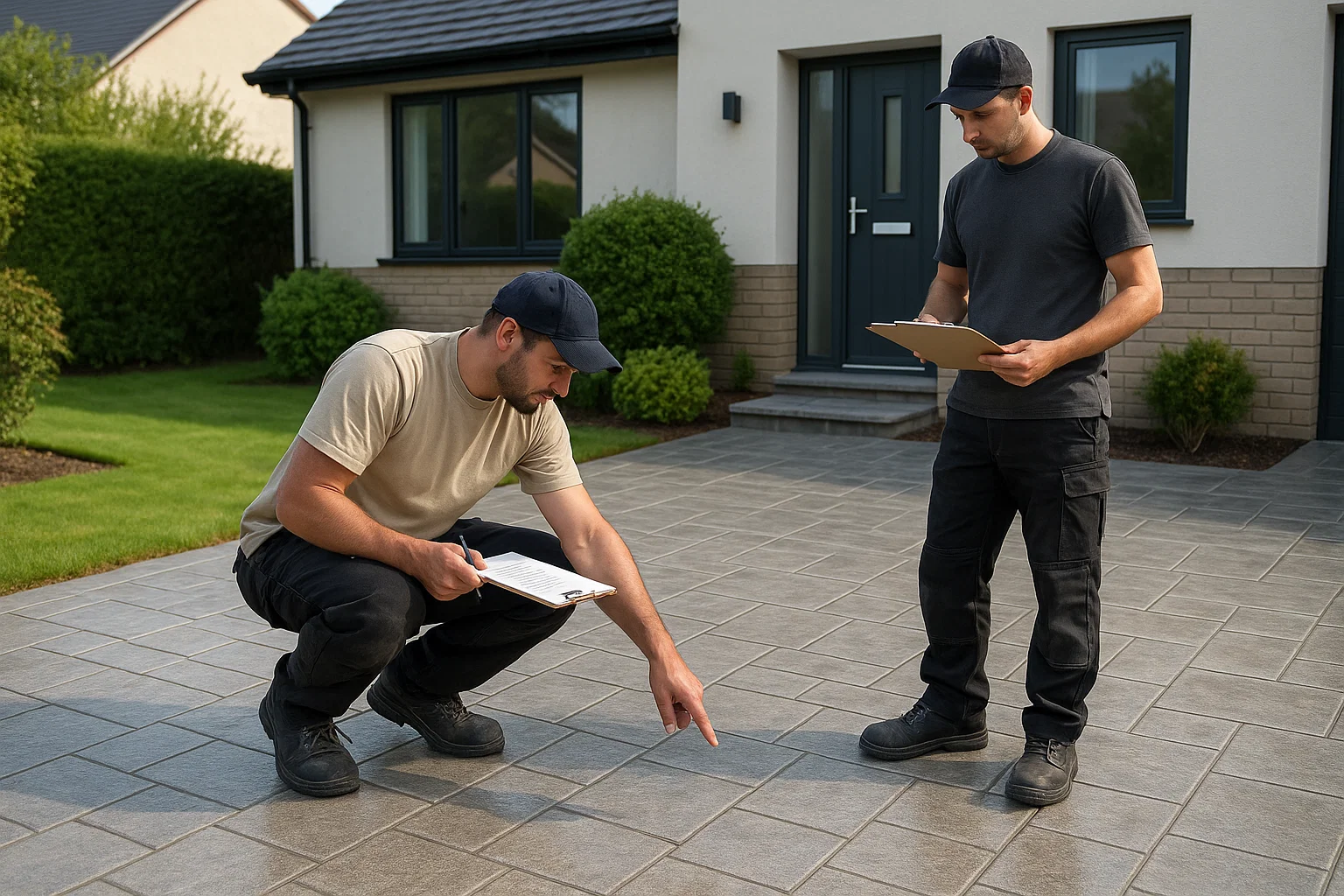
L&R Surfacing specialise in imprinted concrete driveways, stamped concrete, patterned concrete and decorative finishes across Manchester, Cheshire and the North West. Their detailed workmanship, industry knowledge and commitment to quality ensure each driveway is built to last. They use high-performance sealers, industry-leading patterns and durable installation methods to create beautiful concrete surfaces that enhance any home.
Their team handle every stage, from groundwork to finishing touches, ensuring the final result matches the client’s vision. Homeowners value the honesty, experience and skill L&R bring to every project.
Thinking About a New Stamped Concrete Driveway?
A stamped concrete driveway can transform the look of your home and increase long-term value. L&R Surfacing offer free quotes, expert guidance and a full range of decorative concrete styles to choose from.
If you want a driveway with strong visual appeal, low maintenance and years of performance, the team are ready to help. Get in touch today for friendly advice and a site visit tailored to your home.