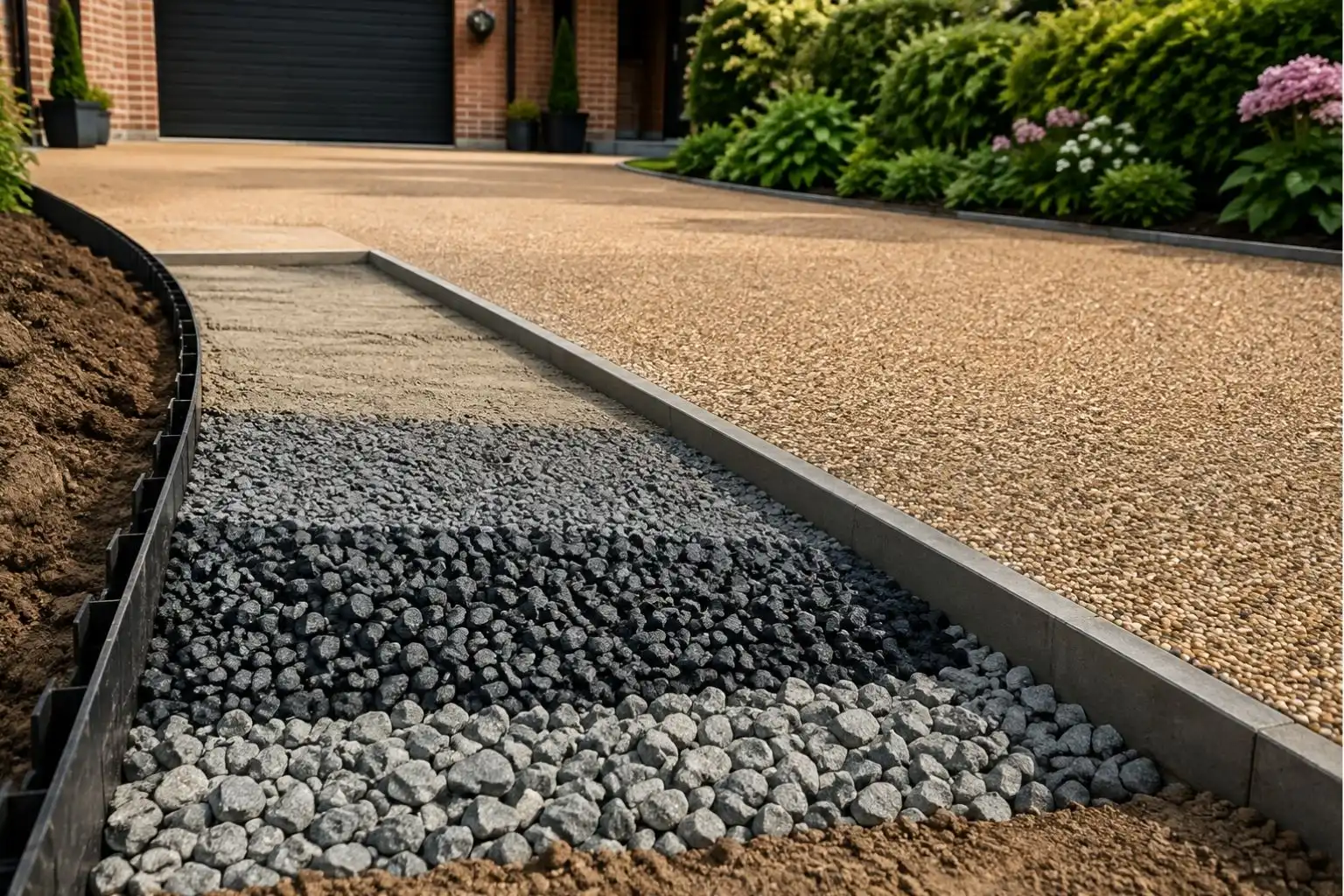
When you’re thinking about redoing your driveway, it’s easy to get overwhelmed. There are a lot of materials out there, but resin driveways and block paving come up a lot, and for good reason. They both look great and hold up well, but how they work and how much effort they require differ significantly.
If you live somewhere like Manchester, you’re probably already thinking about rain, drainage, and general wear and tear. A driveway needs to do more than sit there. It’s got to handle cars, bad weather, and still look decent after a few years.
In this article, we’ll break down how each surface compares across cost, appearance, maintenance, and more. Hopefully, it’ll help you decide what best fits your home.
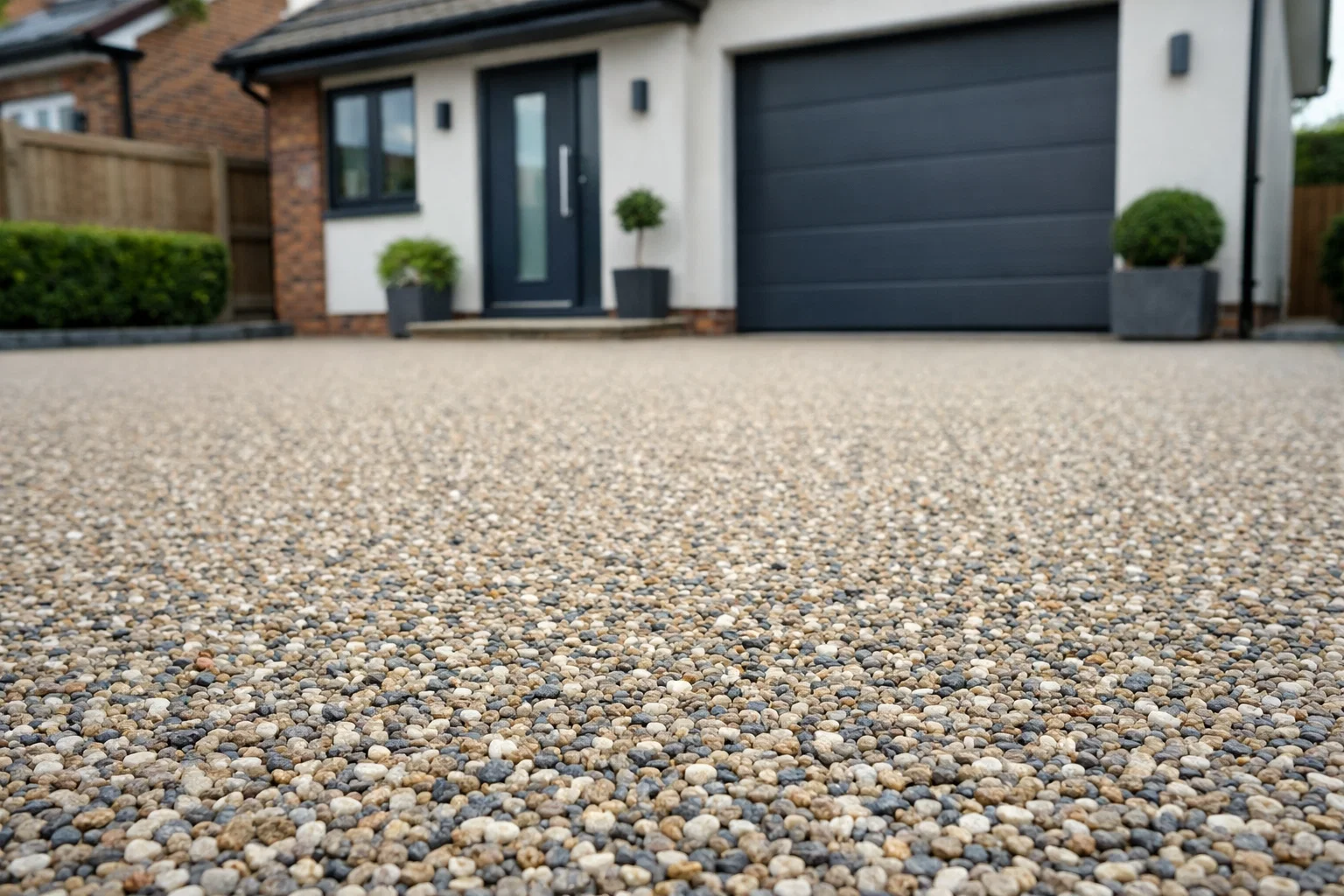
So, What Actually Is a Resin-Bound Driveway?
A resin-bound driveway is made by mixing small stones (known as aggregate) with a strong, clear resin. Once it’s all blended, that mix is spread and smoothed over a solid base – kind of like icing a cake, but with stones. The result is a tidy, even surface that’s often described as a “stone carpet.”
Here are a few reasons people like them:
- Water drains through them easily (they meet SuDS standards)
- The surface is smooth and even – no loose gravel
- You don’t have to do much to look after it
- Loads of colour and texture options to pick from
- It doesn’t encourage weeds or moss to grow
- UV-stable resins stop the colour fading over time
In places like Manchester, where heavy rain is pretty standard, resin driveways have become a go-to option. They’re practical, smart-looking, and don’t need constant maintenance – which is probably why more and more homeowners are leaning toward them.
If sustainability’s on your mind, it’s also worth checking out our guide on resin driveways as an eco-friendly option
What’s Block Paving, Then?
Block paving (sometimes called brick paving) is a more traditional driveway style. It’s made by laying many small blocks, usually concrete, clay, or stone, in a pattern over a solid, compacted base.
Here’s what people usually like about it:
- It gives you that classic, neat look with plenty of design options
- If one or two blocks get damaged, you can swap them out
- Some block types allow for drainage (though not all)
- There are quite a few colours and shapes available
- If it’s not laid correctly, blocks can start to move or sink over time
You’ll see block paving a lot on older or more traditional-looking homes. It works well with period-style architecture and offers plenty of layout flexibility, including herringbone, basketweave, and more.
What About the Cost?
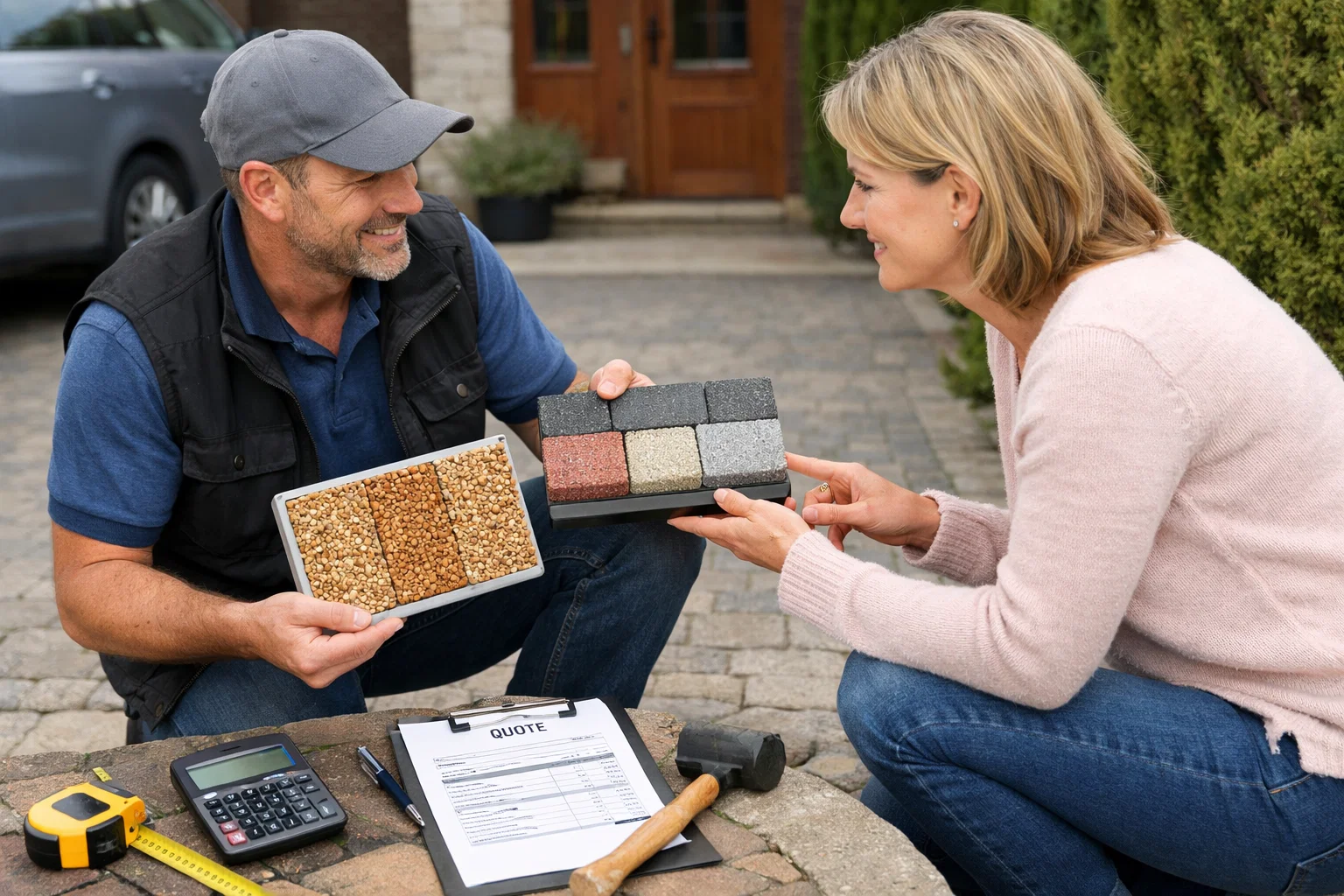
Resin usually looks more expensive up front. Approximately £100-£120 per square metre, give or take. Here’s the thing – if your old driveway’s in decent shape, the resin can often be laid right over the top. That means no digging everything up, which saves on time and labour. It’s also done quicker, and once it’s down, there’s not much to do. Maybe a clean now and again, but that’s about it.
Block paving may cost slightly less at the outset, typically £80 to £110 per square metre, but it’s not just about the blocks. The entire area usually needs groundworks, excavation, then rebuilding a solid base, before anything’s laid. That adds time and money, and over the years, you’ve got more to deal with – weeds coming through, the joints needing new sand, maybe swapping a few bricks if they shift or crack.
So, while resin might seem dearer at first, it often works out better long term, especially if you’re not keen on doing loads of upkeep. If budget’s the main driver, it’s also worth comparing both against imprinted concrete, which sits in a similar price bracket but gives a different finish again.
How Much Effort Do They Take to Maintain?
Resin doesn’t require much. You might give it a sweep now and then, or maybe hose it off if it has some dirt or something spilt on it. It stays pretty clean by itself. There aren’t cracks for weeds to get through, and stuff like oil or moss doesn’t really hang around. If it’s been laid properly, it’ll probably last years without needing much from you, even with cars coming and going all the time.
Block paving’s a bit different. You’ll probably be out there more often – brushing it, maybe re-doing the sand between the bricks, pulling up weeds if they pop through. It’s solid, yeah, but over time, the blocks can shift a bit, especially if the ground underneath wasn’t packed in quite right. Not always, but it happens.
If you’re looking for something that mostly gets the job done without requiring you to fuss over it, resin might be the better choice.
How Do They Look?
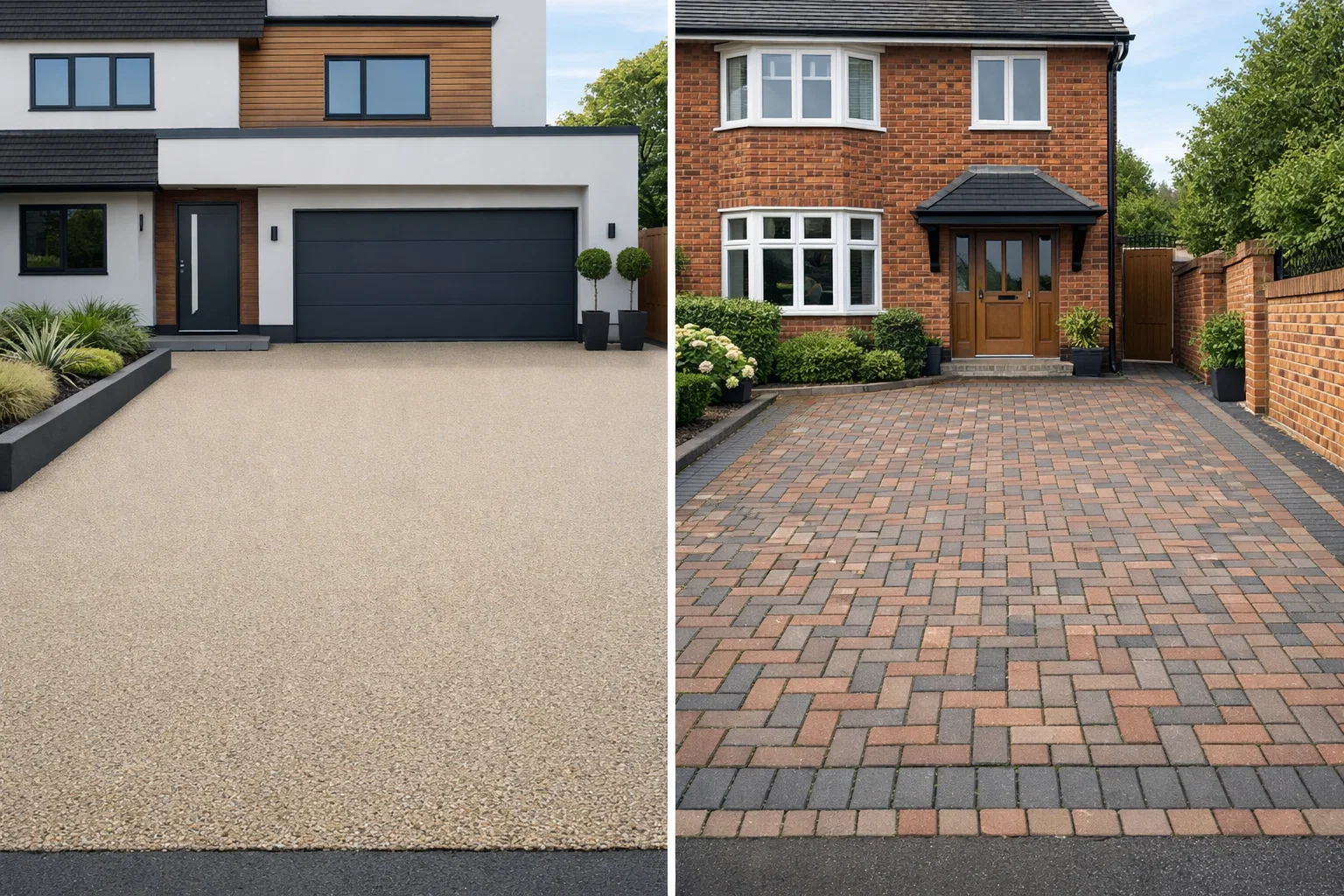
Resin provides a very smooth, modern finish, no gaps or anything, just one clean surface. You’ve got a lot of say in how it looks, too. There are many colours to choose from, and you can mix the stones in different ways depending on your space. It’s one of those things that fits just as well with a newer house as it does with something a bit older. Looks tidy without trying too hard.
Block paving’s more traditional. It suits houses with some character, especially older properties. You can lay it out in classic patterns, such as herringbone, which gives off a more old-school driveway feel. Colour-wise, it tends to stick to earthy tones, like red, brown or grey – nothing too bold, but that’s the point.
Honestly, they’re both great choices It’s just down to the style you’re after.
How Do They Handle Rain and Drainage?
Resin driveways are generally water-resistant. As long as it’s laid the right way, over a surface that lets water through, it’s entirely permeable. That means rain doesn’t sit on top or run off into the street; it just drains down through the surface. That’s a big plus in places like Manchester, where you get a fair bit of wet weather. It also meets SuDS requirements, so you usually don’t need additional drainage.
Block paving’s a bit different. Most standard blocks aren’t permeable on their own, so unless you go for a special type (which can cost more), you might have to add in extra drainage. That could mean channels or soakaways to stop water pooling.
If you’re in a spot like Manchester where rain’s a regular thing, resin’s got the edge. We’ve broken that down more in how resin driveways handle Manchester’s weather
If you live somewhere that gets a lot of rain, resin’s probably going to be the simpler option.
What’s the Install Like?
Resin driveways are usually the quickest ones to complete. In a lot of cases, it’s finished in a day or two, especially if it’s going on top of what’s already there. There’s little mess or noise, which is a plus. The only catch is the weather; it needs to be dry when it’s going down, otherwise, you’ll run into issues.
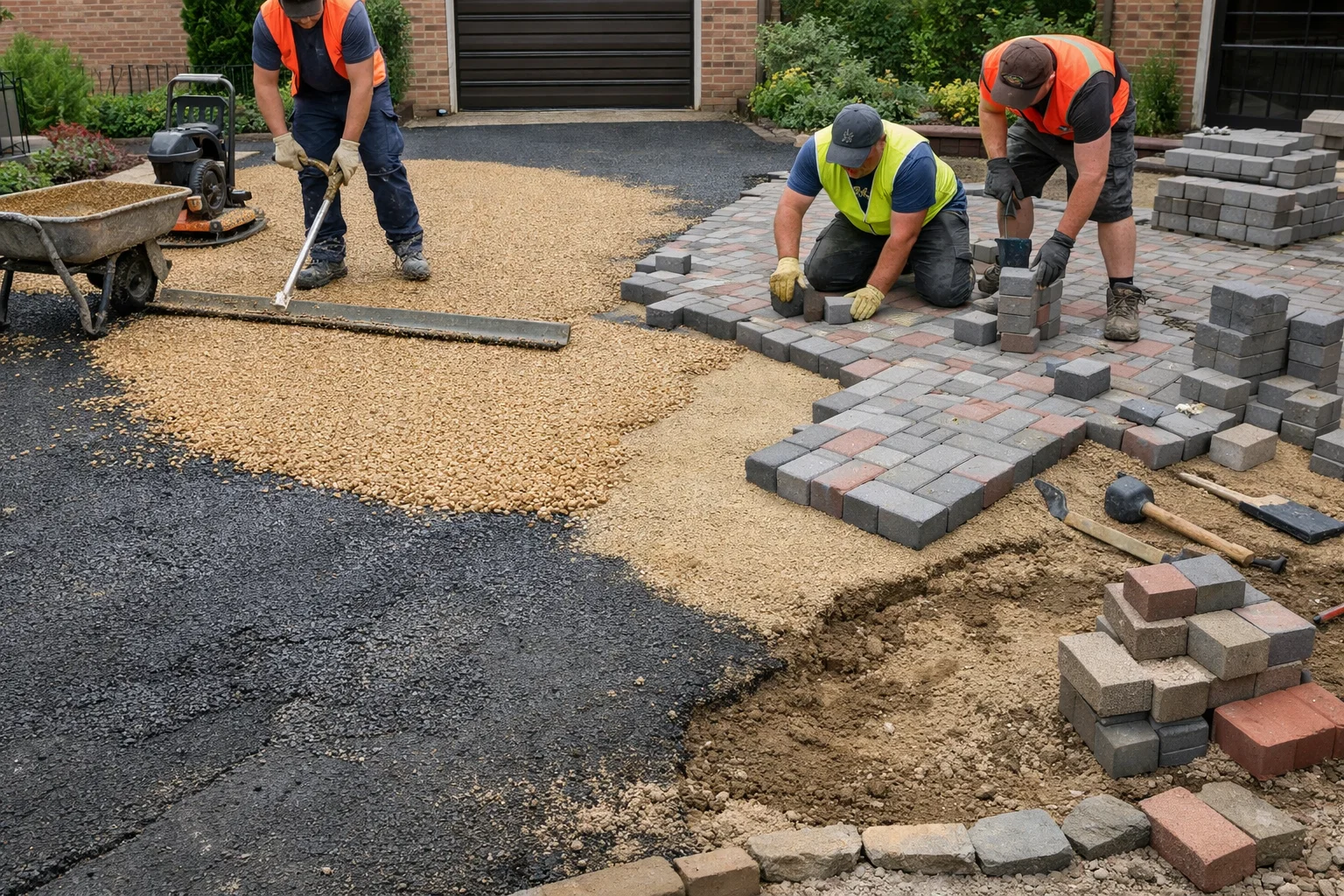
Block paving takes a bit more time. There’s more digging involved, and the blocks all have to be laid by hand, one at a time. It’s not something that’s done in a rush, so you’re probably looking at a few days at least. It can be a bit more disruptive, just because there’s more going on.
So if you’re hoping for a faster job with less hassle, resin’s likely the better choice.
Pros and Cons Summary
| Feature | Resin Driveways | Block Paving |
|---|---|---|
| Appearance | Seamless surface, modern, various colours | Traditional, patterned, aesthetic appeal |
| Permeability | SuDS-compliant, reduces water pooling | Limited unless using permeable blocks |
| Maintenance | Minimal upkeep | Regular maintenance required |
| Installation Speed | Fast and low-labour | Labour-intensive |
| Lifespan | 20+ years with minimal maintenance | 20+ years with more frequent repairs |
| Cost Efficiency | Lower long-term costs | Higher ongoing maintenance |
| Weather Resilience | Great for the UK climate, withstands heavy loads | Prone to shifting, moss, freeze-thaw cycles |

So, Which One’s Going to Suit You Best?
If you’re after something low-maintenance and works (even when it’s pouring), then resin driveways are probably worth a look. It’s neat, doesn’t take much looking after, and for places like Manchester, where it rains more often than not, it holds up well without making a fuss.
Block paving’s not off the table either. If you like that older, more classic look, or want to play around with patterns, it’s got plenty going for it. Either way, it’s worth thinking about how the driveway ties into the rest of your landscaping, a mismatched surface can stick out even if it’s a great material on its own.
Ready to Transform Your Driveway?
Contact L&R Surfacing today for a free quote. Whether you’re installing a new driveway or updating an existing surface, we’ll help you select the best option for your property, style, and budget.