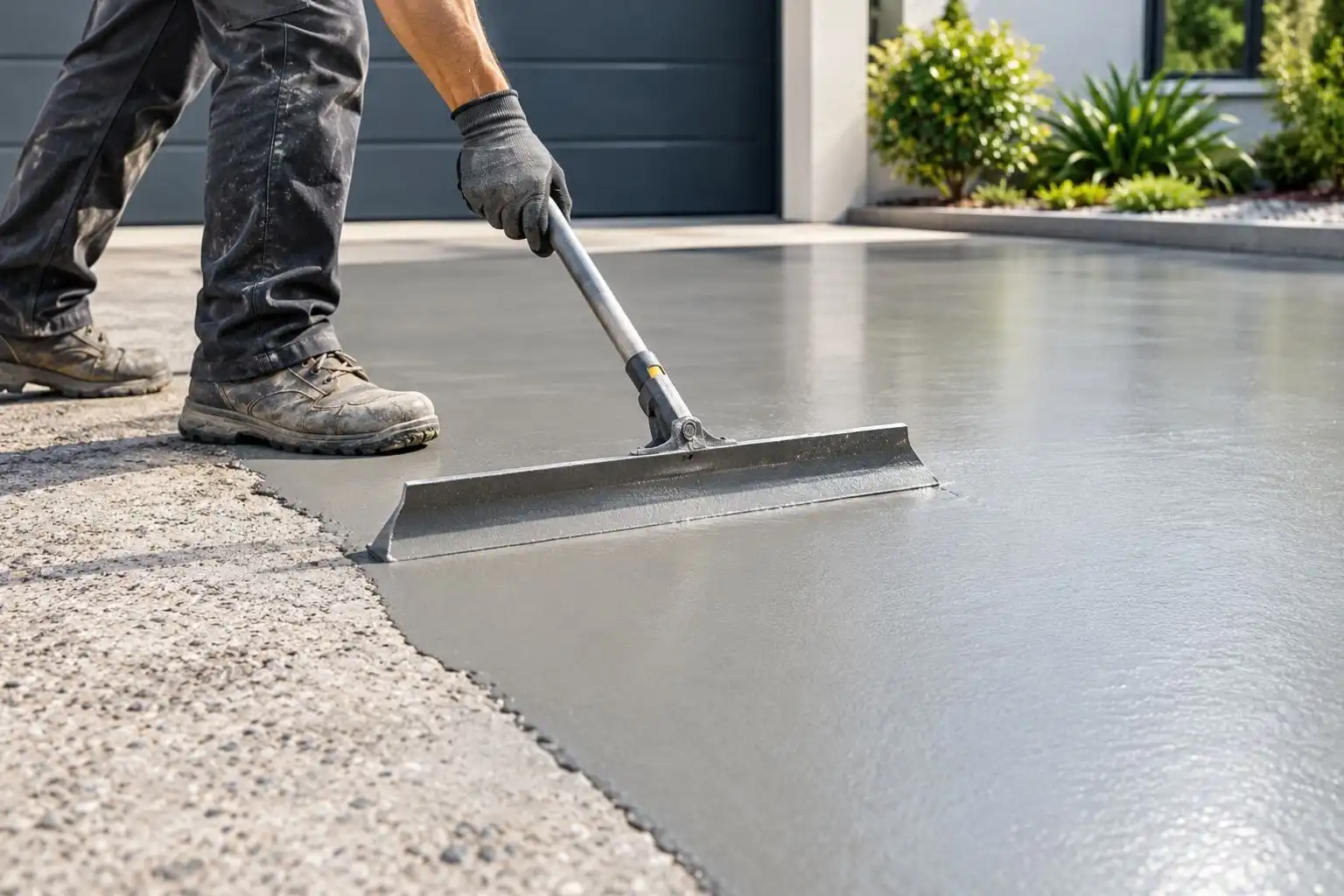
A poorly prepared driveway foundation can lead to cracking, sinking and drainage problems, leaving homeowners facing expensive repairs. Without a stable and properly constructed base, even a high-quality resin driveway may fail prematurely.
According to GOV.UK guidance on permeable surfacing, permeable driveway construction typically requires approximately 200–250mm of material, including the supporting layers. This highlights the importance of proper groundwork in maintaining drainage, stability and long-term durability.
So, if the foundation directly affects the durability and performance of your driveway, what lies beneath a long-lasting resin driveway, and which foundation will give your property the strongest start?
Why Every Driveway Starts with a Strong Sub Base Foundation
Think of a resin driveway as a finish rather than a structure. The resin and stone layer is thin by design and carries very little load on its own. It gives the drive its colour and texture, but it relies entirely on what lies beneath to stay flat, level and crack-free.
That support comes from three layers. The sub-grade is the natural ground, which varies across Manchester and Cheshire, from heavy clay to sandy soil. The resin driveway sub-base sits on top as a compacted bed of crushed stone that spreads each load evenly. A bound layer of tarmac or concrete then gives the resin a solid surface to grip.
A weakness in any one of those layers shows on the surface as cracks, dips or standing water. The finish can only ever be as good as the preparation underneath it. For that reason, our groundworks service completes excavation, sub-base and drainage before any resin is mixed.
How Do You Choose the Right Foundation for Your Resin Bound Driveway?
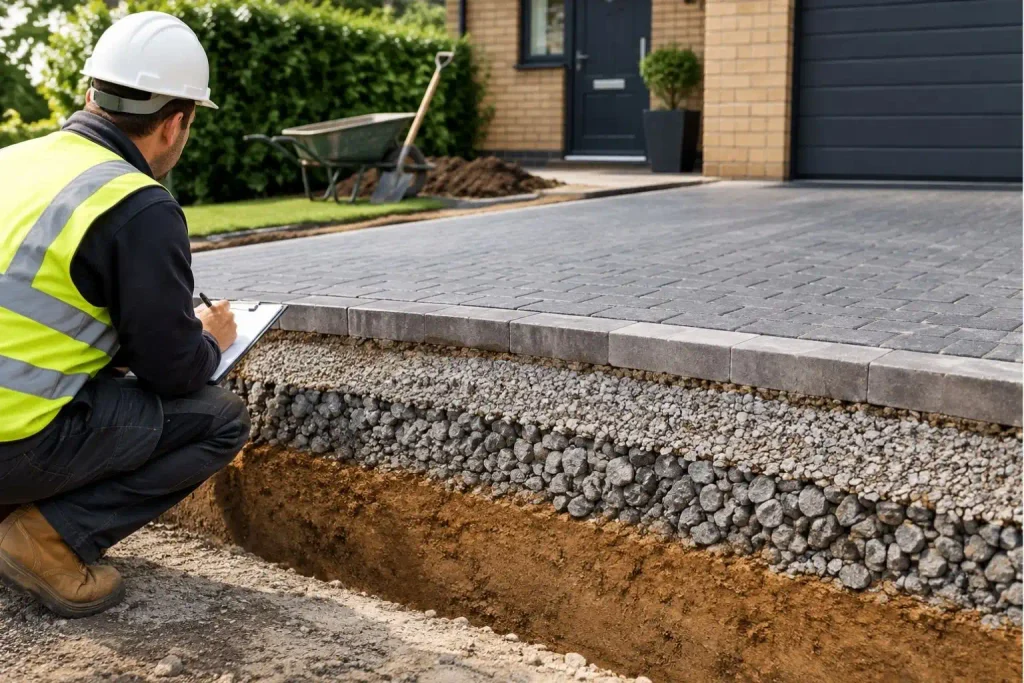
Here are six steps we follow when planning a driveway foundation for resin driveways:
- Assess the existing surface. The first question for many homeowners is simple: can you lay resin over concrete or tarmac already on the drive? Often you can. Sound tarmac or concrete with no cracks, sinking or patch repairs can stay in place, which cuts excavation and cost. Anything with joints, such as block paving or slabs, has to come up.
- Decide if the drive needs to drain. At the front of the house, drainage affects planning. A dense tarmac or concrete base makes the whole build impermeable, even with resin bound on top.
- Pick the bound layer. For a new build, open-graded tarmac is widely seen as the best base for resin driveway projects because water passes through it. Porous no-fines concrete is the alternative where extra stiffness is needed.
- Match the sub-base to the base. MOT Type 1 contains fine particles that compact tightly, so it suits impermeable builds. Type 3 has fewer fines and lets water flow through, which makes MOT Type 3 for resin driveway builds the standard choice when the surface must drain.
- Set the depths for your ground and traffic. Resin driveway base depth depends on soil type, use and vehicle weight. Soft clay or regular heavy vehicles call for a deeper sub-base, and a geotextile membrane beneath it helps stop weeds and sinking on softer Manchester soils.
- Confirm edging and primer. Firm edge restraints stop the build spreading outwards, and concrete bases need priming so the resin bonds properly.
We work through each of these during a free site survey before quoting for any of our resin driveways, so the base is specified rather than assumed.
Which Foundation Suits Your Driveway?
The right build-up depends on your existing surface, your ground and how water needs to leave the drive. Typical options are compared below, with depths based on Vuba’s resin bound build-up guidance.
| Foundation | Typical build-up | Drains? | Best for |
| Open-graded tarmac over MOT Type 3 | 60 to 70mm tarmac on 100 to 225mm Type 3 | Yes | New front drives needing SuDS compliance |
| Porous no-fines concrete over MOT Type 3 | Concrete slab on compacted Type 3 | Yes | Permeable drives needing extra rigidity |
| Existing sound tarmac | Reused, repaired where needed | Usually no | Budget overlays on side or rear drives |
| Existing sound concrete | Primed, joints and cracks treated | No, unless drilled | Stable slabs in good condition |
| New dense concrete | 100mm slab on MOT Type 1 | No | Heavy vehicles or poor ground |
The top two rows in the table are the only options that drain freely, and that matters at the front of the house. A SuDS compliant resin driveway needs a permeable base for resin bound surfacing throughout, otherwise paving a front garden may need planning permission. The bottom three rows suit overlays and heavier loads where drainage is handled separately.
What Are the Warning Signs an Existing Drive Won’t Work?

Overlaying saves money, but only after checking that the existing substrate is genuinely sound before the resin is overlaid. Before asking an installer for an overlay, walk your drive and look for these signs:
- Cracks wider than a hairline, or a crack pattern that grows after each winter.
- Dips, ruts or puddles that linger for hours after rain, pointing to a weak sub-base.
- Lifting or bulging near trees, where roots are pushing the surface upwards.
- Patch repairs in different materials, which expand and contract at different rates.
- Crumbling edges, loose corners or areas that sound hollow when tapped.
- Block paving, flags or loose gravel anywhere in the area, none of which form a bound slab.
Homeowners often ask: can you lay resin over concrete that is decades old? Firstly, an existing concrete surface can still be a suitable base to lay resin bound if it is in good condition, level, and drains properly. Age matters far less than condition.
Any of the signs above tends to show through as resin driveway cracking within a season or two, because the movement below can shorten the longevity of the resin bound surface. Installers should ensure the base is suitable before overlaying, and where a drive fails these checks, a full rebuild is the safer route; some homeowners then compare resin with imprinted concrete driveways, which are laid as a new slab from the ground up.
Build Your Drive and Lay Resin Bound From the Ground Up
Before you accept any resin quote, ask the installer to put three things in writing: the base material, the resin driveway base depth for each layer and where surface water will go. A quote that lists only colour and price per square metre gives you no fair way to compare installers, and no way of holding anyone to the groundwork later. Choosing the best base for resin driveway work starts with those three answers. A qualified installer can assess site factors, recommend the most suitable substrate and the right bound layer.
L&R Surfacing has served homeowners across Manchester, Cheshire and Salford since 2016, with every installation built on a properly prepared foundation. Our resin driveways use BBA-approved systems, carry a 10-year written guarantee and can be built as a SuDS compliant resin bound driveway with a permeable base for resin bound surfacing throughout, keeping your front drive clear of planning issues while giving an attractive finish that is frost and slip resistant. The binder course is dependent on ground conditions and should provide stable support beneath the resin bound surface.
If you’re ready and not sure about resin over tarmac you already have, or how to prevent resin driveway cracking on an older slab, our team will assess it on site. Call us on 0161 399 0351 or email enquiries@landrsurfacing.co.uk.
Frequently Asked Questions About Resin Driveway Foundation
Do you guarantee resin driveways built on a new foundation?
Every resin driveway we install on a new foundation comes with a 10-year written guarantee. We use BBA-approved resin systems and are fully insured, so you have clear protection from the day the drive is finished. Because we handle the groundworks ourselves, the excavation, sub-base and bound layer are all built by the same team that lays the resin.
That matters, as a guarantee is only as strong as the work beneath it. Your written quote sets out exactly what the guarantee covers, so you know where you stand before work begins. If anything is unclear, our team will talk it through with you at survey stage.
Which areas do you cover for resin driveway installation?
Our team carries out resin driveway installation across Greater Manchester, Cheshire and Salford from our base in Wythenshawe. Homes we regularly work on sit in Altrincham, Hale, Bowdon, Wilmslow, Alderley Edge, Bramhall, Stockport, Macclesfield, Bury, Didsbury and Ashton, along with central Manchester and Salford.
Ground conditions change a great deal across that patch, from heavy clay in parts of Cheshire to lighter soils elsewhere, and we plan each foundation around what we find on site. If your address sits just outside these towns, get in touch anyway. We will confirm quickly if we can reach you, and arrange a free survey at a time that suits.
How long will it take you to install my resin driveway with a new base?
A typical domestic resin driveway with a new base takes two to five days from start to finish. The first stage covers excavation, the sub-base and the bound layer, which can take one to three days depending on size, access and ground conditions. The resin itself is usually laid in a single day on a standard front drive.
New tarmac or concrete may need time to settle before resin goes down, and we build that into the programme. Your written quote includes a clear timeline, and we keep you updated if weather affects the schedule. You can normally walk on the finished surface the next day.
How do I book a free site survey for my driveway?
Booking a free site survey takes a single call or email. Ring us on 0161 399 0351 or email enquiries@landrsurfacing.co.uk with your address and a rough idea of the work you have in mind. We then arrange a visit at a time that suits you. During the survey, we inspect your existing surface, check drainage and access, and review the important site factors before we recommend the most suitable base build-up and talk through finishes and colour options.
You then receive a clear written quote, usually within days, setting out the base, depths and timescales, and whether the presence of a geotextile membrane is needed, as it helps prevent weed growth while letting water pass through the build-up. There is no obligation to go ahead, and no pressure. If you already have photos of your drive, sending them ahead helps us prepare.